










By Arsala Hassan
Five years ago, when this land regained its independence, nearly twenty years had already passed in which the voice of truth was strangled, mothers were left grieving, fathers lost their children, the Quran was burned, mosques were destroyed, and Hafizs were martyred. Muslims were wounded, imprisoned, and killed. These were years when speaking the truth was a crime, the sound of the adhan was heard under the shadow of fear, reciting the Holy Quran could cost a person his life, and every step toward the mosque came with the threat of death.
There were nights when mothers stayed awake until morning, waiting to hear the footsteps of their sons, only to hear news of their martyrdom instead of their return. There were fathers who waited for the funerals of their children, yet for some, that wait has never truly ended.
There were homes where, after a major and bloody attack, family members were lost forever, with some homes left without a single member.
Years ago, America and its allies had lost their sense of reason. They no longer knew what to do. In the end, they launched an assault on Afghan soil, the oppressed Afghan people, and a steadfast and complete system. In violation of the rules of war and diplomacy, they committed acts of oppression and injustice whose record will be difficult for anyone to surpass until the Day of Judgment.
They drove some Afghans from their homes, killed some, wounded some, imprisoned others, and subjected many to all kinds of torture. They bombed homes, madrasas, mosques, and public facilities. They smeared scholars, Hafizs, and tribal elders with all kinds of accusations.
But Afghans are not a people who will sleep peacefully under the shadow of occupation. They never have been, and they never can be. Afghans are a people whose history is filled with golden pages of defeating occupiers. They broke the horns of powerful empires such as the British and the Russians so badly that they are still licking their wounds, and if their children ever think of returning, they will advise them not to come back.
There was a time when the Taliban were not even allowed the right to live on their own land. They were either imprisoned or killed.
The Taliban were those who, in the simple language of the villages, stood like a shield against B-52s, cruise missiles, Black Hawks, drones, tanks, all kinds of weapons, an army of 150,000, and a large number of domestic puppets, armed with little more than a handful of bullets.
The Taliban left behind the tall buildings of the cities, beautiful parks, luxury cars, and soft beds. They separated themselves from the warm embrace of their mothers and fathers and deprived their young children of their love. They left behind comfort, pleasure, and an easy life and moved toward the mountains. They rested their backs against the hot, hard rocks and began thinking about bringing down a great dragon.
At that time, the Taliban had no tanks, no aircraft, no modern luxury vehicles, no armored trucks, and no laser weapons. They had only the resolve of Khalid and Umar and the help of Allah. With these, they brought down that heavy wave as well. They did things that left the occupiers with no way out except departure and retreat.
America then stepped away from the path of force and began its cunning political game. Through this, it wanted to cover up its defeat. For a full eighteen months, it put all its strength into this effort, but here too it faced the followers of Muhammad. Through the Doha Agreement, all they managed to achieve was to secure fourteen months in which they would no longer be attacked. In the end, they quietly made their way back home. This was not an achievement for them. It was simply a way to find an escape route.
But this land did not die. This people did not break. The voice of truth did not fall silent. From every drop of blood, a new determination rose. From every sacrifice, a new idea of freedom was born. And after every darkness, hope for the light of tomorrow became stronger.
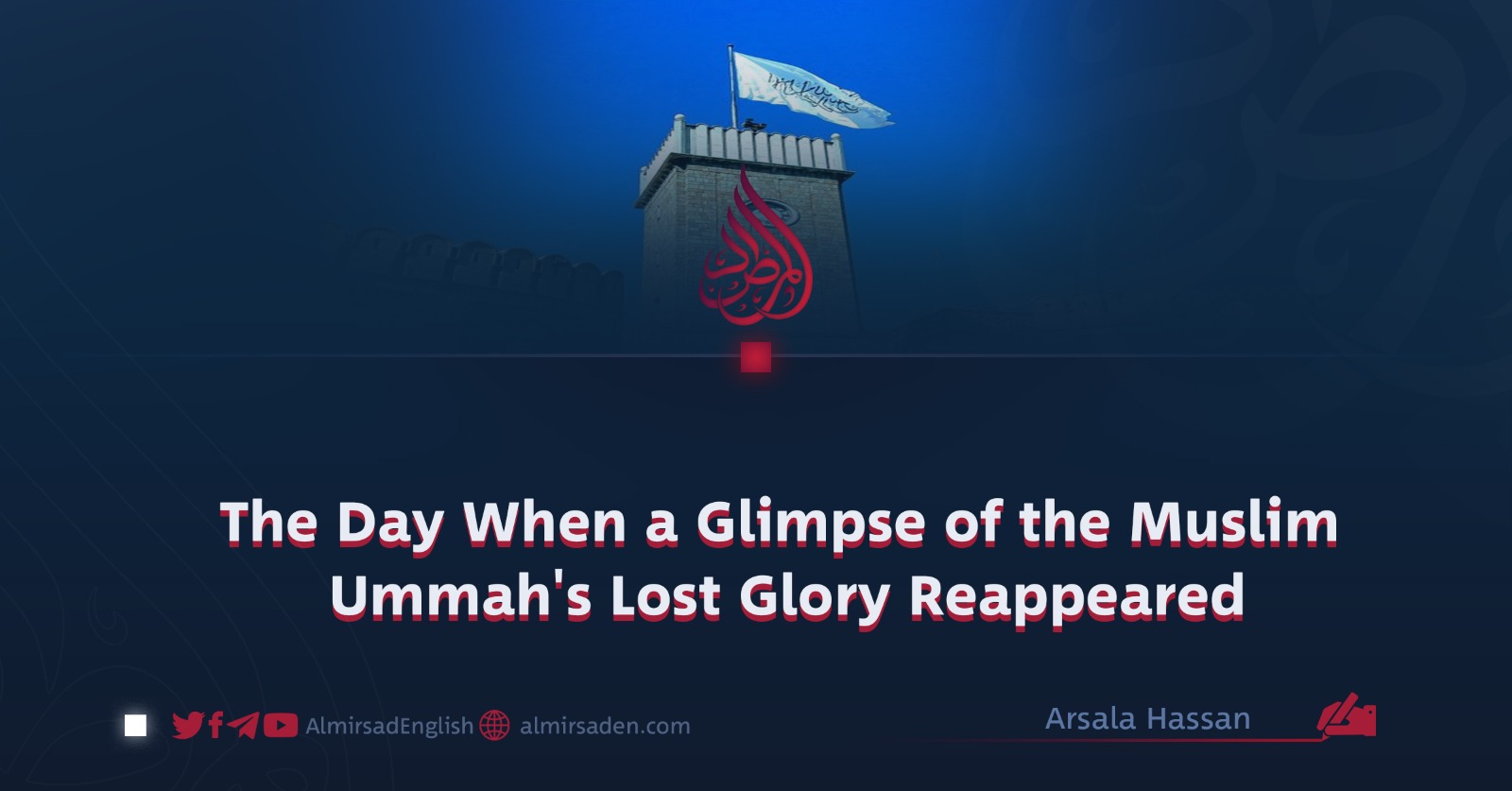
Until the day finally came, after a long struggle, sacrifices, and countless martyrs, when a glimpse of the Muslim Ummah’s lost glory reappeared. It was the day when the mark of independence once again shone on the forehead of this land, and the people felt that the blood of their sacrifices had not been shed in vain.
It was a day of victory for the patience of those mothers who sacrificed their sons. It was the day when the tears of fathers who had lost their children found their reward. It was the day when the sacrifices of Hafizs, scholars, and believers who gave their lives for the sake of truth finally bore fruit.
This day should not be preserved merely as a date or a symbolic occasion. It must remain alive forever in the memory of history, in the hearts of the people, and in the minds and beliefs of future generations.
Nations remain faithful to their history when they do not forget the sacrifices of their martyrs, when they understand the pain of the generations before them, and when they lay a foundation for the future built on peace, knowledge, honor, justice, and independence, so that no mother will again have to shed tears over the loss of her son.
The 24th of Asad is that historic day, the day when the Arg was honored by the footsteps of the forces of Umar, when the backbone of the armies of disbelief and their allies was broken, and when the brave Afghan people finally breathed a sigh of relief.