














By Akbar Jamal
For some time now, one question has kept coming up. In simple terms, it goes like this: the Islamic Emirate of Afghanistan (IEA) carries out qisas against murderers, and it enforces the hadd punishment of flogging for those who drink alcohol and for unmarried adulterers. Yet there have been no reports of a thief’s hand being amputated or of a married adulterer being stoned to death. Why is that?
The question itself reflects a misunderstanding born of viewing Sharia only through the lens of punishment.
The question itself reflects a misunderstanding that comes from looking at the Sharia only through the lens of punishment. The Islamic criminal justice system is not simply about carrying out penalties. It is a just and carefully balanced system meant to uphold justice, protect people’s lives, property, and honor, and preserve the well-being of society. Some critics, or those who only look at the issue on the surface, ask: “If an Islamic government is in power, why do we rarely see the punishment of hand amputation for theft or stoning for married adulterers?” In reality, that objection comes from not understanding the nature of Sharia, the wisdom behind Islamic judicial policy, and the strict conditions required before any hadd punishment can be carried out.
Anyone seeking a proper understanding of Sharia must first recognize one essential fact. Islam is not eager to establish crimes. As long as there is room to avoid applying a hadd punishment, it does so. One of the agreed principles of Islamic jurisprudence is that if even a valid doubt exists regarding the proof of a crime, the hadd punishment falls away.
A well-known Prophetic narration reported from Abdullah ibn Mas’ud (RA) and other Companions states:
«ادْرَءُوا الْحُدُودَ عَنِ الْمُسْلِمِينَ مَا اسْتَطَعْتُمْ، فَإِنْ كَانَ لَهُ مَخْرَجٌ فَخَلُّوا سَبِيلَهُ، فَإِنَّ الإِمَامَ أَنْ يُخْطِئَ فِي الْعَفْوِ خَيْرٌ مِنْ أَنْ يُخْطِئَ فِي الْعُقُوبَةِ.» (سنن الترمذي، کتاب الحدود، باب: ما جاء في درء الحدود، حدیث: 1424)
“Avoid applying legal punishments against the Muslims if you are able. If the criminal has a way out, then leave him to his way. Verily, for the leader (Judge) to err in pardoning is better than to err in punishing.”
This principle, “It is better for the judge to err in forgiveness than in punishment,” stands among the finest principles of Islamic jurisprudence. Even modern legal systems have regarded it as worthy of reflection and praise. Its meaning is clear. If someone who is actually guilty goes free, that is undoubtedly a judicial mistake, but its harm remains limited. If an innocent person is punished, however, the injustice is far greater. It damages the credibility of the entire justice system and calls the legitimacy of the state itself into question. Society suffers far less from a guilty person escaping punishment than from an innocent person being imprisoned or having his blood wrongfully spilled.
The danger becomes even greater because some hudud punishments, such as amputation or execution under qisas, cannot be reversed. If an innocent person’s hand is cut off, or he is stoned or executed, and it is later discovered that the court’s judgment was mistaken, no court can restore the hand or bring that life back. For that reason, Sharia requires judges to give the accused the benefit of the doubt whenever doubt exists. This principle makes it clear that an Islamic government is not driven by a desire to punish. Its primary aim is to safeguard people’s lives, property, and honor. Once courts begin issuing judgments based on emotion, public pressure, or anything short of certainty, they cease to reflect the justice exemplified by Umar al-Faruq (RA) and instead become instruments of oppression. That is precisely why Sharia considers a mistake in forgiveness preferable to a mistake in punishment, so that no innocent person falls victim to the justice system.
The Prophet Muhammad (PBUH) demonstrated this principle in practice. His conduct showed that Islam gives the accused every opportunity to withdraw a confession and return to repentance rather than rushing toward punishment. During the lifetime of the Prophet Muhammad (PBUH), when Ma’iz ibn Malik al-Aslami (RA) came forward and confessed to adultery four separate times, the Prophet (PBUH) turned his face away each time. He even asked him, “Are you mad?” and suggested that perhaps nothing more than kissing or embracing had occurred. The entire incident reflects the merciful and wise spirit of Sharia. Until a crime is proven with complete certainty, as clear as the sun and free from every doubt, a hadd punishment is not carried out. Many people assume these punishments are straightforward, but Islamic jurisprudence places such detailed and demanding conditions on the hadd for theft that meeting every one of them at the same time is extremely rare, almost impossible under ordinary circumstances.
According to the rules of Sharia, the stolen property must reach the prescribed legal threshold (Nisab). It must have been taken from a secure place specifically intended for safekeeping, such as a locked room, a house, a cabinet, or similar locations. The thief must have no share in the property, no ownership claim, and not even a legal ambiguity regarding ownership.
There is another important condition. If someone steals because of hunger, desperate need, or severe economic hardship, the hadd punishment is dropped by the agreement of the jurists. It was for this reason that Umar ibn al-Khattab (RA) suspended the punishment of hand amputation during the Year of Famine. If the courts of the IEA rarely issue judgments involving hand amputation, the main reason is that judges examine every condition required by Sharia with the greatest care. They also take into account today’s economic realities, genuine hardship, and any legal ambiguities that may exist. Whenever the conditions for a hadd punishment are not fully satisfied, the courts give preference to discretionary punishments (Ta’zir) instead.
This distinction between hadd and ta’zir gives Islamic judges broad legal discretion. If a crime cannot meet the strict standard required for a hadd punishment because of insufficient proof or because one of the legal conditions is absent, yet it is still established that the accused committed an offense, the judge may impose a ta’zir punishment. Depending on the nature of the crime, the character and condition of the offender, and the surrounding circumstances, this may include imprisonment, a fine, corporal punishment, or another suitable penalty.
So if reports of hand amputations are rare, it does not mean thieves are simply being released. It means the judges of the IEA, because of the legal ambiguities and conditions surrounding hudud, often impose severe ta’zir punishments that have proven effective in deterring crime, preserving security, and protecting public order. At the same time, assessing domestic realities, international circumstances, and public interest is also among the responsibilities of those entrusted with authority in an Islamic state. The IEA inherited a country devastated by decades of war and carries the enormous responsibility of rebuilding society intellectually, socially, and economically. At the same time, it faces sustained international pressure, economic sanctions, and hostile propaganda.
Under such circumstances, Shariah allows an Islamic government to adopt a wise approach in the manner of implementing punishments, one that restrains fitnah and presents the true, balanced, and just face of Islam to the world. This is why certain severe punishments are carried out within court compounds or designated locations rather than public squares. That approach itself reflects Islamic wisdom and serves the interests of da’wah. It leaves hostile media with fewer opportunities to distort the justice of Sharia and protects society from becoming desensitized through constant exposure to harsh public spectacles.
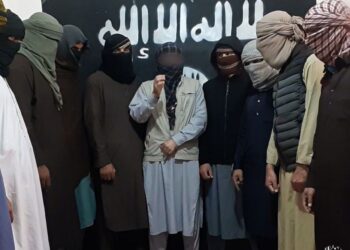
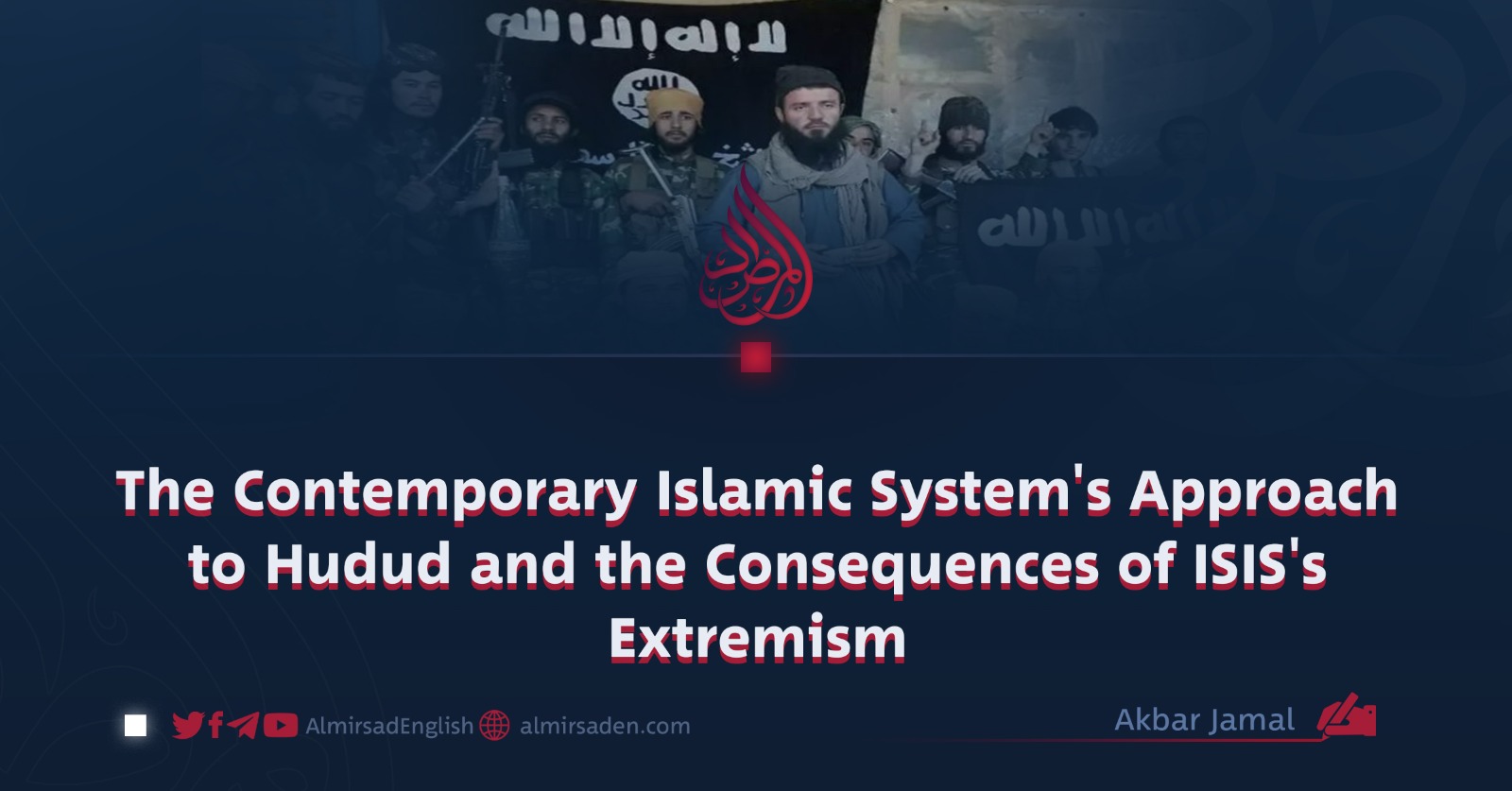
If we look at the conduct of today’s Khawarij, namely Daesh, one of the main reasons for their failure and destruction was precisely this extremist mindset. They cast aside the strict legal conditions governing hudud and ignored the principle of doubt. People were killed, beheaded, and had their hands cut off based on suspicion and assumption alone.
The result was that they presented Islam to the world as though it were nothing but a religion of punishment. That extremism stood in direct conflict with the mercy, justice, and wisdom that lie at the heart of Sharia, and it was one of the reasons Allah stripped them of their strength and brought about their downfall.
By contrast, the IEA’s implementation of qisas and other Sharia punishments, including flogging, is itself sufficient proof of its commitment to enforcing Islamic law. But the IEA does not seek publicity or short-lived propaganda by turning hudud into public spectacles. It gives priority to the dignity of the justice system, the strict conditions laid down by Sharia, and the wider interests recognized by Islamic law. This reality must be understood correctly. The value of the Islamic criminal justice system is not measured by how many punishments are carried out or how publicly they are displayed. Its true measure is whether justice is upheld, whether people’s lives, property, and honor are protected, and whether crime is prevented.
That is why the absence of frequent reports about hand amputations or stoning does not reflect weakness on the part of the IEA, nor does it mean that Sharia has been set aside. It reflects caution, thorough judicial examination, and wise judgment, all of which are entirely consistent with the spirit of Islamic law.
Muslims, therefore, should strive a deeper and more balanced understanding of their religion. Rather than reacting emotionally or focusing only on outward appearances, they should pay attention to the higher objectives, wisdom, and just principles of Sharia. Islam is not merely a religion of punishments. It is a religion of mercy, justice, wisdom, and the protection of human dignity. Every ruling in Sharia has been legislated to serve those greater purposes.