








Part 1
By Akbar Jamal
After the United States was defeated and the Islamic Emirate of Afghanistan (IEA) returned to power in Afghanistan in August 2021, regional geopolitics, especially relations between Afghanistan and Pakistan, entered an exceptionally delicate, complicated, and fast-changing period. In political circles, among intellectuals, and across the public, the same questions have continued to surface. Did the IEA ever make a genuine effort to resolve its political and security disputes with Pakistan through dialogue? Did Kabul send any senior representative to Islamabad with the aim of opening talks and finding a lasting settlement?
This article draws on official statements, careful analysis, and realities on the ground to answer those questions. It examines the political, strategic, and diplomatic dimensions of that period so that no important part of the recent history of Afghan-Pakistan relations is overlooked.
When the IEA assumed control of Afghanistan in August 2021 after years of struggle, it made peaceful, stable, and lasting relations with neighboring countries, particularly Pakistan, one of the central pillars of its foreign policy. Kabul’s view was straightforward. Long-running disputes over security, the Durand Line, trade, and other contentious issues should not be dealt with through war, military pressure, or a climate of hostility. They should be resolved through political understanding, mutual respect, and diplomacy.
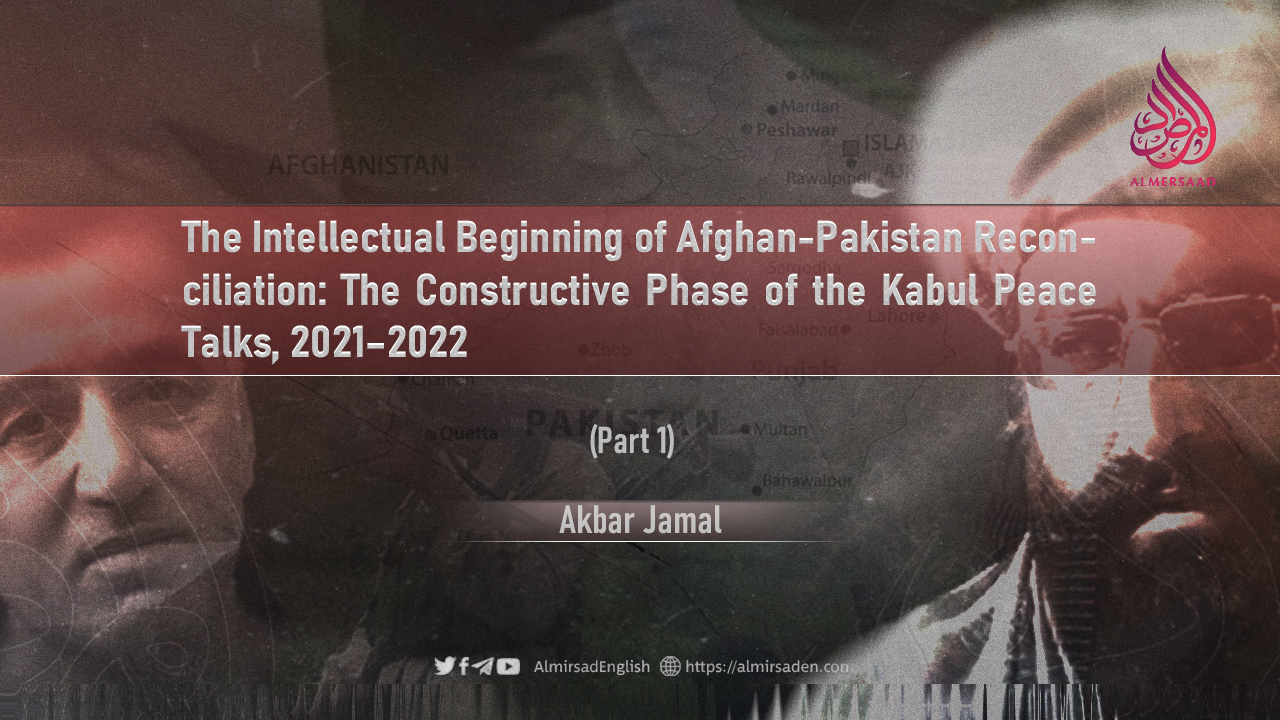
The first major demonstration of that policy came in November 2021, when fierce fighting was taking place between Islamabad and Tehreek-e Taliban Pakistan (TTP), pushing the region into a serious security crisis. To promote regional peace and demonstrate its goodwill, the IEA hosted talks in Kabul between Islamabad and the TTP, two bitter adversaries. It devoted its own resources to the process and succeeded in helping both sides agree to a one-month ceasefire. The next important stage came in May 2022, when, at the invitation of the Afghan government, a high-level Pakistani delegation led by Peshawar Corps Commander Lieutenant General Faiz Hameed arrived in Kabul.
The delegation included not only senior military officials but also representatives of Pakistan’s tribal elders and influential circles. Their goal was to search for a broad and lasting solution to the security problems facing both countries. Throughout several days of lengthy and demanding meetings held at secure locations in Kabul, the IEA acted as a responsible, impartial, and sincere mediator, working to help Islamabad and the TTP move toward a durable peace agreement.
Determined to ensure that the negotiations produced practical results rather than becoming little more than ceremonial meetings, the IEA brought its own senior security officials into the process.
Among them, Interior Minister Khalifa Sirajuddin Haqqani played the central mediating role. He personally brought together the Pakistani delegation led by Lieutenant General Faiz Hameed and the TTP delegation led by Mufti Noor Wali Mehsud. He used all of his political influence, diplomatic experience, and personal standing to narrow positions that at first appeared impossible to reconcile. The IEA’s objective was clear. It believed Pakistan’s internal security problems needed a lasting solution because peace inside Pakistan would directly improve security along the Durand Line and strengthen trade between the two countries.
Kabul repeatedly stressed to both sides that lasting peace, public welfare, and economic progress could only be achieved through a ceasefire, an end to the fighting, and political dialogue.
Those efforts produced significant results.
The most immediate and important outcome of the negotiations was the TTP’s formal announcement that it was suspending all military operations against the Pakistani state and extending the ceasefire for an indefinite period. That decision created an opportunity for security conditions inside Pakistan to improve. To strengthen confidence between the two sides, another important understanding was reached during the talks. The Pakistani government agreed to release a number of senior TTP prisoners as a gesture of goodwill, and Pakistani security authorities subsequently freed dozens of detainees. One of the most difficult issues discussed during the negotiations was the TTP’s demand that the constitutional merger of the former Federally Administered Tribal Areas (FATA) into Khyber Pakhtunkhwa be reversed and that the region regain its previous semi-autonomous tribal status.
General Faiz Hameed and the Pakistani delegation held extensive discussions on this sensitive issue. With tribal elders acting as intermediaries, both sides agreed to explore a middle-ground solution that would respect Pakistan’s constitutional framework while also addressing the TTP’s concerns. The IEA and Pakistan also agreed that tribal families who had fled across the Durand Line into Afghanistan because of Pakistan’s internal conflicts, military operations, and fighting should be able to return safely and with dignity to their ancestral homes, particularly in Waziristan.
One historical fact deserves attention here.
Those hundreds of thousands of Pakistani refugees crossed into Afghanistan while the United States still maintained its largest military presence in the country and Ashraf Ghani’s government was in power. All of this happened long before the IEA returned to power. That raises an obvious question. At the time, Pakistan’s government should have asked its own military and intelligence officials how eighteen to twenty thousand residents of Waziristan managed to cross the heavily fortified Durand Line and enter Afghanistan despite the extensive fencing and strict security measures that had already been put in place.
The IEA was determined to keep the talks going and preserve the momentum created by the agreements. But political and military changes inside Pakistan soon disrupted the entire process.
Imran Khan’s government fell, Shahbaz Sharif became prime minister, and Pakistan’s security and foreign policy began to shift. At the same time, Lieutenant General Faiz Hameed, one of the key figures behind the negotiations, was removed from his post as Peshawar Corps Commander, breaking the continuity that had sustained the talks.
The new military leadership showed little interest in continuing the IEA’s mediation or pursuing political dialogue with the TTP.
After taking office, the new army chief, General Asim Munir, adopted a hard-line position. He declared that armed groups would be dealt with only through military force and that the state would not return to the negotiating table.
Taken together, these events make one historical fact difficult to ignore. In 2022, the IEA used its influence and available resources to create a genuine opportunity for peace inside Pakistan and greater stability across the region. But for reasons rooted in Pakistan’s own political and military decisions, the ruling circles in Rawalpindi allowed that opportunity to slip away. Confident that force alone would prevail, they chose not to build on the progress that had already been made.