








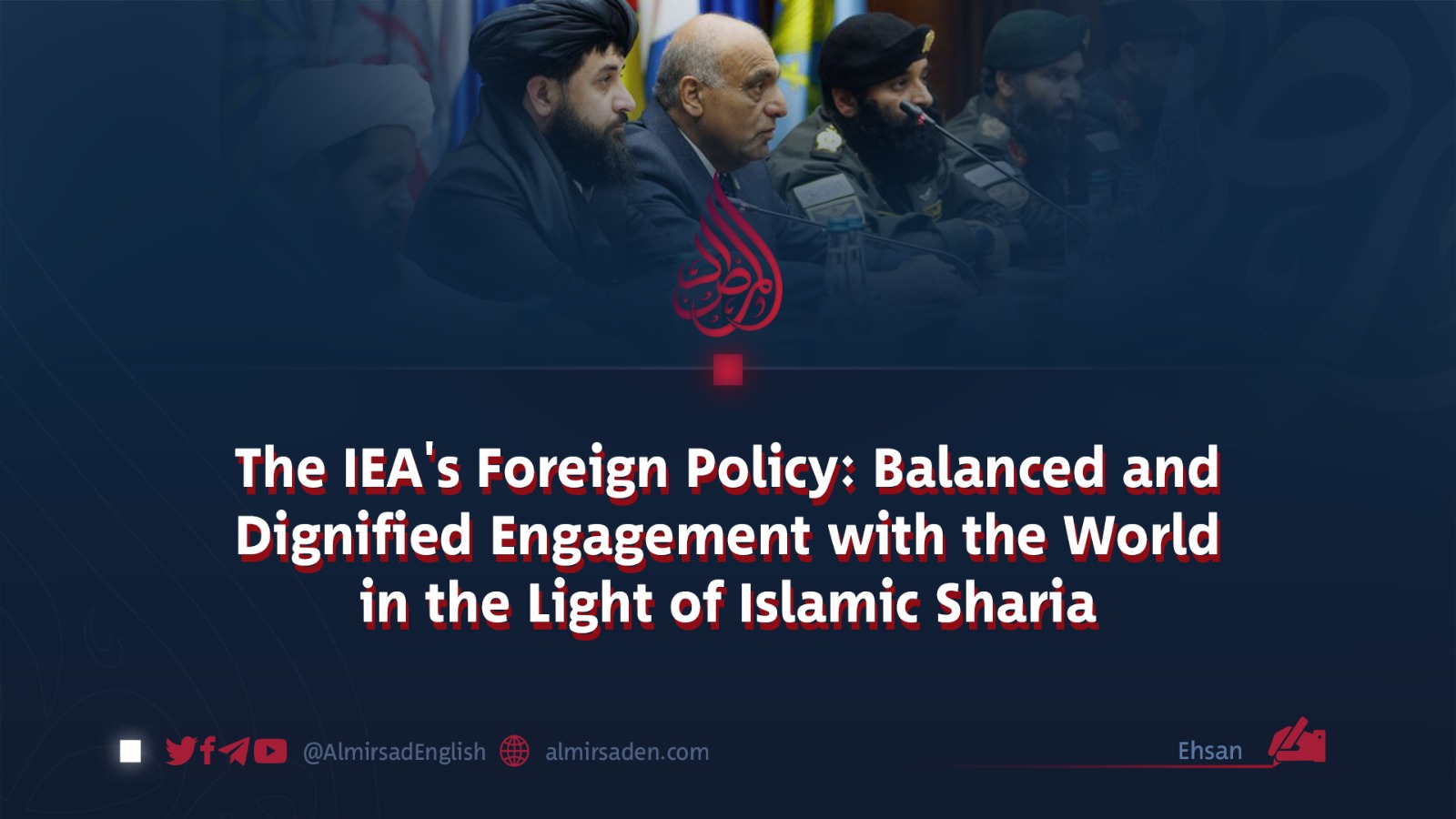
By Ehsan
In recent days, as Afghanistan has expanded its diplomatic relations and engagement with countries in the region, certain circles and groups, particularly Pakistan’s military regime, have tried to create an atmosphere of doubt and suspicion and stir perceptions of threat in an effort to cast the foreign policy of the Islamic Emirate of Afghanistan (IEA) into question in the eyes of regional and international countries. These efforts became especially noticeable after Afghanistan expanded its political and security cooperation and understandings with a number of regional states, including Russia.
The reality is that the IEA’s foreign policy is built on the established principles of Islamic Sharia, the protection of the country’s independence, the safeguarding of national interests, and balanced relations with the outside world. There is no conflict or contradiction between these engagements and the Islamic values on which this policy rests.
Islam is not a religion that opposes relations and engagement with the world and other nations. Rather, Islamic Sharia has laid down a clear framework for international relations. Allah the Almighty says:
«لَا يَنْهَاكُمُ اللَّهُ عَنِ الَّذِينَ لَمْ يُقَاتِلُوكُمْ فِي الدِّينِ وَلَمْ يُخْرِجُوكُمْ مِنْ دِيَارِكُمْ أَنْ تَبَرُّوهُمْ وَتُقْسِطُوا إِلَيْهِمْ إِنَّ اللَّهَ يُحِبُّ الْمُقْسِطِينَ»
“Allah does not forbid you from showing kindness and justice to those who have neither fought you because of your religion nor driven you out of your homes. Indeed, Allah loves those who act justly.”
Engagement and cooperation with other nations, as long as it does not compromise Muslim dignity or harm the interests of the Ummah, is not only permitted but in many cases necessary.
On that basis, the IEA has not chosen isolation and has not accepted subordination to any outside power. It engages with Russia, China, and other countries on the basis of mutual respect, non-interference in internal affairs, the protection of Afghan independence, and adherence to Islamic principles. Afghanistan can maintain constructive relations with every country without giving up its religious values, national sovereignty, or political independence.
Keeping promises and honoring agreements is one of the core principles of Islamic foreign policy. Allah the Almighty says:
«يَا أَيُّهَا الَّذِينَ آمَنُوا أَوْفُوا بِالْعُقُودِ»
“O you who believe! Fulfil your covenants and agreements.”
Any agreement or cooperation carried out within the framework of Sharia and national interest is legitimate and worthy of support. Political, economic, and security engagements with various countries are defined within that same framework, with the aim of helping strengthen stability, improve the economy, and reinforce Afghanistan’s standing in the region.
Pakistan’s military regime, which has spent decades pursuing double-dealing policies and interfering in Afghan affairs, is not happy about the IEA building independent and balanced relationships with regional powers. It tries to present Afghanistan as a threat in order to win international backing for its own political objectives. The facts on the ground say otherwise. Afghanistan today seeks regional stability, economic cooperation, and relations built on mutual respect. It is not a threat to anyone.
The IEA has repeatedly stated that Afghan soil will not be used against any country. In return, it expects other countries to respect Afghan sovereignty, independence, and territorial integrity. This position comes directly from Islamic teachings and the principle of good neighborliness, something Islam regards as one of the foundations of security and peace in human societies.
Today, under the Islamic system, Afghanistan has found the opportunity to organise its foreign relations on the basis of dignity, wisdom, and sound judgement. These are the same principles that Islamic scholars have drawn from the blessed verse:
«ادْعُ إِلَىٰ سَبِيلِ رَبِّكَ بِالْحِكْمَةِ»
“Invite to the way of your Lord with wisdom.”
and from the life of the Prophet Muhammad (PBUH). During the period of the Islamic state in Madinah, the Prophet (PBUH) maintained relations, agreements, and dealings with different tribes, states, and nations, all for the purpose of securing the interests, security, and stability of Muslims.
Afghanistan’s foreign policy does not revolve around the East or the West. It revolves around Afghan national interests and the principles of Islamic Sharia. The IEA is ready to engage and cooperate with every country in the world, on one condition: that those relations are based on mutual respect, non-interference, respect for Afghan independence, and adherence to Islamic values.
This balanced and prudent policy can help make Afghanistan a bridge for regional cooperation and stronger economic ties, while strengthening its position between the Islamic world and other nations.
The more Afghanistan’s foreign policy remains rooted in Sharia, Islamic dignity, political wisdom, and national interests, the better it will be able to withstand pressure, propaganda, and the schemes of its enemies. Afghanistan’s future depends on engaging with the world while preserving its independence and remaining committed to Islamic values. The IEA regards this as the foundation of its foreign policy.