


Farid Afghan
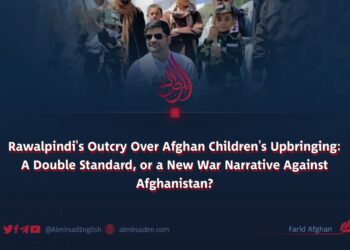
Pakistan accuses the Islamic Emirate of Afghanistan (IEA) of “pushing its own children toward a military environment and a jihadi mindset.” On the surface, this baseless uproar comes wrapped in a heart-tugging pretext of child safety, but when this outcry from Rawalpindi is held up against a mirror of its own conduct, the truth comes right out into the open. This isn’t the observance of any international principle or moral value, it’s just a new page in Rawalpindi’s grudge against and opposition to the IEA.
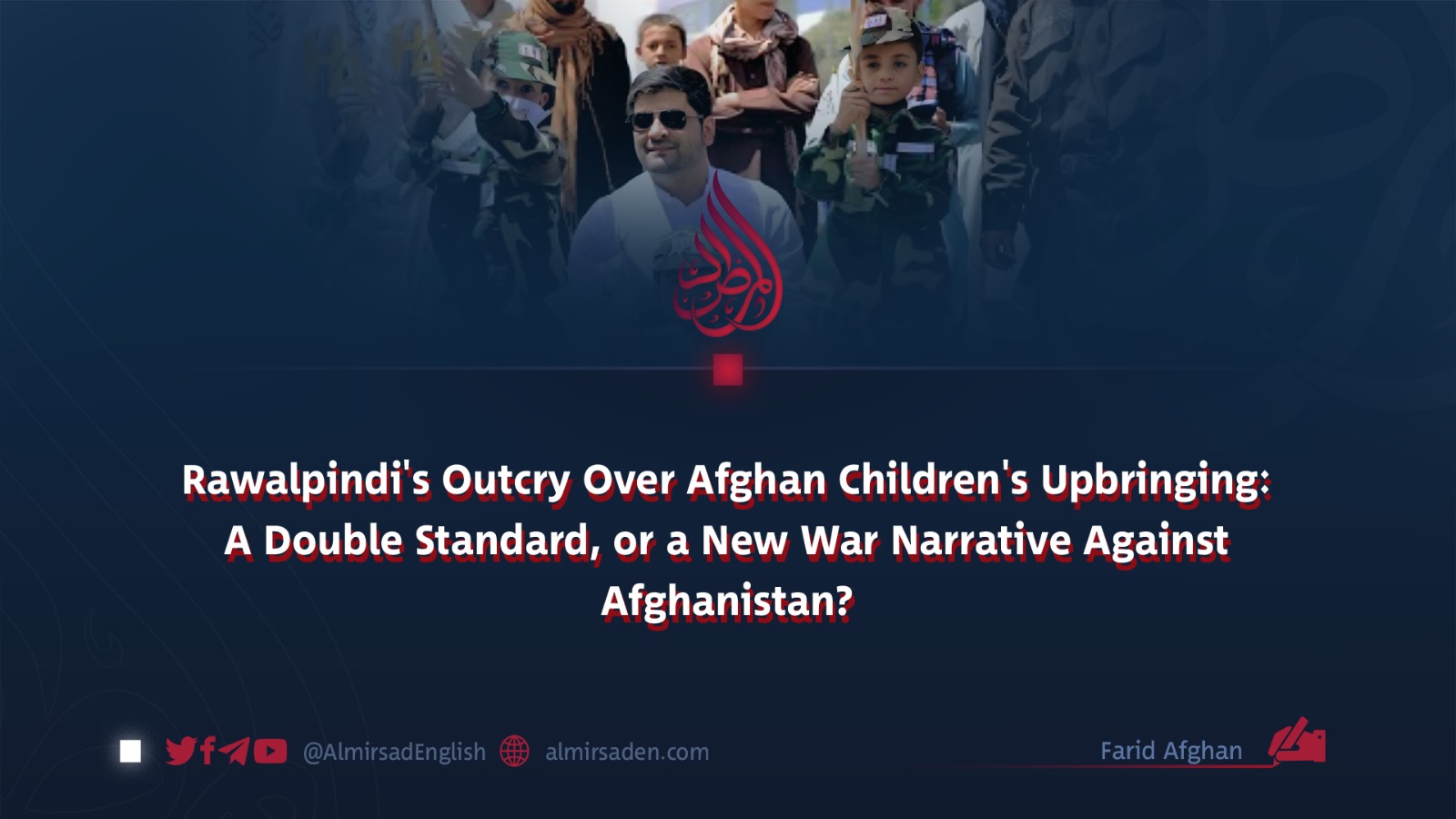
If, in Afghanistan, young children turn up at some gathering or school wearing military-style clothing, hear talk about their country’s defensive duties, and resolve that one day they’ll grow up to defend their Islamic homeland, Pakistan’s military media and diplomatic machine springs into motion immediately. All of a sudden this gets branded an “international crime” and “building a military mindset,” and an outcry begins about it across the whole world.
But from this same Rawalpindi-based military ruling clique, which presents itself as the victim, this question deserves to be asked once: “If stirring the spirit of protecting and defending an Islamic homeland in children is a crime, then how does Pakistan’s own army come out clean of that same crime?” For decades, the Pakistani army has been bringing Pakistan’s own young, innocent children into its military bases and parades, dressing them in military uniforms, having them sing war anthems, and teaching them militarism in the name of defending the country. The entire system of Pakistan’s dozens of cadet colleges and military schools stands on this very point, tying children to a military environment from early childhood.
If dressing children in military uniforms under Rawalpindi’s own shadow is patriotism and national consciousness, then how did it suddenly become extremism when Afghan children in the Hindu Kush region talk about protecting their own borders and religion? Do all the world’s moral principles and laws change according to the borders of this disgraced Rawalpindi? Pakistan’s military’s real problem is with the Islamic system itself!
If we look closely, the real pain here isn’t about Afghan children’s military uniforms or upbringing, the real pain is that Afghanistan raises its own children under the protection of an independent Islamic system. In Islam, upbringing doesn’t start only after reaching puberty, or after turning sixteen under modern democracy’s terms, it starts from childhood, planting the seeds of morals, worship, and social responsibilities in a child’s mind. Just as a child is commanded to pray at age seven, they’re also given a sense of the basic responsibility to defend their society and Islam.
If Pakistan’s education system has the right to tell its own children, “when you grow up, you’ll defend your country in the army or other security institutions,” then when an Afghan child talks about defending their religion, values, and country, stamping that with the label of “criminal mindset formation” is nothing but Rawalpindi’s own bad intellectual faith. If awakening a sense of defense in a child’s mind is an international crime, then every military system in the world would have to tear down its own educational structures.
There’s a clear difference between upbringing and involvement in actual military operations. The IEA has never used any child in armed operations or actual combat. If Islamabad has any proof to the contrary, let them present it to the world. Simply seeing children at some military ceremony in Kabul and stamping it a “war crime” is nothing but a filthy political narrative.
On historical precedent, it should be said that the participation of children like Mu’adh and Mu’awwidh ibn Afra (RA), the killers of Abu Jahl at the Battle of Badr, is part of Islam’s great defensive history. This shows that the relationship between young age and national responsibility can’t be understood through a modern Western or Pakistani political lens. Islamabad’s military leadership being afraid of the sacred word “jihad” alone reveals its own political fear.
The Pakistani army has a bitter history full of contradictions!
This outcry, these shouts and cries from the Pakistani army, turn into nothing but a laughable spectacle the moment its own stained past comes up. After painful events like the tragedy of the APS school in Peshawar, the Pakistani army made wide use of this same education system and these same children for its own defensive narrative. Children were made to sing war anthems, given roles in military propaganda films, and schoolchildren were turned into spokesmen for the narrative supporting the very army that had been defeated in Bangladesh.
So the question is: is teaching “defense of the homeland” halal when it suits Rawalpindi, but even mentioning “defense” of one’s own country by Afghan children considered haram?
The real face of Pakistan’s military has been blackened by its own dark history of cooperation and providing facilities to America, treating Rawalpindi’s latest stance against Afghanistan as merely a diplomatic complaint is ignorance. In truth, this is a frightening, cunning, and hypocritical financial scheme, one that wants to defame Afghanistan on the world stage once again and prove it a strategic threat.
Pakistan-trained and Pakistan-supported circles are making a failed effort to convince the world that training grounds for extremism are operating inside Afghanistan, so that, just as after the events of 9/11, they can create a pretext for any kind of foreign or military action against Afghanistan in the eyes of the world. It’s essential here to raise a direct and hard question about the Pakistani army’s strategic role: does Pakistan really care about the rights of Afghan children? Never!
History bears witness that in the past, whenever world powers planned to set fire to Afghan soil, this same Pakistani army and its intelligence agencies provided air corridors, logistical support, and intelligence facilities to American bombers. The same Pakistani army that provided bases and facilities for dropping bombs on the heads of Afghan children now plays the role of “flag-bearer” for Afghan children’s rights.
Now that the Afghan people live in freedom and independence under the shadow of the Islamic system, Pakistan is once again playing the same old game, to reopen the pipelines for funding its own military-industrial complex in the region amid the drying up of foreign aid.
The truth is bitter!
Islamabad and Rawalpindi should look at their own record before scattering poison against Afghanistan. They should account for their own educational institutions, military academies, and the programs that pull children into the process of militarization.
If your own concept of defending the homeland in your own country is “patriotism,” then don’t dare commit the filthy audacity of calling the same thing “extremism” on the other side of the Durand Line. And if your conscience has truly awakened, and your principle really is that children should be kept away from military environments, then apply that rule in your own country and your own cadet colleges first.
If not, the world has every right to ask these bitter questions:
1. Are Rawalpindi’s policymakers truly concerned about the future of children, or has Afghan children’s independent upbringing simply robbed them of their sleep at night?
2. Is the objection really about children’s upbringing, or about the fact that Afghanistan, instead of becoming your puppet, is moving forward in line with Islamic values?
3. Most importantly, how does the same action that counts as “patriotism” for Pakistan’s army become “terrorism” for the Afghan people?
4. And even more important, is the goal of this Pakistani military narrative against Afghanistan to once again create a pretext for world powers to interfere in the region, hand mujahideen over to the enemies of Islam, and repeat the history of profiting from selling out mothers and sisters, like Aafia Siddiqui, for dollars and useful facilities?
Until the Pakistani army does away with these double standards, every objection it raises will be seen as political hypocrisy, double-dealing, and a cunning attempt to fan the flames of war against Afghanistan by the enemies of humanity and Islam.