






Part 15
By Abu Umair al-Afghani
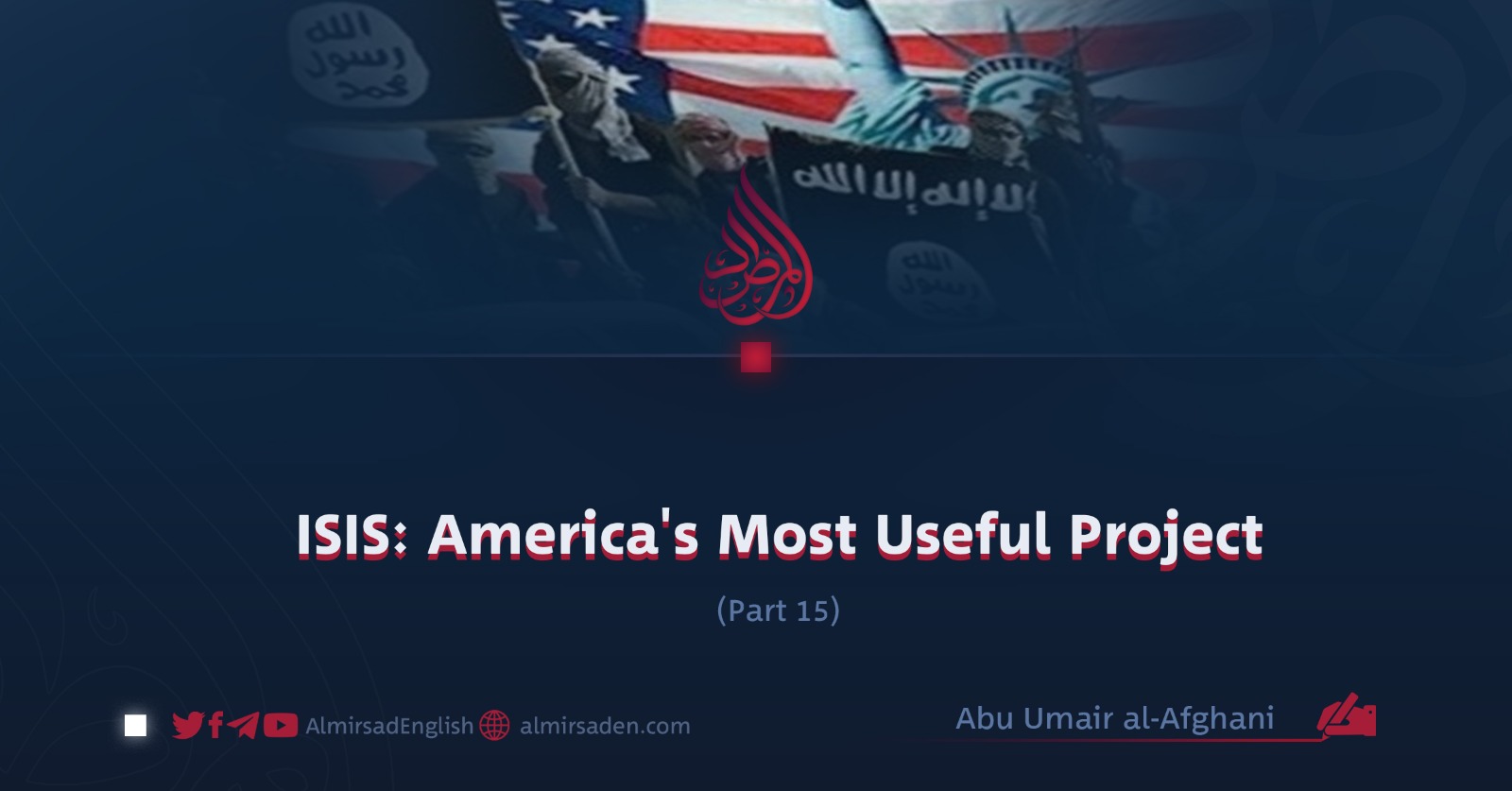
Another goal for the West was using ISIS to smear Islamic thought and make Muslims despise it. The Muslim youth were thoroughly exhausted by imperialism, democracy, and secularism. They had no desire left to live under the shadow of these Taghuti systems. In fact, a massive wave of Muslims had started embracing Islamic ideology again.
You can see a clear example in Egypt, where the al-Ikhwan al-Muslimun (Muslim Brotherhood) came to power through elections.
Even inside a secular country like Turkey, Islamic ideals were spreading fast among the youth. But the actions of ISIS dealt a heavy blow to this awakening. They weakened the cause of most Islamists, while handing secularists plenty of material to use against Islamic thought.
One of the worst fallouts of ISIS appearing in the Islamic world was how sacred Islamic concepts became tied to oppression, savagery, and extremism. ISIS repeatedly used words like Islam, jihad, qital, caliphate, and Sharia for their propaganda. Under those banners, they committed atrocities that blatantly violated the actual moral and Sharia principles of Islam.
The greatest victory for ISIS’s propaganda was how much doubt it planted regarding Islamic political and social governance. When a group parades itself as an “Islamic State,” shouting about “caliphate” and “jihad,” but spends its time butchering civilians, executing prisoners in the most gruesome ways, burning people alive, and leveling historical sites without an ounce of mercy, the uneducated and the unaware will fail to separate these crimes from actual Islamic teachings.
By slaughtering innocents under the guise of jihad and Islamic ideology, ISIS deliberately blurred the lines in the public’s mind. They took a concept that has its own conditions, limits, and moral boundaries in Islamic Sharia, and used their propaganda to fuse it with an image of absolute, unrestrained violence.
Watching the behavior of ISIS, a huge portion of the Muslim youth started believing this was what an Islamic system actually looked like: a regime offering nothing but murder, tyranny, and brutality. In all its years, ISIS never once demonstrated a single day of forgiveness or mercy. They never spoke of uplifting or developing the Muslim community. Everything they preached and practiced was rooted in cruelty and harshness.
Because of this, a massive segment of the Muslim youth turned their backs on Islamic thought. The actions of ISIS prepared Muslims mentally to believe that Islamists and Islamic thought were to blame in the eyes of the West, and that if Westerners suppressed Islamic thought and Islamists, they had every right to do so because this ideology was a danger to the whole world. And with that mental groundwork laid, the West was given a freer hand to continue its oppression against Islamists on a much wider scale.