













By Rafiq
The natural order of human life is that problems between people are resolved through goodwill. Pakistan’s situation is no different. It, too, requires goodwill. But in Pakistan, that goodwill has been sacrificed to the ambitions of a handful of blackmailing individuals pursuing hidden agendas and foreign schemes, along with those who hold power over them. As a result, insecurity is no longer confined to Pakistan itself. It is being pushed beyond its borders into the region. The networks operating there have different missions, and the clash between those missions has reached the point where the seeds they once planted have become a threat to them, and the harvest of their own policies has turned into a burden they can no longer ignore.
The foundations of Pakistan’s military regime lie in the Arbakai model.
During the Muslim uprising against British rule in India, when the movement had gained enough strength that much of the country seemed within its reach, the British colonial authorities organized an Arbakai-style force from different parts of what is now Pakistan. Within a year, that force committed such widespread killings and atrocities that history itself struggles to contain the full account. Drawing on what the British regarded as the success of that experiment, those Arbakis later became known as the army. Today, the same thinking on which it was built is once again being put into practice.
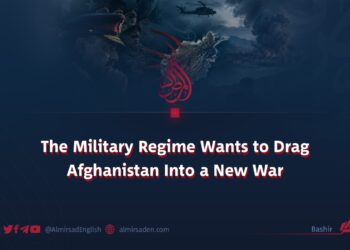
What is striking is that the regime is now using both the Arbakis and Daesh for objectives that ultimately inflict enormous damage not only on Pakistan itself but also on the countries of the region. The question is whether this military regime, shaped by that Arbakai legacy, has openly embarked on another confrontation with its neighbors, or whether it is pursuing even broader goals.
Armed resistance and conflict across three of Pakistan’s provinces have pushed the country toward a deep crisis. Yet instead of addressing the legitimate demands of those communities, the military regime and the circles around it continue searching for new ways to spread disorder and unrest. Public resentment and resistance against the regime have been growing for decades. In response, the military adopted methods that, within less than a decade, left communities fighting not only the regime but also one another. Groups backed by the military under labels such as peace committees and defenders of public rights have deepened divisions among the people of Pakistan.
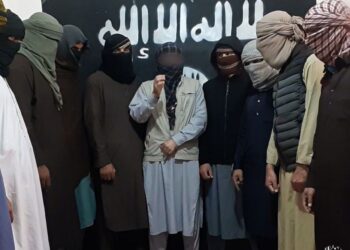
More recently, training Daesh fighters and organizing Arbakis and other groups of disorder and violence has become another tool of the military regime. It uses them to pressure local communities and neighboring countries alike.
The countries of the region have a shared responsibility to maintain peace and goodwill among themselves. Pakistan’s military regime has chosen the opposite course. As in the past, it continues to treat the spread of violence and instability as a means of preserving its power, authority, and influence.
The training of Daesh and, today, the support and use of Arbakis and other armed groups against the TTP, the Baloch, Afghanistan, and other countries in the region are clear examples of that approach.
The countries of the region should recognize today’s Arbakis and other violent groups as the next regional threat, just as Daesh became one. There was a time when many regional governments viewed Daesh as a problem affecting only Afghanistan and Pakistan. But the bloody attacks carried out or planned in Tajikistan, Russia, and Türkiye over the past two years showed that Daesh had become a regional threat.
The same is true today of the Arbakis and other groups of disorder and violence. They are not a danger confined to Afghanistan and Pakistan. The plans pursued by Pakistan’s regime, together with the foreign agents and networks operating within it, have never been confined to Afghanistan and Pakistan alone. They continue to challenge the wider region. That shared threat demands urgent attention. Regional countries should make clear to Pakistan’s military regime that the creation of such groups must stop before they emerge once again.
If the regime believes it can preserve its authority by sowing division and fueling conflict, it should keep those policies within its own borders. It must recognize and respect the rights of the other countries in the region.