

By Aziz
From an Islamic perspective, a legitimate political system rests upon three essential pillars: justice, consultation, and complete adherence to divine commandments. From the perspective of the people, a government earns legitimacy when it remains answerable to its citizens, serves their interests, and protects their rights with sincerity. Any authority that lacks these qualities, even if it clings to power through coercion or wealth, cannot truthfully be described as legitimate.
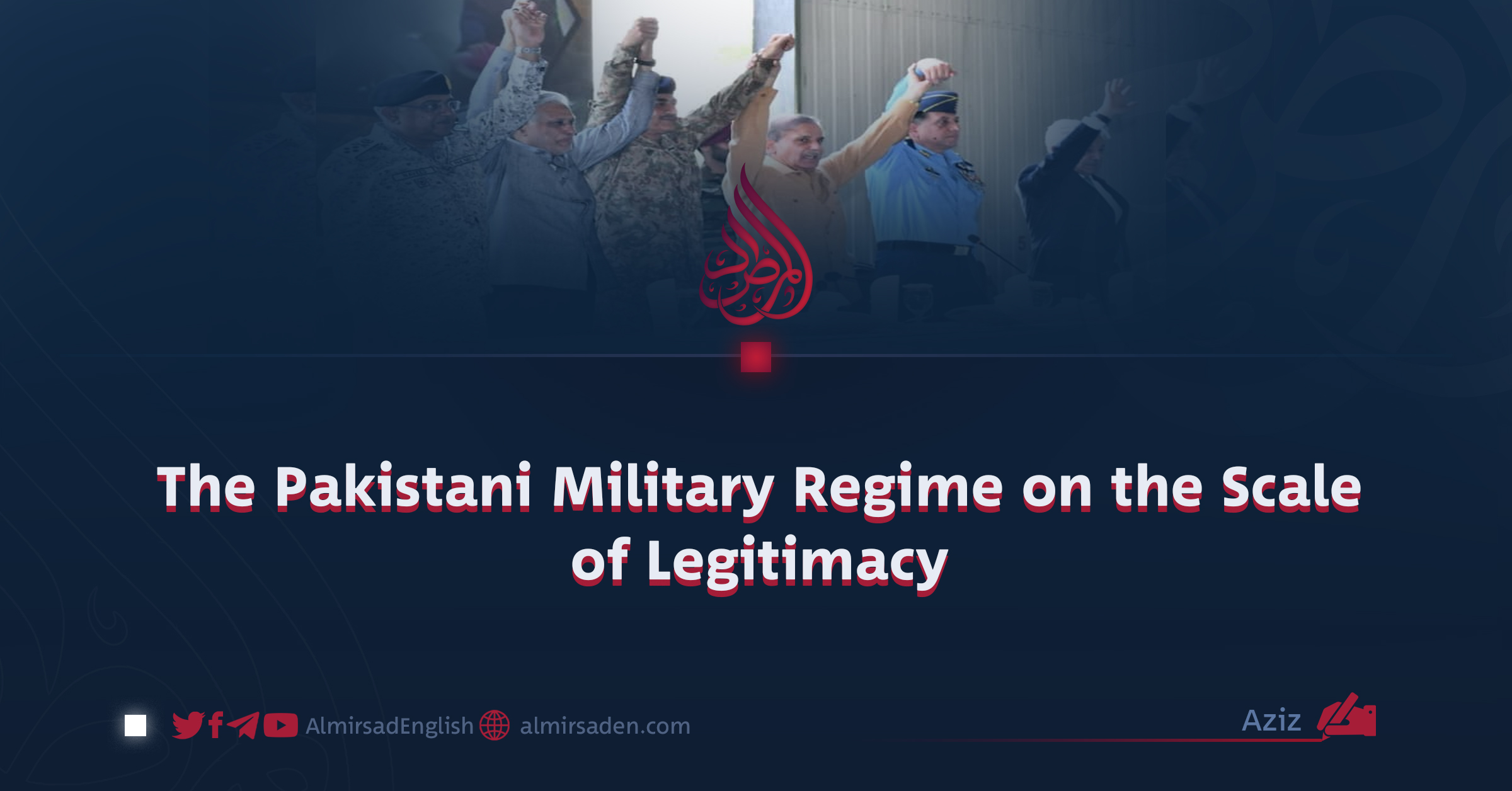
When these principles are taken as the measure, a critical question emerges: can Pakistan’s current regime be regarded as legitimate? The answer is an unequivocal no.
In practice, Pakistan’s ruling establishment has shown itself to be far removed from these foundational principles. Do the brutal incidents of Lal Masjid and Madrassa Hafsa, in which dozens of innocent students and civilians were martyred, conform in any way to the standards of Islamic justice? And can the tragic ordeal of Dr. Aafia Siddiqui, a renowned Muslim scholar who has been held under harsh conditions in American prisons for years, be regarded as an example of defending the rights of Muslims?
How can the violent suppression of movements such as Tehreek-e-Labbaik (TLP), whose members were targeted simply for defending Islamic sanctities, be justified through the principle of shura? Can widespread corruption, bribery, and the plundering of the Muslim public treasury ever be considered signs of justice, integrity, or trustworthiness?
On the international stage as well, Pakistan’s regime has adopted an openly hypocritical posture. Domestically, it drapes itself in the mantle of Islam in an attempt to secure domestic legitimacy. Yet abroad, it remains silent in the face of the massacre of oppressed Muslims in Gaza, while aligning its policies, in effect, with the objectives of the Zionist regime to appease foreign patrons. What connection does such behavior have with the responsibilities that an Islamic government owes to the Muslim Ummah?
Whenever a scholar describes such a regime as legitimate, it raises fundamental questions. Is religious legitimacy created through the approval of individuals, or through the true implementation of divine commands?
If a regime’s actions openly violate the principles of Islam, can the approval of scholars conceal its wrongdoing or grant it a legitimacy it has never earned?
How, then, can we regard as legitimate a regime that tramples upon the rights of the people, dishonors sacred values, collaborates with the enemies of Islam, and loots the wealth of the nation? Can there be any religious legitimacy without seeking the pleasure of Allah Almighty? And can such conduct ever gain His pleasure?
Is it not an undeniable truth that in an Islamic system, sovereignty belongs solely to Allah, and governance is a trust entrusted by Him? When those entrusted with that responsibility abandon public service in pursuit of wealth, influence, and personal dominance, can such a government still claim to be Islamic?
Every free and conscious individual must ask: is silence in the face of ongoing injustice, oppression, and corruption anything other than complicity with the oppressor? Has the moment not arrived for the honorable and conscientious people of Pakistan to confront these deviations and demand a system that is genuinely Islamic and truly rooted in the service of the people?
In reality, what distinction remains between a government that is openly secular and one that hides behind Islamic slogans while acting in opposition to Islam itself? Reason and sound judgment both affirm that the latter is far more dangerous, for it tarnishes the religion while deceiving the public.
Considering the criteria of legitimacy and the coercive, authoritarian, and oppressive actions of Pakistan’s ruling regime, it can be stated with full certainty that this government possesses neither religious legitimacy nor popular legitimacy. And it must never be forgotten that legitimacy does not arise from the approval of individuals, but from sincere and practical commitment to religious and human values. This truth is clear to every awakened and honest Muslim conscience.