






By Dr. Ajmal Kakar
On the night between June 9 and 10, 2026, when the frightening echoes of explosions suddenly shattered the calm of Khost, Kunar, and Paktika, this was not just another routine cross-border strike by the Pakistani military. It was a bloody and decisive moment that erased the already blurred line between truth and falsehood in the region, a line that for years had been covered by competing narratives.
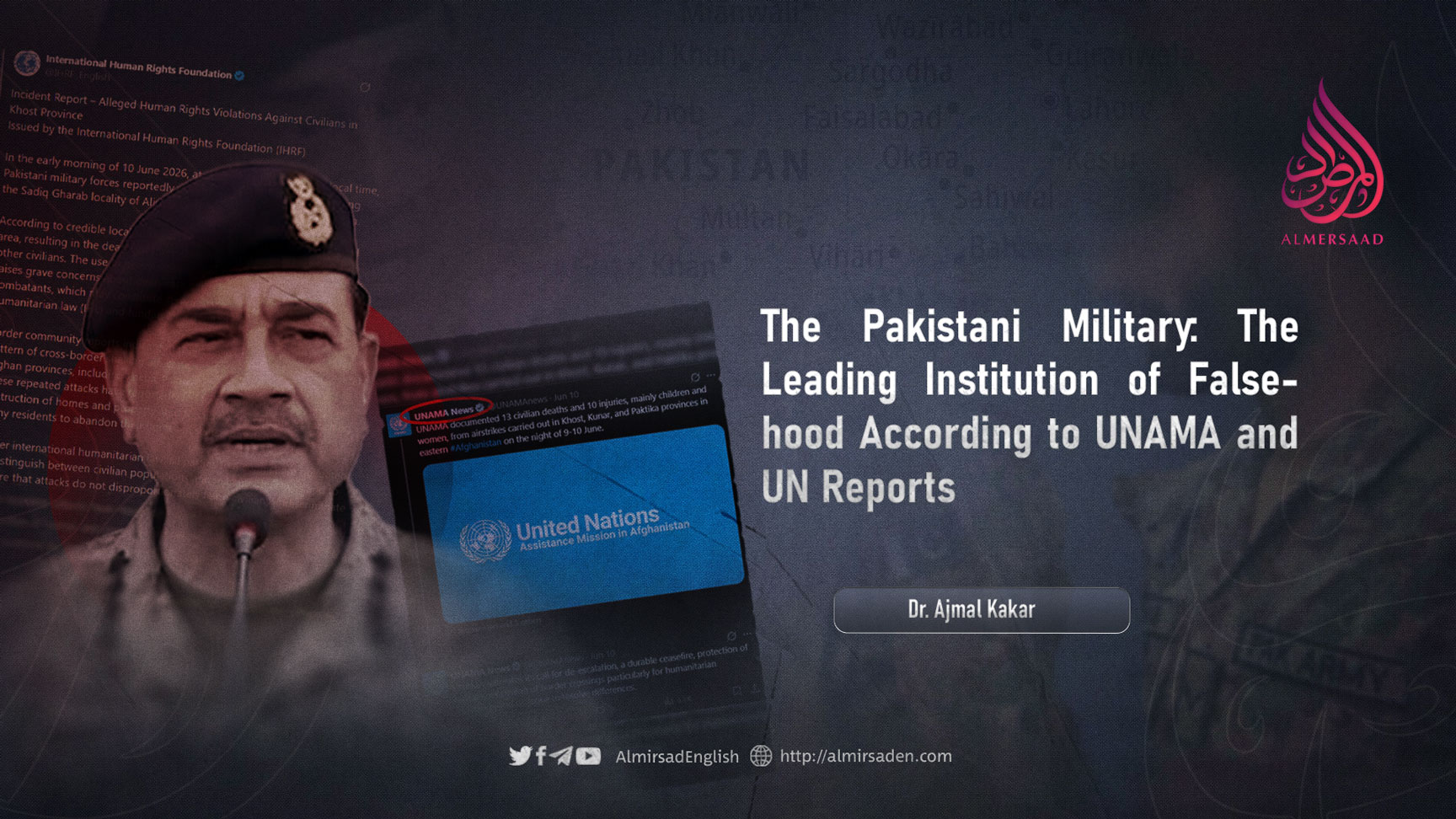
The smoke from the explosions had barely begun to clear when a press statement, prepared by the Pakistani military and handed to Federal Information Minister Attaullah Tarar, was released. The statement claimed that the strike had been carried out on the basis of precise, reliable, and credible intelligence, that it had been carefully planned, and that its purpose was to target militant hideouts across the Durand Line.
The official narrative promoted by the military headquarters (GHQ) in Rawalpindi, further claimed that 26 militants had been killed in the strike and that concerns raised by the Afghan government regarding civilian casualties were merely part of an organized propaganda campaign against Pakistan.
History, however, has always shown that propaganda and fabricated narratives rarely survive for long. This time too, the effort to conceal the truth did not last long, and the official story quickly fell apart.
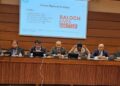
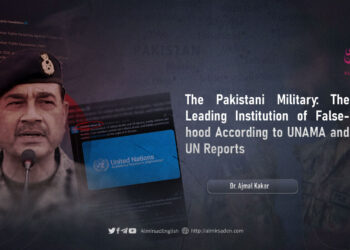
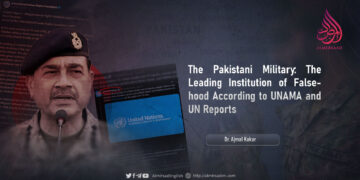
The inflated picture painted by the state narrative collapsed entirely when the spokesperson for the United Nations Secretary-General, Farhan Haq, publicly rejected the military’s claims and presented the actual picture of the incident to the international community. Soon afterward, UNAMA, the United Nations Assistance Mission in Afghanistan, released its detailed fact-finding report, which fully supported the Afghan government’s position.
According to the findings of these international institutions, a thorough assessment of the targeted areas showed that the so-called “defensive operation” had not struck militant centers at all. Instead, it had hit simple mud-built homes where innocent families were asleep. As a result of this bloody and inhumane attack, 13 civilians, including women and children, were martyred and another 14 were seriously wounded.
With the United Nations and UNAMA supporting the Afghan position, the falsehoods hidden behind the Pakistani military’s artillery and the press statements produced by GHQ crumbled like a wall of sand. And from here a deep and troubling question arises: why would an army that considers itself at the peak of professional capability carry out such a dangerous cross-border strike? And more importantly, what hidden factors and motives drive this so-called professional military to spill the blood of its Muslim neighbors?
To untangle this complicated puzzle, we cannot look only at the mountains along the Durand Line. We have to look at the full geopolitical chessboard spread across the region. Experts in international affairs and seasoned analysts view the situation from a much deeper strategic perspective. If you study the major events of recent regional history, a curious and recurring pattern emerges: whenever political or military tensions between the United States and Iran have reached their peak in the Middle East, the smell of gunpowder has suddenly appeared along the Durand Line as well.
Many analysts do not see this as mere coincidence. They view it as part of a deliberate strategy of manufactured crises. Pakistan today faces severe economic and political difficulties, and its struggling economy depends heavily on financial assistance from Gulf countries, particularly Saudi Arabia, as well as loans from the International Monetary Fund (IMF). Whenever tensions rise in the Middle East and the possibility increases that Iranian actions could threaten American or Saudi interests, pressure also grows on Islamabad and Rawalpindi to take their defense commitments and regional alliances into account.
Yet Pakistan faces a serious strategic dilemma. It cannot afford direct military confrontation with a powerful, geographically significant, and politically sensitive neighbor like Iran. Any direct conflict with Iran could create serious security and political consequences inside Pakistan itself.
For this reason, the military looks for a “diversionary theater,” a stage on which attention can be shifted away from the main crises and pressures. From this perspective, Afghanistan, which has had limited air defense capabilities since 1979, has consistently been viewed as the most suitable target.
Through such attacks along the Durand Line, the Pakistani military wants to send a message to its Gulf and Western backers that it is supposedly engaged in a large-scale and bloody war against armed groups along its western frontier. Therefore a significant portion of its forces is tied up there and cannot take direct military part in other conflicts in the Middle East. This is an argument that finds ready listeners in international political and diplomatic circles and has acquired the value of an effective political card for Pakistan.
At the same time, the “counter-terrorism” narrative has for years remained an acceptable framework for Washington and some of its Asian allies, because they see Afghanistan’s current government as a security threat. By maintaining this atmosphere, Pakistan can justify its strategic constraints, keep itself at arm’s length from the direct consequences of regional conflicts, and at the same time secure the continuation of financial, military, and political support.
But the most painful, disturbing, and profound aspect of this entire geopolitical game is the moral and intellectual bankruptcy hidden behind the Pakistani military’s gamble. Pakistan is a country that has always claimed it was created in the name of Islam. Its military, in order to compensate for its declining popularity at home, presents itself as the fortress of Islam, the protector of the Muslim Ummah, wrapping itself in the banner of great Islamic struggles.
People in Pakistan’s streets and cities are told that the military is not just the guardian of the country’s borders but also carries the responsibility of defending the entire Islamic Ummah and the two holy mosques. But when the balance of strategic interests and international politics shifts, all those ideological and religious claims are thrown out the window.
And here an important question comes to mind: if the only goal is to provide excuses and justifications to the United States, Saudi Arabia, or other international partners, then why is spilling the blood of innocent Muslims chosen as the preferred tool instead of economic arguments, internal political instability, or other diplomatic reasons?
The answer to this question lies buried in a mindset that has cast its shadow over the region for a long time. Because acknowledging economic weakness or political crisis presents Pakistan to the world as a failing state. But the claim of “counter-terrorism operations” presents it as an active and important security partner.
Beyond that, media outlets and official narratives linked to the Pakistani establishment have over the past twenty years consistently spread the notion that every development coming from Afghanistan is a threat to Pakistan’s security. Because of this propaganda, Afghan Muslims have been largely portrayed in the Pakistani public mind as suspects and people associated with sources of insecurity.
In military literature this condition is called “dehumanization,” the process by which targeted human beings are no longer seen as people, but merely as “collateral damage” in military calculations.
The bodies of children pulled from the rubble of collapsed homes in Khost, Kunar, and Paktika, and the cries of wounded mothers, are now the most painful reminder of this event, a reminder that looms larger than any official statement or press release. This episode teaches the world that when states use religion, belief, and values not to reform and guide human beings but purely as tools for political power and survival, their moral foundations weaken and human values come under question.
Now that UNAMA’s fact-finding report has placed the claims of the Pakistani military and Attaullah Tarar under serious scrutiny, time will tell whether Pakistan’s Muslim population and those who feel the pain of others will stay silent in the face of this serious war crime by their so-called army, or whether they will raise their voices.
When an ordinary Muslim thinks about all of this, he reaches the conclusion that the bombs being dropped by the Pakistani military on Muslims inside and outside the country are not really meant to eliminate any enemy. Their purpose is to send a message to global powers, lenders, and debt-forgivers: “O rulers of the world, we, like our forefathers who were groomed in the era of the East India Company, remain your loyal and obedient servants to this day, and to your generations to come.”