













Ayub Khalil
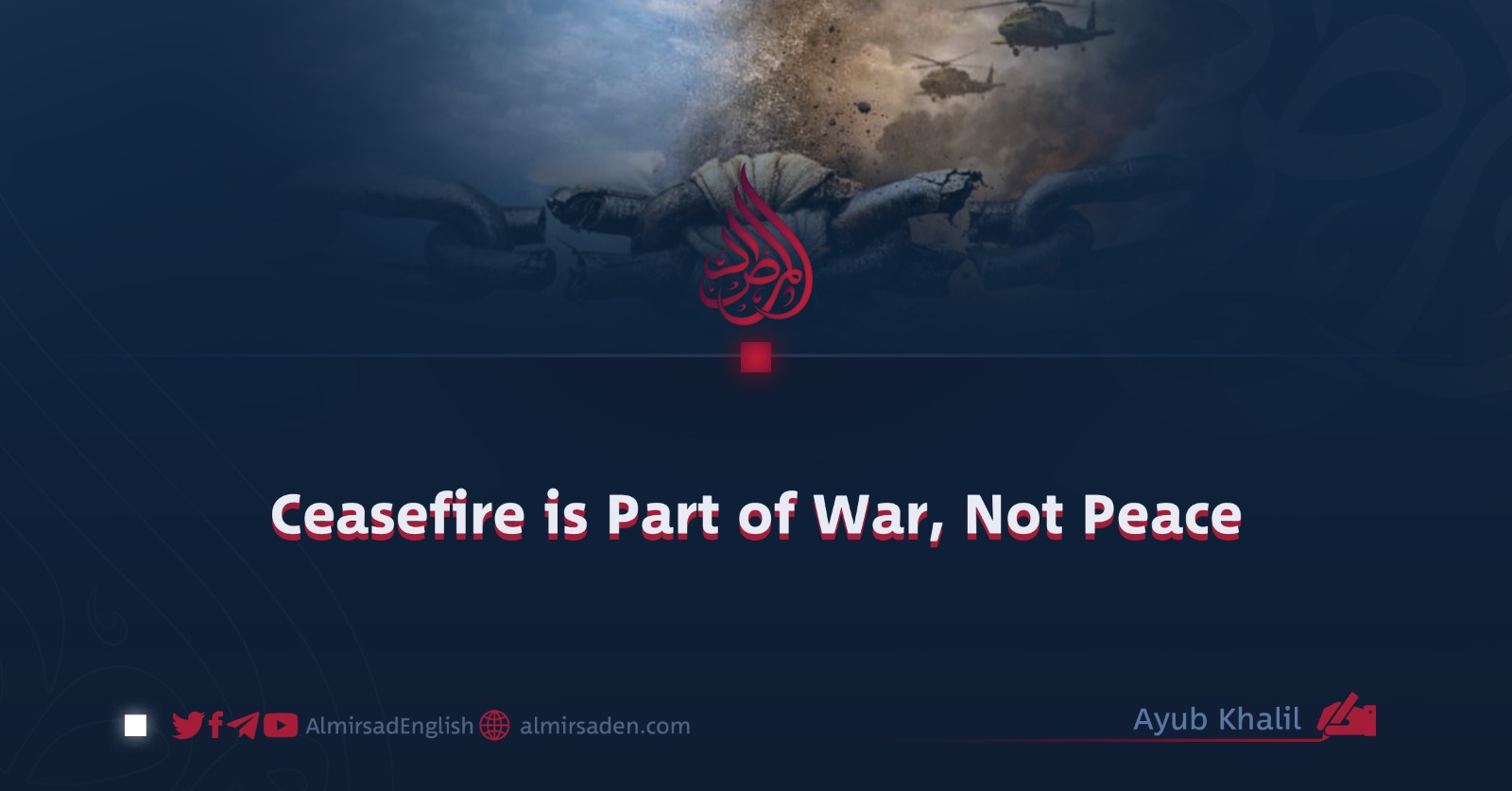
The conditions on the ground remain uncertain and ambiguous. The global balance is shifting, and the era of Western dominance to be coming to an end. This conflict represents a complex and unfolding scenario of major developments. In 2026, the Middle East stands amid multiple major crises, wars, and political transformations, including the direct confrontation between Iran, the United States, and Israel, the war in Gaza, instability in Lebanon and Syria, concerns among Gulf countries, and the role of the United States and Western states, all of which are shaping the region’s future.
Based on current developments, the Middle East to be moving toward one of three possible paths: limited wars, a broader regional war, or a forced political settlement driven by mounting pressures.
For several years, the competition between Iran, the United States, and Israel was largely limited to proxy wars (proxy wars refer to conflicts in which smaller actors appear to be fighting, while major powers operate behind the scenes). However, this competition has now shifted toward more direct military confrontation. Iran seeks to maintain its regional influence in Iraq, Syria, Lebanon, and Yemen, while the United States and Israel are attempting to limit Iran’s military, political, and social capabilities.
Due to the recent attacks and mutual threats between Iran, the United States, and Israel, that neither side wants to start a full-scale war. However, both sides feel compelled to demonstrate their strength. For this reason, the coming months may take the shape of a controlled conflict, meaning that attacks will continue, but each side will try to prevent the situation from escalating into a full explosion.
However, this may prove unsustainable, and beyond this point, the battlefield is to become even more heated.
The Middle East and surrounding regions appear to be moving toward major political and security transformations. Some analyses suggest that internal instability in the Middle East may be seen as a sign of changes in the structure of the global order. These developments may indicate that the era of unipolar dominance is coming to an end and that the world may be entering the early stages of a bipolar system or a new emerging international order.
Israel’s position that negotiations are merely empty promises, along with possible U.S. military preparedness, raises serious concerns about the future of the Middle East. While this scenario of both conflict and negotiation remains a possibility, its consequences would be extremely heavy and damaging for all sides, especially for the Gulf countries.
There are views that such scenarios could lead to political instability and even the collapse of governments. In this context, the risk of weakened state structures, internal conflicts, and the possible fall of certain regimes is also increasing.
As regional and global factors continue to evolve in the same direction, there is a growing possibility of new waves of political change, conflict, and instability in the region, potentially leading to the collapse of some states.
This is because, in Islamic narrations, it is mentioned that in the end times wars, the great powers of the world, including Muslims and the Romans (Western powers, Crusaders), will gather peacefully in the region of Syria, and they will confront Islam, while Muslims will unite in defense of truth. Today, we see that the world’s major powers are gathering on the land of Syria. These forces include the armies of Russia, Turkey, Iran, NATO, Pakistan, and Gulf countries. Their presence is officially presented under the slogans of maintaining global peace or rebuilding Gaza, but according to deeper analysis, the real aim is to intensify the battlefield and weaken Muslims.
The position of international forces shows that behind their presence there is an apparent reflection of strategic objectives. The slogans of peace and reconstruction are only for appearance, while in practice efforts are made to continue the war and destabilize the region. At present, the region of Syria has become a major arena of influence and competition for global powers; however, these ambitions will ultimately be buried in this region and land forever.
Current conditions appear to be moving in favor of the Muslim community, as Muslim forces are now engaged in forming a united front. Efforts toward the unity of the Muslim Ummah aim to prevent the shared ambitions of global powers. The unity of Muslims will change the outcome of the conflict and will bring the ambitions of global powers to nothing.
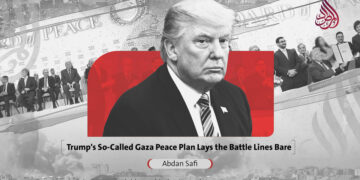
Gaza: The Wound That Has Not Yet Healed
The war in Gaza remains one of the most important issues in the Middle East. Although some ceasefires have taken place, the issue of Palestine has still not been resolved. Unless a clear political solution is presented for the Palestinian people, including an independent state and the resolution of the occupation issue, the region will not become stable.
Gaza is no longer only a Palestinian issue; it has become the center of emotions and politics of the entire region. In Arab countries, the general public expresses sympathy for Palestine, but many governments maintain a cautious position due to their economic and security relations. This contradiction has led the situation toward the possibility of a broader regional conflict, and the fire of this war may reach every home in the world, as the flames of this fire are part of the fire of Gaza.