









By Akbar Jamal
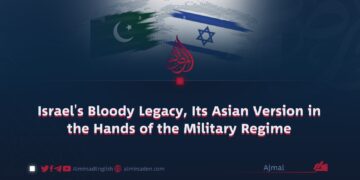
One of the bitter truths of political history is that inside the halls of power, moral crimes are often turned into strategic achievements. Acts that, under the law, should bring the harshest punishment instead become stepping stones to higher rank on the military establishment’s chessboard. When we look back at the bloody civil war that unfolded in Jordan in September 1970, known as Black September, and compare it with Pakistan’s strategic conduct today, we find an unwritten principle that has survived the decades. Under the banners of “state authority” and “protecting the system,” the decisions of certain individuals are treated as being above the law.
This is not merely the story of an event that happened more than fifty years ago. It is the story of a particular military culture, one that continues along the same path to this day.
The story begins with the 1967 Arab-Israeli War, when the armies of Egypt, Syria, and Jordan suffered a crushing defeat at the hands of Israel. That defeat did not happen by accident. It was the natural result of strategic failure among Arab rulers, intelligence shortcomings, mutual distrust, and poor military preparation.
The consequences were enormous. Jerusalem and the West Bank slipped from Muslim control, while millions of Palestinians were displaced and forced into refugee camps. That historic failure convinced many Palestinians that if they did not take up arms themselves, they might lose both their homeland and their identity forever. Out of that despair emerged the Palestine Liberation Organization (PLO) under the leadership of Yasser Arafat, which used Jordan as its last frontline against Israel.
As time passed, the growing presence of Palestinian armed groups inside Jordan created the impression that a state was emerging alongside the Jordanian state. They were widely accused of paying little regard to Jordanian law, and their activities came to be seen as a threat to the country’s sovereignty. In early September 1970, after members of the Popular Front for the Liberation of Palestine (PFLP) hijacked several international passenger aircraft, landed them in the Jordanian desert, and later destroyed them, King Hussein’s patience came to an end.
He regarded the incident as a direct challenge to his throne and his authority and ordered large-scale military operations against the Palestinians. Those operations later became known as Black September.
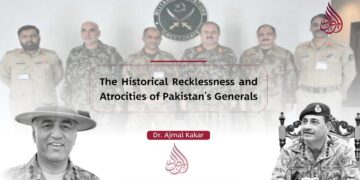
It was during this bloody chapter that Brigadier Muhammad Zia-ul-Haq, who would later become Pakistan’s president, emerged at the center of events.
Since 1967, Zia had been serving in Jordan as part of Pakistan’s official military mission to train the Jordanian army. The purpose of that mission was to reorganize Jordan’s armed forces after their defeat in the 1967 war and provide counterinsurgency training. But when fighting broke out between the Jordanian army and Palestinian refugees, it is widely reported that Zia went well beyond the limits of his official assignment and took a direct role in planning and directing Jordanian military operations.
Under his supervision, heavy bombardments and military assaults were carried out against Palestinian refugee camps. According to Yasser Arafat, between ten thousand and twenty-five thousand Palestinians were killed during those operations.
When Zia returned to Pakistan after the fighting ended, the Chief of Army Staff at the time, General Gul Hassan, recommended that he be court-martialed for participating in another country’s internal conflict without the approval of the Pakistani government.
But at that moment, history took a different turn.
The man who, under the law, should have faced punishment instead became a valuable strategic asset because of King Hussein’s personal recommendation and the strategic interests of Pakistan’s military establishment. The court-martial case was quietly closed, and what could have been treated as a military crime instead became the foundation of Zia’s rapid rise. In 1976, Prime Minister Zulfikar Ali Bhutto bypassed seven senior generals and appointed Zia-ul-Haq as Chief of Army Staff, a decision that would later be remembered as the greatest political mistake of Bhutto’s career.
The cancellation of Zia’s court-martial laid the first stone of an unwritten rule inside Pakistan’s military, a rule that later developed into an enduring institutional culture.
According to that culture, as long as a senior officer remains within the military chain of command, his strategic failures, policy contradictions, and major mistakes are rarely examined in public. Instead, they are buried under what is described as “the need of the hour.”
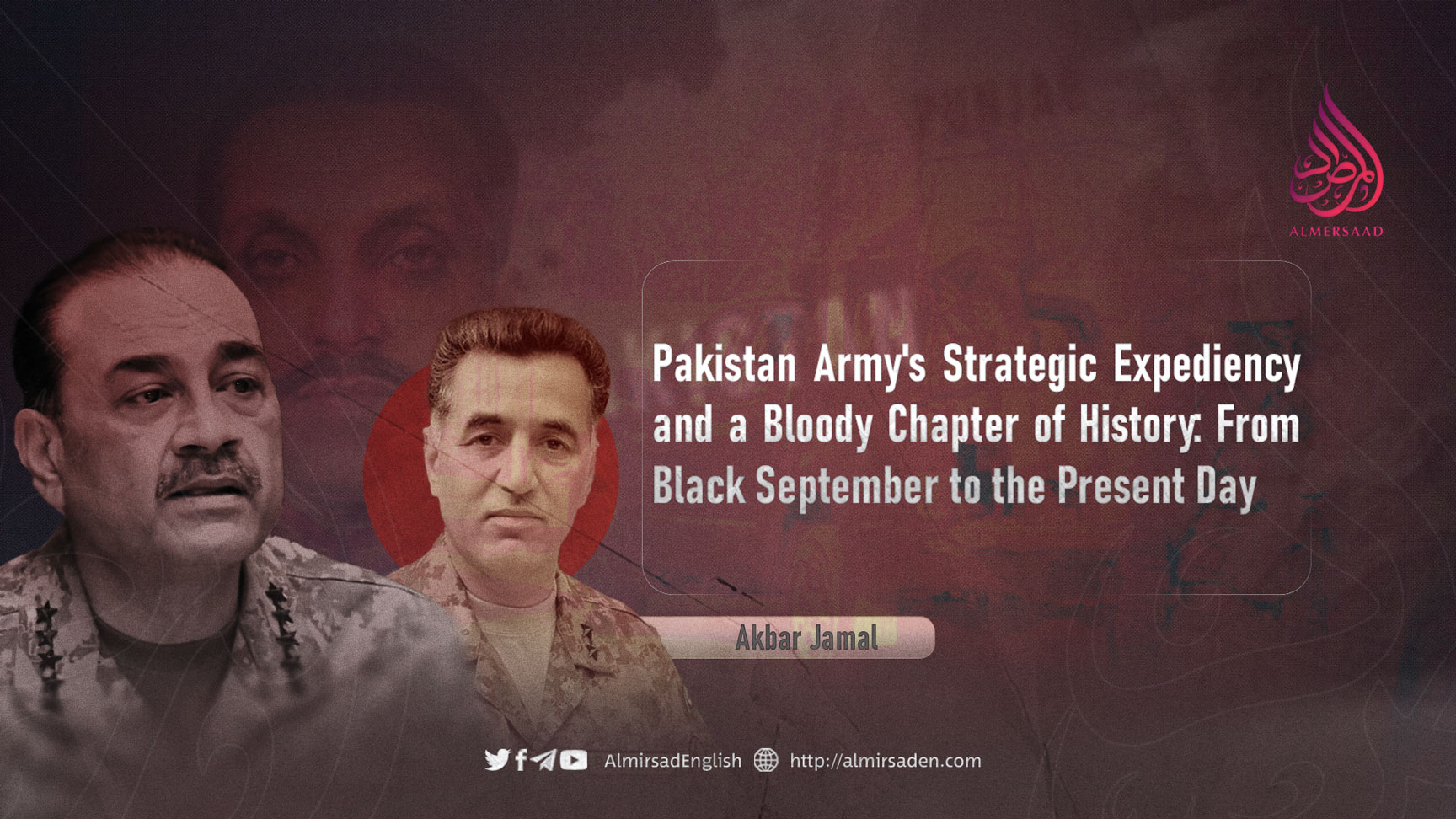
A modern example of this institutional contradiction can be seen in the different security policies pursued by retired Lieutenant General Faiz Hameed and the current Army Chief, General Asim Munir.
While serving as Director General of the ISI and later as commander of the Peshawar Corps, Faiz Hameed supported negotiations and reconciliation with the TTP in cooperation with the government in Kabul. Prisoners were released, and some militants were allowed to return to their previous areas.
After the change in military leadership, however, the same policy was presented under General Asim Munir as one of the reasons behind Pakistan’s worsening security situation and the rise in militant violence.
Some analysts argue that Asim Munir’s preference for military confrontation over negotiations is closely tied to preserving the army’s traditional war economy. In their view, the continuation of the approach associated with Faiz Hameed and Imran Khan could have weakened that structure.
According to this analysis, the military establishment abandoned negotiations and embraced a policy of zero tolerance and military force. Yet despite these major strategic reversals and contradictions, the military leadership has never considered itself accountable before the public.
When disciplinary proceedings were eventually initiated against Faiz Hameed, they were not because of his negotiations with the TTP. Instead, the charges centered on abuse of authority in connection with the Top City housing project and his alleged involvement in political activities after retirement.
This contradiction reveals how accountability functions inside Pakistan’s military. It begins only when an officer crosses the institution’s internal lines, threatens its core interests, or challenges the direction set by its leadership.
As long as an officer remains within the broader framework of the army’s political influence, its war economy, its dominance over parliament, and its strategic interests, even his most serious mistakes are often shielded by considerations of expediency. In some cases, such actions effectively receive legal or practical immunity.
From the events of Black September in 1970 to Pakistan’s strategic decisions today, history teaches the same lesson. When states and powerful institutions replace public accountability and transparency with institutional immunity, the line between right and wrong gradually begins to disappear.
What an ordinary citizen or a Palestinian refugee sees as a struggle for survival, dignity, and basic rights is redefined in the establishment’s official narrative as “rebellion against the state” or “internal fitna” and is crushed through force.
When necessary, court-aligned religious scholars can also be brought forward to provide religious justification, issuing fatwas that label opponents as Khawarij. Perhaps that particular idea had not yet occurred to Zia-ul-Haq. Otherwise, the Palestinians might not only have been declared rebels against the Jordanian state but also branded as Khawarij.
This politics of power may protect governments and institutions for a time. But one question always remains before the court of history:
How long will so-called strategic victories continue to be purchased with the blood, displacement, and suffering of ordinary people?