














By Farid
The Durand Line, at the crossroads of South and Central Asia, is no longer simply a place for routine border clashes or diplomatic protests. It has entered a new phase of technological and strategic competition, one that has overturned many of the assumptions that shaped the past several years.
For a long time, the IEA maintained a defensive posture. Faced with repeated military incursions by the Pakistani army that increasingly resembled the methods of the Israeli occupation forces, it relied on patience, restraint, and composure. Now, however, it has adopted a military and intelligence strategy that is no longer based on waiting for threats from across the Durand Line. Instead, it is aimed at identifying and destroying the sources of those threats before they reach Afghanistan.
This is not simply another military response. It marks the emergence of a new security approach from Kabul. In the past, when violations of the Durand Line, border incidents, or airspace breaches occurred, Kabul’s response was generally limited to diplomatic protests or measured reciprocal actions.
The developments at the end of June 2026, however, have shown that the IEA’s policy has changed in a meaningful way. The focus is no longer on waiting and watching. It is now on pre-emptive defense. Kabul’s message is that future actions will not be taken merely to avenge an attack or as part of the usual cycle of retaliation. Any element that threatens Afghanistan’s security and independence, whether military pressure, armed networks, or any other security threat, will face direct action before it can do harm.
For that reason, what is unfolding on both sides of the Durand Line can no longer be seen as a simple border dispute. It has become a complex contest of intelligence capabilities, technology, and strategic planning that could have a lasting impact on the region’s political and security future. Kabul is now demonstrating in practice that it possesses both the ability and the determination to eliminate threats in their safe havens across the Durand Line before they reach Afghanistan’s doorstep.
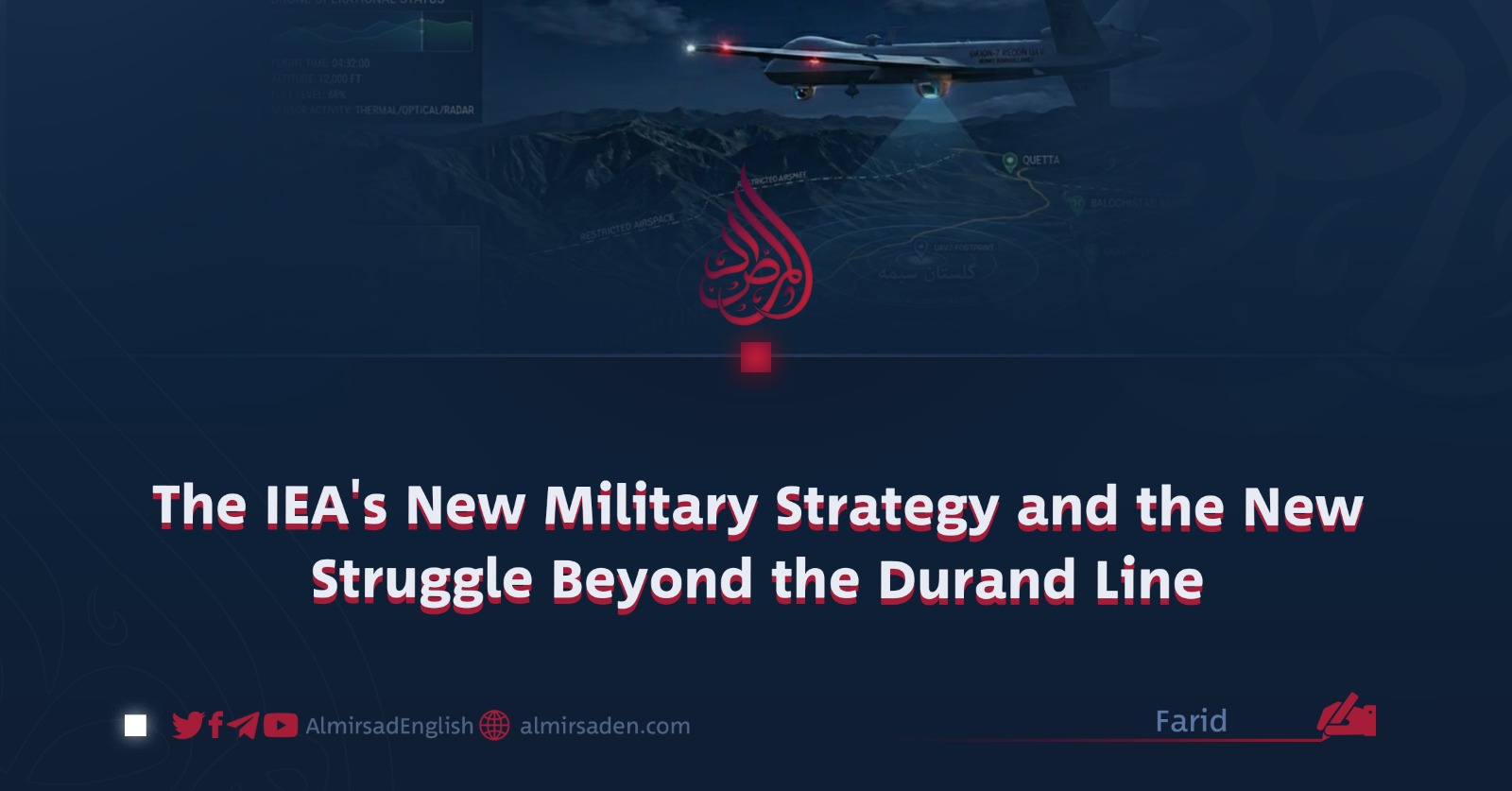
The most striking aspect of this new military approach is the IEA’s progress in air and intelligence capabilities, something that has surprised many military and security observers. The targeting of high-value Daesh targets deep inside areas stretching from Chagai and Qila Abdullah in remote parts of Balochistan to Orakzai and other tribal districts stands as an important example of the IEA’s new way of warfare.
Even more notable is that these operations were carried out despite Pakistan’s advanced radar systems, air defense network, and extensive electronic surveillance. The effective use of inexpensive modified drones and other modern equipment once again highlights the growing importance of technology in asymmetric warfare.
This suggests that the IEA has successfully integrated relatively inexpensive but accurate technology with ground intelligence networks in a way that allows it to pursue its security objectives effectively. These developments have raised new questions and challenges for the region’s political and security landscape. Every side is trying to present its own position as the convincing one and to explain events in a way that serves its own interests.
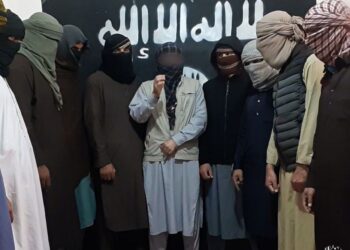
When intelligence agencies and media outlets publish photographs and videos from different operations, they become part of the information war, a war in which competing narratives are almost as important as military operations themselves. For that reason, the situation along the Durand Line is no longer just a traditional cold rivalry between two neighboring countries. It has become a complicated arena where intelligence services, media campaigns, drone technology, and strategic calculations all intersect, with the potential to shape the region’s security, economy, and future political balance. In the end, the future of the region will largely depend on whether the parties choose continued confrontation, proxy competition, and security pressure, or whether they can build political understanding, mutual respect, and regional cooperation.
The IEA sees itself in a position where it can draw the attention of the international community, particularly the countries of North, Central, and South Asia, to the role it can play in maintaining regional peace and stability. It is therefore becoming increasingly clear that Pakistan’s corruption-ridden military, which has long taken pride in its alliance with the United States, can no longer be allowed to undermine regional peace and disrupt trade across the region.
For that reason, the situation on both sides of the Durand Line should no longer be viewed as an ordinary cold rivalry between neighboring states. It marks the beginning of a new, long-term military phase through which the IEA intends to secure Afghanistan’s national security. Under this approach, the safe havens of Pakistan’s corruption-ridden military and its proxy groups, including Daesh, are being targeted, places where, for years, plots and plans were prepared against the IEA.