






By Saifuddin
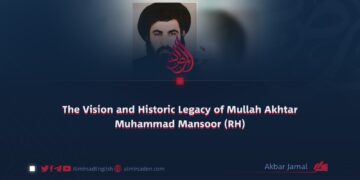
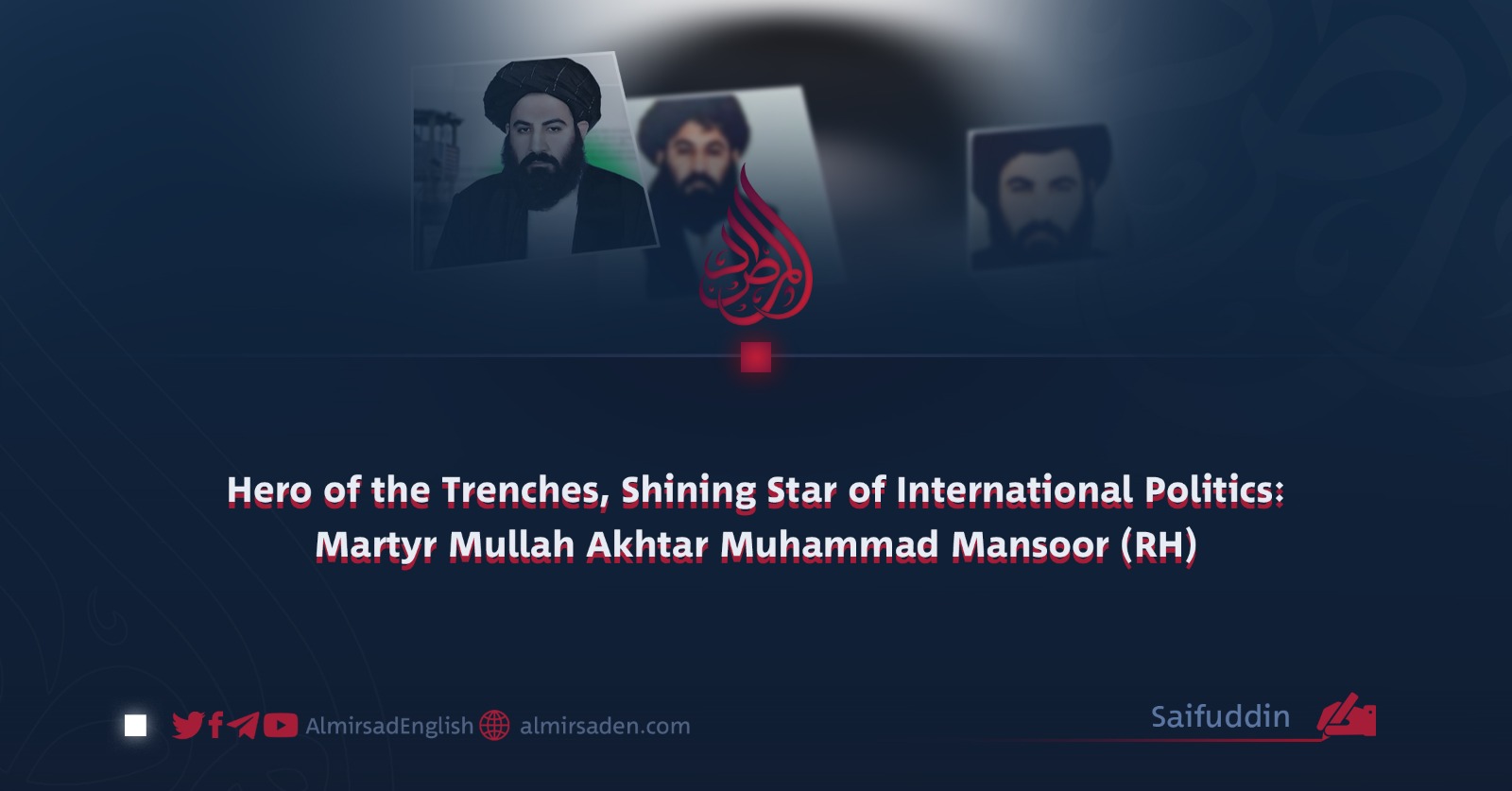
Few figures in Afghanistan’s modern history have combined, in a single lifetime, the qualities of a brilliant political strategist and a man of genuine humility, piety, and sincerity. Mullah Akhtar Muhammad Mansoor (RH), the second leader of the Islamic Emirate of Afghanistan (IEA), was one of those rare exceptions. His leadership stands as a unique and unprecedented chapter in the history of the IEA.
When the weight of leadership was placed on his shoulders, the IEA was facing some of the most complex, sensitive, and dangerous political and military crises in its existence. But through his measured statecraft and his deep, genuine humility before his people and mujahideen, he steered the ship to shore. A bitter reality of history is that most leaders issue orders from afar, but Martyr Mansoor Sahib’s distinction was that, despite his heavy political responsibility, he could not detach himself from the front lines of the war.
Several companions from Mansoor Sahib’s era and eyewitnesses to the events say: At that time, when the battles in Helmand, Kunduz, and other provinces had reached their most critical stages, Mansoor Sahib himself would travel to the front lines of the war in order to raise the morale of the Mujahideen and manage the battlefield from up close.
This was not performance. He sat in the dusty trenches alongside ordinary mujahideen, listened to their problems, and in the most difficult conditions, disrupted the enemy’s largest plans before they could unfold. The first fall of Kunduz and the sweeping advances in Helmand were the direct result of that hands-on, present leadership.
His era was a storm of internal and external conspiracies. He faced three challenges, any one of which could have shattered the IEA entirely.
The first was concealing the news of Amir al-Mu’minin Mullah Muhammad Omar’s martyrdom. This was his highest act of political wisdom. On the advice of senior leadership, keeping that news contained until the ranks of the mujahideen were stable and consolidated saved the IEA from a potentially fatal fragmentation.
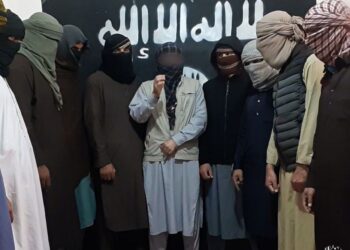
The second was neutralizing the ISIS fitna. At that same critical moment, the group calling itself ISIS was attempting to sink roots into Afghanistan and ignite an internal war among the mujahideen. Martyr Mansoor Sahib moved against it with decisiveness, military sharpness, and speed, cutting the threat off before it could take hold and protecting the ranks of the sincere mujahideen from a dangerous split.
The third was building the IEA’s political identity on the world stage. He activated the Doha office and established balanced relationships with neighboring and regional countries, pulling the IEA out of political isolation and giving it a presence and legitimacy that the outside world could no longer ignore.
For a man who commanded thousands of armed fighters, arrogance would have been easy, perhaps even natural. But Mansoor Sahib was a portrait of humility that astonished those who saw it. He was so careful with the public treasury that he asked for no personal privileges. In gatherings and meetings, he sat in a way that left newcomers unable to identify him as the leader of the entire movement.
When mujahideen would express concern for his safety, he would smile and say: “My life is worth nothing compared to the Islamic system and the unity of the mujahideen.”
It was that sincerity and that piety that made the mujahideen love him beyond measure.
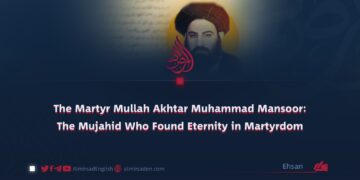
Mullah Akhtar Muhammad Mansoor (RH) was martyred in an American drone strike while returning from an important political journey. He gave his life, but he left the IEA a united, cohesive, and disciplined force, a force that became the very foundation of the country’s complete liberation and victory.
His leadership proved one enduring truth: a real leader is not the one who governs in calm times. He is the one who finds the path to salvation for his people in the middle of the storm.