


By Saif Umar
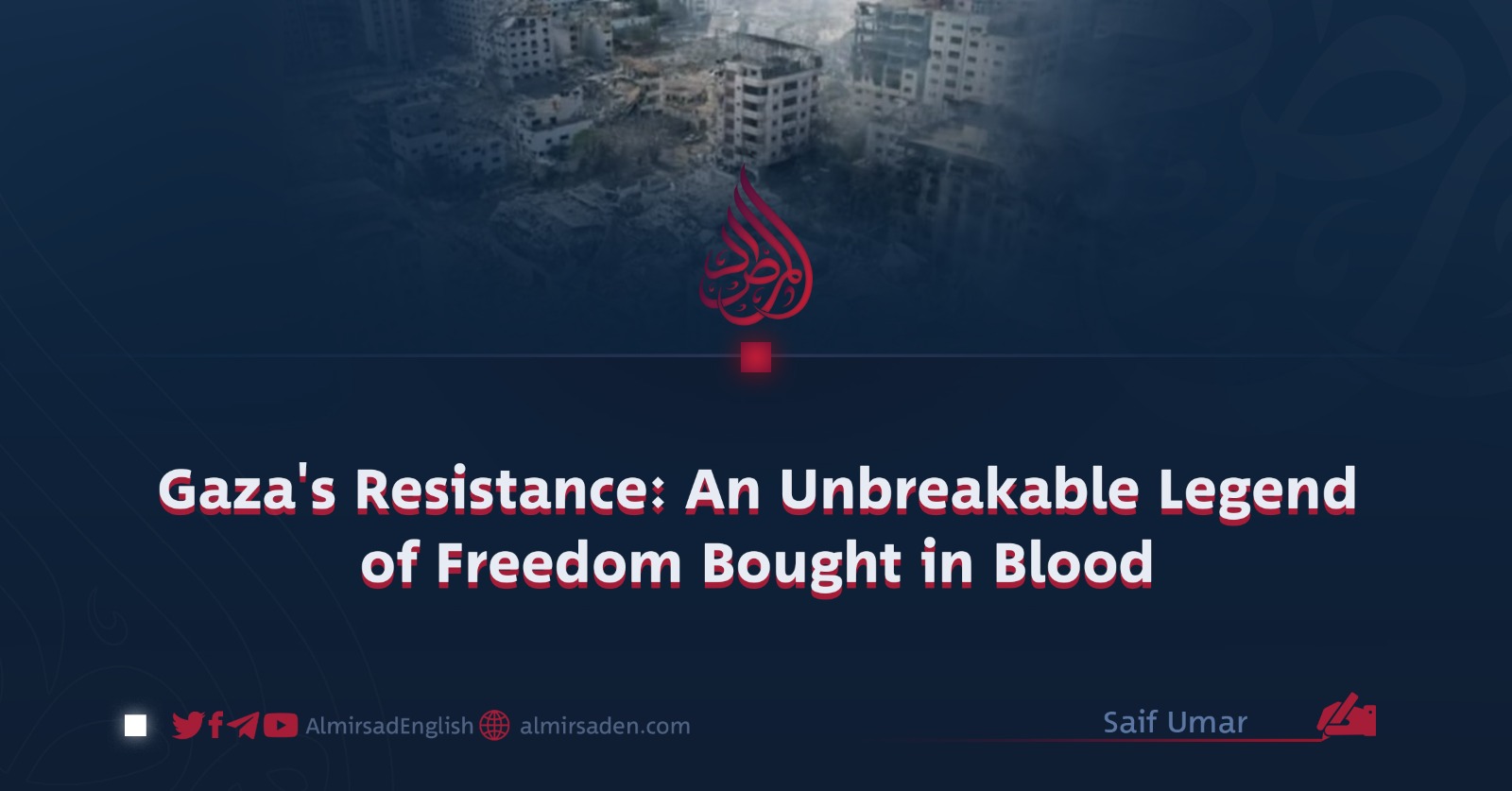
Israeli occupation forces’ latest strikes on Gaza and the killing of innocent people represent a catastrophe of the deepest kind. But history has its own stubborn logic: oppression always ends, and systems built on injustice never last. The martyrdom of a leading Hamas leader and jihadist commander, Izz al-Din al-Haddad (RH), is a mark of the enemy’s treachery. It is also, paradoxically, a source of renewed resolve in the ranks of the resistance.
Islamic history has proven this pattern again and again. When commanders and leaders fall, the lines of jihad do not weaken. Every drop of blood breathes new spirit into the Mujahideen. For those who walk the path of resistance, the martyrdom of their leaders does not break them. It awakens the people, deepens the hunger for freedom in the younger generation, and turns the will of the nation into something harder than steel in the face of military pressure and oppression.
The Islamic movement of Hamas, as the central force in the Palestinian liberation struggle, has managed to seriously obstruct the advance of Israel’s modern military machine in Gaza, despite limited resources and an almost incomprehensible imbalance of power.
Not long ago, the Israeli regime repeatedly declared that Hamas was on the verge of defeat, on the edge of collapse. The mujahideen answered with sacrifice and endurance, proving what the regime refused to believe: conviction and a cause do not dissolve under material pressure. The movement is still standing in the field, unbowed.
The admiration for Hamas is not simply about military tactics. It is about a depth of faith and a quality of leadership that kept Gaza’s people steadfast through total economic and food blockade, and that thwarted the enemy’s plans to displace and scatter them.
Hamas has become something larger than an organization. It has become a global symbol of Palestinian identity and the demand for legitimate rights, a reality without which peace in the Middle East is simply impossible.
This war is a living story of faith and extraordinary patience set against modern weapons and technology. And in nearly every dimension of ground combat and military tactics, the occupying force has fallen short. To cover that failure, it bombs civilian infrastructure, hospitals, schools, and innocent children. Modern tanks and fighter jets could not break the spirit of young people whose land is the inheritance of their fathers and grandfathers.
The world’s political analysts are left asking how the most besieged, most resource-stripped strip of land on earth brought the pride of one of the world’s most powerful armies to the ground and washed away its military prestige. The answer, perhaps, lies with the mothers. The mothers who stand over the bodies of their martyred sons and recite not laments but verses of pride and defiance, sending a message to the conscience of the world: the price of freedom, however heavy, is worth more than a life lived on your knees.
Taken together, the steadfastness of the Palestinian people and their resistance against a strategy built on genocide and the destruction of homes is one of the clearest examples of truth confronting falsehood in our time. The evidence on the ground shows that the pure blood of the martyrs only unites the ranks further, because from every collapsed building and every innocent life taken, new fighters rise against oppression.
Palestinian resistance today has proven that real victory does not belong to the side with the most weapons. It belongs to the side with the strongest faith and the most fearless commitment to the truth. And these immense sacrifices will, in the end, open the road to the political collapse of the occupying regime and the full liberation of Palestine.