


By Adil Shahid
A few days ago, the spokesperson of Pakistan’s military regime issued a statement about a meeting held with the students and teachers of Jamia al-Rasheed, presenting it as if the Jamia’s students had once again declared their support for the armed forces. At first glance, such statements may seem routine; in reality, they reflect a long-standing pattern. The regime has repeatedly sought to exploit religious scholars and prominent public figures to lend legitimacy to its actions, using their names and appearances to mask its conduct and cloak its narrative in religious language.
This raises a serious question: How can those who present themselves as defenders of Islamic values stand beside a regime whose record is drenched in the blood of innocent people, a regime whose most consistent legacy has not been service to Islam, but betrayal of its principles and disregard for its sacred values?
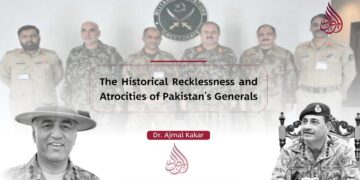
Throughout its dark history, Pakistan’s military regime has committed acts that directly contradict both Islamic teachings and basic human conscience. These are not isolated mistakes. They are part of a persistent pattern of behavior that has left deep and lasting scars, marks of shame that history will not easily erase.
A few of these actions deserve particular mention.
1. The Tragedy of Lal Masjid and Jamia Hafsa in 2007
One of the darkest moments in Pakistan’s modern history was the siege and assault on Lal Masjid and Jamia Hafsa in Islamabad. Under the government of Pervez Musharraf, security forces surrounded the complex from July 3 to July 11 before launching a full military operation. What followed was a brutal crackdown in which more than one hundred people, including the mosque’s leader, Abdul Rasheed Ghazi, lost their lives, and many more were left injured. It remains a painful and unresolved wound for countless families across the country.
2. The Betrayal of Dr. Aafia Siddiqui
Dr. Aafia Siddiqui, a Muslim academic, was detained by American forces in 2008. Instead of defending one of its own citizens, the Pakistani regime stood by in silence and, according to many accounts, cooperated in her transfer and disappearance. Despite the years she has spent in captivity and the suffering she has endured, the state has shown little more than indifference, making no serious or sustained effort on her behalf.
3. The Suppression of Tehreek-e-Labbaik
This religious movement, established to defend the honor of the Prophet Muhammad (PBUH) and known for its repeated protests on related issues, has faced consistent pressure and crackdowns from the Pakistani authorities.
In recent months, during demonstrations against Israel and in support of Palestine, the regime, due to its relations and alignments, declared the party proscribed under anti-terrorism laws and placed its leadership under surveillance and detention through the Fourth Schedule of the Anti-Terrorism Act.
4. The Mass Killing of Bangladeshi Muslims in 1971
This tragedy, commonly referred to as the Bengali genocide, occurred during the Bangladesh Liberation War. On March 26, the army of what was then West Pakistan (now Pakistan) launched military operations to suppress the independence movement in East Pakistan (now Bangladesh). What followed was a campaign of widespread violence. Estimates suggest that between 300,000 and 3 million Bengali civilians, the vast majority of them Muslims, were killed. More than 200,000 women were subjected to sexual violence, and nearly 10 million people were forced to flee their homes, seeking refuge in neighboring India.
These crimes are comparable to, and in some respects worse than, what is happening today in Gaza at the hands of the Zionist regime. Yet, despite this history, the Pakistani regime continues to present itself as an Islamic state, while issuing statements about receiving support from certain so-called religious figures around the world.
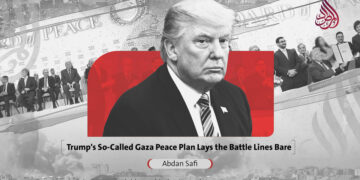
5. The Endorsement of the Trump Plan and the Palestinian Cause
In more recent years, under the leadership of Shehbaz Sharif, the Pakistani regime expressed support for the Trump administration’s proposed two-state solution. While this was presented as a pragmatic and constructive step, many viewed it as a position that effectively reinforced Israeli control and weakened the Palestinian cause. To its critics, this stance represented yet another breach of trust with an oppressed Muslim population and a clear alignment with American and Zionist interests.
This leads to a bitter and uncomfortable reality: How can individuals who wear the outward symbols of religion and present themselves as defenders of Islamic values remain silent, or worse, openly support a regime responsible for so much bloodshed and injustice? How can those who ought to uphold Sharia and justice become instruments in legitimizing oppression?
It becomes increasingly clear that the endorsement of such a regime by famous personalities is neither a mark of faith nor a genuine service to religion. Rather, it serves as a convenient tool to give moral cover to its actions. Islam, at its core, stands against tyranny and cruelty. Those who support oppression in its name are, in truth, standing against the very values of justice, truth, and humanity that it represents.