



By Abbas
History is full of armies that started with a noble purpose, built to protect their nations, only to be slowly swallowed by power, money, and foreign agendas until they found themselves standing against the very people, land, and values they once claimed to defend. Pakistan’s military regime is perhaps the clearest living example of that tragedy. A system grown from the intellectual inheritance of colonialism, nourished by British security doctrine, and groomed from the beginning to serve Western strategic interests.
The most dangerous thing British colonialism ever did wasn’t drawing borders. It was capturing minds. The colonizers understood that if Muslim nations could be separated from their faith, their identity, and their sense of honor at the level of military institutions and security structures, then Muslims would end up being crushed by their own hands. That’s why they built curricula where nation, religion, and moral principles could all be sacrificed at the altar of “state interest” and the preservation of power.
Pakistan’s generals were raised in that shadow. They were taught, at the most foundational level, that power comes before everything. And that anything is permissible in service of keeping it. The blood of their own people. The sanctity of a mosque. The honor of religious scholars. The name of Islam itself. Which is why, at every turn in Pakistan’s political history, the moment the smell of dollars arrived, the military’s position shifted. Whenever Western interests came into the equation, Islam and Muslims were the price paid.
At one point they used madrassa students as tools of “strategic depth.” Then they turned around and offered those same people up as sacrifices on the altar of the global War on Terror. This dual-faced politics isn’t just political hypocrisy. It’s the inevitable product of an ideological formation that has no conscience, no faith, and no moral red lines.
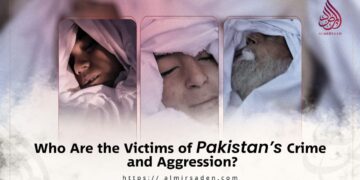
Lal Masjid was the bloodiest chapter of that double game. What happened that day wasn’t just the destruction of a madrasa. It was the unmasking of the Pakistani military’s true face. The very army that calls itself the defender of Islam sent tanks into a mosque in the heart of Islamabad. Copies of the Holy Quran burned. Young female students were martyred. The heart of the ummah was shattered. And for the military, all of it was simply the cost of dollars, international approval, and American backing.
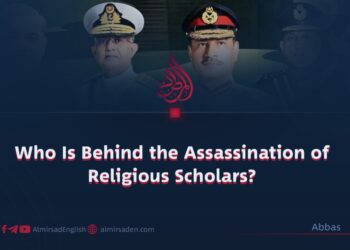
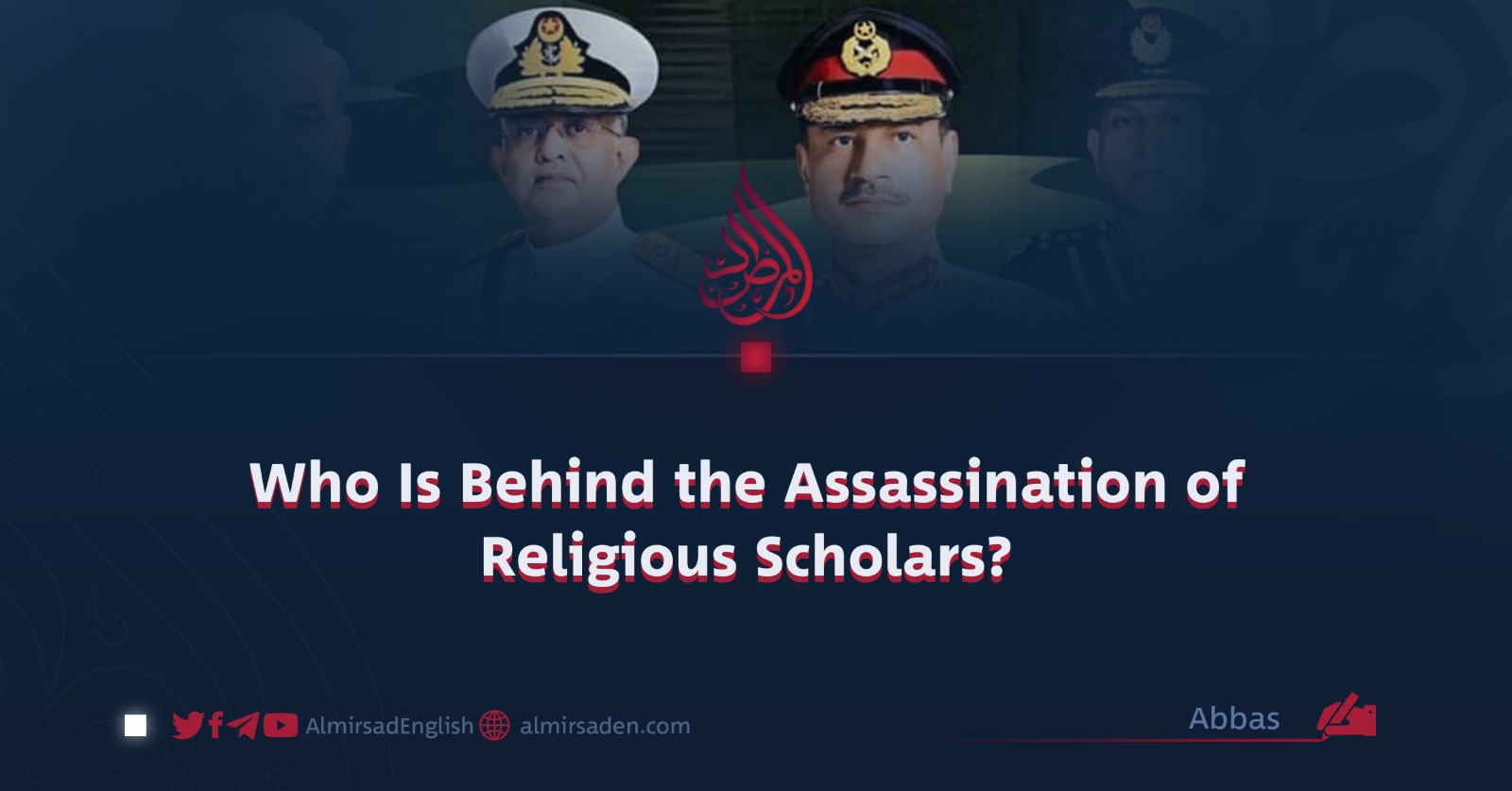
After that, the targeted killing of religious scholars only accelerated. From the martyred Sheikh Hassan Jan (RH) to Maulana Sami ul-Haq, Sheikh Naseeb Khan, and others, a disturbingly familiar pattern keeps repeating. Scholars are first discredited, then pressured, then isolated, and then killed by “unknown armed men.”
The real question is why it’s always religious scholars. Why are the actual centers of power never targeted? Why do these assassinations share the same shape, the same timing, the same outcomes?
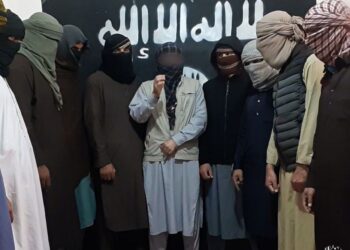
That’s where the ISIS question becomes impossible to ignore. ISIS isn’t just an armed group. It has become a tool for manufacturing intellectual and security chaos across the region. Whenever there’s a need to discredit Islam, jihad, the caliphate, or any Islamic movement, ISIS conveniently appears. And what’s striking is that the victims of these attacks are almost always religious scholars, supporters of jihad, and Islamic figures, never the forces bombing Muslim populations, never the West’s direct allies.
The recent killing of Sheikh Idrees (RA) appears to be another link in this long chain. The audio messages released before his martyrdom carried signs of pressure, fear, and intelligence surveillance. It seems he was operating under enormous strain, which strongly suggests that silencing him was an attempt to bury something much larger. Because when a scholar speaks truth, challenges the military’s narrative, or begins waking people’s minds up, his very existence becomes a threat to an authoritarian system.
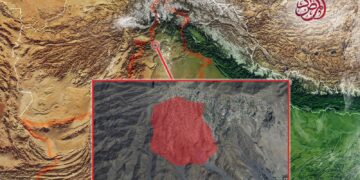
Pakistan’s military regime is facing a deep internal crisis. The people are exhausted, by instability, economic collapse, injustice, and years of being played both ways. When the military strikes targets inside Afghanistan, hitting madrassas, mosques, hospitals, and schools, ordinary people are asking the obvious question: if this is a war on terror, why are the victims always civilians and religious institutions? Why does the Holy Quran burn? Why do mosques fall? Why are hospitals bombed?
Each of these acts strips away another layer of the military’s carefully constructed image. Because a system that crosses every conceivable line to preserve its own power has forfeited any claim to speak in the name of humanity, Islam, or morality. That’s why the idol of the military’s sanctity has already shattered in the minds of the Pakistani people. They see the game being played under the banner of “security.” They know who is profiting from the trade in Pashtun blood.
History has a clear verdict on armies that abandon their nations to serve foreign powers. They end up facing the hatred of their own people. Force, propaganda, and intelligence operations can suppress the truth for a while. But a nation’s collective memory records everything. The blood spilled on madrassa floors, the Qurans set on fire, the scholars silenced in the dark, none of it can be erased from history’s ledger.
The greatest test facing Pakistan’s scholars, its educated class, and its ordinary citizens today is simply this: break the silence. Because every time a scholar is left alone, another scholar becomes the next target. Every time an injustice is justified, the next one grows bolder. Every time truth is buried in the name of power, the nation sinks deeper into crisis. Nations survive when they protect their values, their faith, their dignity, and their voice. When they don’t, authoritarian systems read that silence as victory. History will decide, once again, who stood with the people, and who spent themselves in service of dollars, power, and foreign agendas, fighting against their own.