




(Part 1)
By Sayyid Jamal al-Din Afghani
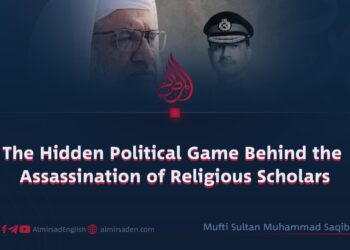
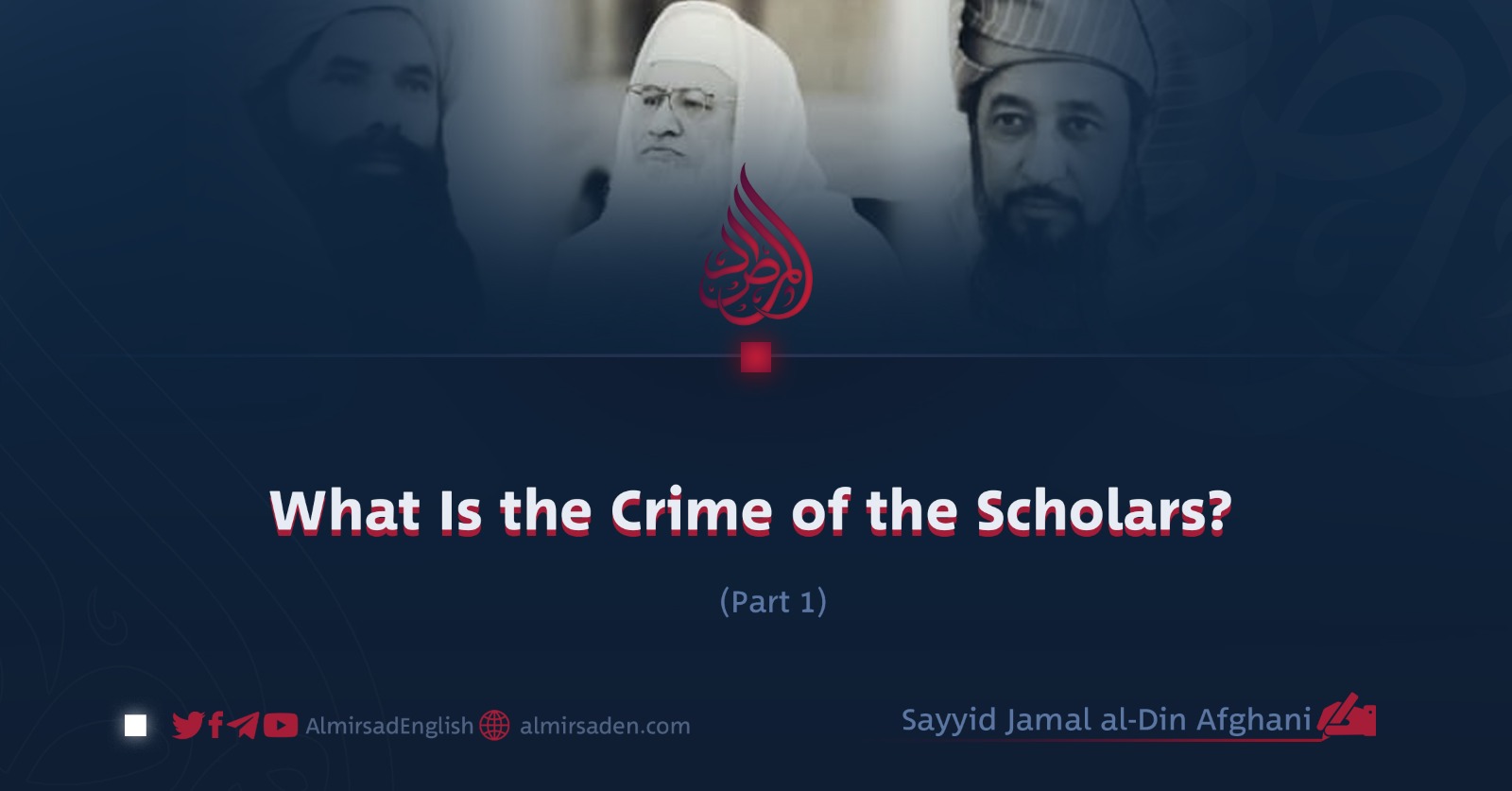
In recent days, news emerged that struck the hearts of the entire Muslim Ummah like a thunderbolt. Sheikh Muhammad Idris, a prominent Islamic scholar from the Charsadda district of Khyber Pakhtunkhwa, was shot dead in broad daylight by unidentified gunmen and lost his life at the scene.
Sheikh Muhammad Idris, who belonged to the Tarangzai tribe, served as a Sheikh al-Hadith at Jamia Naumania and Darul Uloom Haqqania. It would be no exaggeration to say that he graduated thousands of students annually across Asia and held a distinguished position in the teaching of Hadith.
He was known for his gentle temperament and carried several respected scholarly and familial associations. He was the son-in-law of Sheikh Hassan Jan Shaheed and the grandson of Mufti Shahzada, one of the prominent graduates of Darul Uloom Deoband. His father, too, was a well-known religious scholar. Beyond all these associations, he himself was a remarkable personality, a man whose influence and stature made him a whole institution in his own right.
In Khyber Pakhtunkhwa, he had become a symbol of scholarly excellence and intellectual integrity. His words, writings, and speeches were regarded as authoritative and carried the weight of credibility. More importantly, he was a selfless individual. It is often said that from the very beginning of his life, there was no place in his nature for personal interest or worldly gain.
At his funeral, scenes emerged in which people from every segment of society were overcome with grief and tears. The reason was simple: his life had been filled with compassion, kindness, and goodwill, while hatred found no place in his character. One of his admirers wrote that throughout his entire life, Sheikh Sahib had never even engaged in a verbal quarrel with anyone. Even those who insulted him were answered with dignity and kindness.
Yet despite all this, he was assassinated. This inevitably raises a painful question: why did matters reach the point of murder?
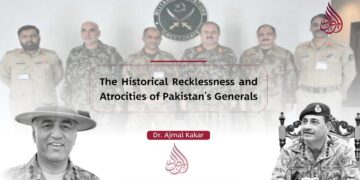
However, those who are familiar with the history of Pakistan, and with the mindset and policies of its state institutions or even those who have observed them at a superficial level, understand well the factors that may lie behind the tragic martyrdom and mysterious killing of Sheikh Muhammad Idris.
From the very inception of Pakistan to the present day, many of the country’s distinguished and influential religious scholars, national leaders, political figures, and even individuals who once occupied some of the highest state offices have been killed in an exceptionally ruthless manner. Such incidents are not widely viewed as mere coincidences; rather, they are often perceived as part of a recurring and systematic pattern.
For instance, Maulana Muhammad Yusuf Ludhianvi, a prominent religious scholar from Karachi, was brutally shot dead. Some time later, the perpetrators were arrested, but when the investigation phase began, they were released without any judicial verdict. Pakistan’s religious scholars reacted strongly to the development, sending protest letters to the government, condemning the move in unequivocal terms, and demanding that the killers be brought to justice, yet their appeals went unheard.
Those same individuals later began openly intimidating scholars, saying: “You know who we are and whom we are connected to.” Since then, no effective action is said to have been taken against them.
More recently, a well-known columnist of the Urdu newspaper Daily Jang narrated a startling incident concerning the leader of one of Pakistan’s major political-religious parties. A police officer (SHO) in the region was shot dead. When the suspect was arrested, state authorities intervened immediately and secured his release on the grounds that “he is one of our own men.”
These are not merely one or two isolated incidents; rather, there are hundreds of such cases in which the perpetrators are labeled “unknown” and, it appears, remain unknown indefinitely, as deeper motives are believed to lie behind them. This raises a crucial question: what are those hidden objectives for which the blood of religious scholars continues to be shed? Why are political and moral values trampled upon? Why are influential leaders and intellectual figures repeatedly targeted?
In this pattern of violence, the religious class has been among the most heavily affected. Whether in Punjab, Balochistan, Karachi, Gilgit-Baltistan, or Khyber Pakhtunkhwa, accounts of bloodshed can be found everywhere. Nationally and internationally known figures are killed in broad daylight, yet even decades later, the perpetrators often remain unidentified.
For example, in Rawalpindi, one of Pakistan’s most significant military centers, Maulana Sami-ul-Haq, a prominent religious scholar and political figure, was brutally stabbed to death inside his own home with apparent ease. Yet, even after many years, no definitive trace of his killers has publicly emerged.
Because, hidden objectives operate behind such incidents, and these objectives are believed to be known only to state institutions, which are considered to be the principal driving forces behind them.
Several political figures in Pakistan have, on different occasions, openly argued that whenever a murder remains unresolved and the perpetrators are never identified, responsibility falls upon the state. the state places little value on scholarship, religion, or politics when these come into conflict with its broader strategic narrative; instead, it formulates a particular policy framework and pursues it relentlessly.
At times, this narrative may deem certain individuals to be obstacles that must be removed. At other times, diverting public attention toward a different issue may be considered necessary, leading to selected incidents that shift the national focus elsewhere. There are also situations, in which a person’s statements may initially serve the interests of a prevailing narrative, but fears later emerge that the same individual might clarify, revise, or oppose those positions, and thus the individual becomes vulnerable to elimination.
This state narrative has repeatedly come into direct conflict with Islamic values, and for that very reason religious scholars have continuously been sacrificed in its pursuit. From Maulana Haq Nawaz Jhangvi to Isar al-Qasmi, Sarfaraz Shaheed, Shamsuddin, Zia-ur-Rahman Qasmi, Habibullah Mukhtar, Maulana Abdul Sami, Muhammad Banuri, Maulana Hassan Jan, Sheikh Naseeb Khan, Mufti Nizamuddin Shamzai, Mufti Jameel, Maulana Sami-ul-Haq, Hamid-ul-Haq, Dr. Adil Khan, and finally Sheikh Muhammad Idris, every case reveals the same background when examined closely.
A few years ago, even Mufti Muhammad Taqi Usmani came under a deadly attack in Karachi. Several people were killed in the assault, while his driver was wounded. Later, Mufti Sahib stated in an interview that when the firing began, his driver’s hand was struck and bleeding heavily. They asked the police for help, but the police openly refused.
Now think about it: a globally renowned personality like Mufti Taqi Usmani was injured, such a massive incident had taken place, yet the police did not even come forward to help him.
Now consider the case of Sheikh Muhammad Idris: in Charsadda, in broad daylight, in a marketplace, gunfire erupts and the attackers escape calmly. On top of that, instead of apprehending the real perpetrators, the state attempts to divert public attention elsewhere, presenting different faces and leveling various accusations.
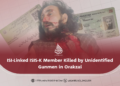
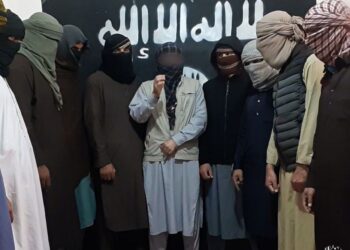
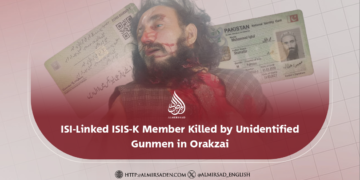
Shortly afterward, a statement is released by ISIS claiming responsibility for the attack. But the question remains: who is ISIS, and where do they come from? In light of past events, the suspicion grows stronger that such statements are issued as part of a planned narrative.
Later, efforts are made by certain close circles of the state to attribute the incident to Afghanistan. However, during funeral prayers and memorial gatherings, many scholars openly rejected this claim, stating that such accusations are only meant to conceal the real perpetrators.
Charsadda is not a remote border village where someone can simply cross from Afghanistan, commit a killing, and escape; it is hundreds of kilometers deep inside the region, with police, military, and intelligence installations present. So how can such claims even stand?
When the attack on Mufti Taqi Usmani took place, he gave an interview to journalist Zia Chitrali, published in the newspaper Daily Ummat, which is still available today. In it, he clearly stated that neither ISIS nor any other armed group carried out the attack, but that the attackers were different individuals.
Now, if this statement is examined alongside the conduct of the police, the conclusion becomes clear on its own as to who the attackers are and which elements are being targeted.
To be continued…