

By Sayed Jamal al-Din Afghani
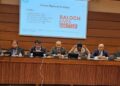
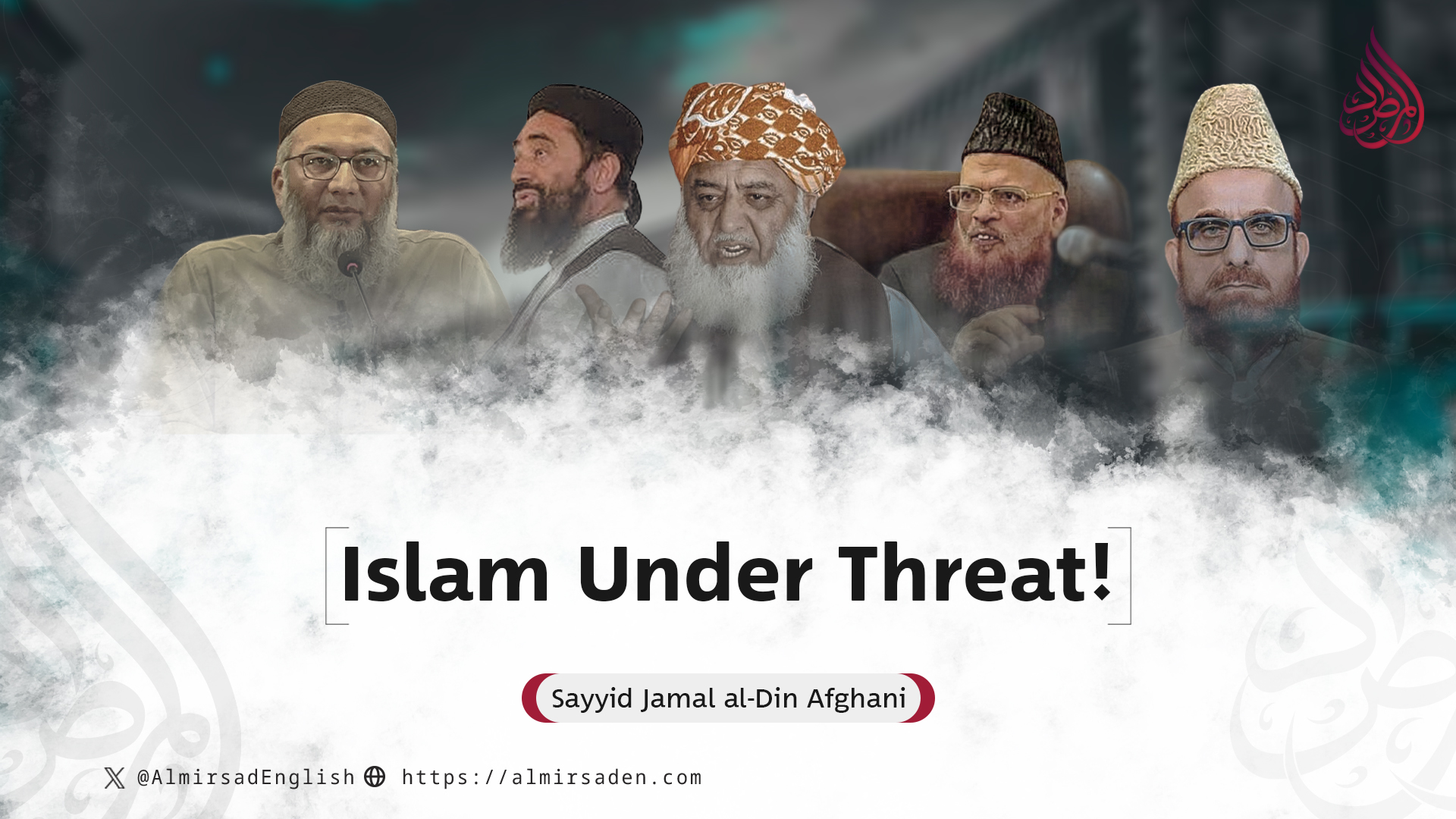
Yesterday in Karachi, an extraordinary and dignified gathering brought together leading Islamic scholars from across Pakistan’s religious spectrum. Senior figures from the Deobandi, Barelvi, Ahl-i-Hadith, Tanzeem-e-Islami, and Shia schools of thought were in attendance.
The conference opened with the chair presenting a ten-point agenda, after which participants were invited to speak. Each scholar addressed the gathering in turn. Some spoke at length, others briefly, but all delivered serious and far-reaching remarks. At the conclusion, Mufti Muneeb-ur-Rehman, the Grand Mufti of the Barelvi school and one of the conference’s leading figures, presented a detailed joint declaration.
Both the agenda and the final declaration revolved around a single, alarming conclusion: Islam, its teachings, and its identity are facing a grave threat in Pakistan today. If decisive and meaningful action is not taken, the loss of Islamic identity may not remain a distant fear. The warning was stark. Like King Abdullah of Granada, we may be left only to watch helplessly in chains as our legacy is stripped away before our eyes.
During this conference, I witnessed several astonishing speeches. Both the declaration and the ten-point agenda made it clear that these scholars and senior religious figures perceive the very existence of Islam in Pakistan as being under threat from the ruling elite. This stands in sharp contrast to the ruling class’s habitual claims. Whenever their policies are criticized for violating Islamic principles, they respond with pride, asserting that Pakistan’s constitution is “fully Islamic” and that the country operates under a purely faith-based legal system.
For the first time in Pakistan’s history, the renowned scholar Mufti Muhammad Taqi Usmani publicly tore away the veil from the constitution. He revealed that not only in the present framework, but also in the 1974 constitution, a major non-Sharia provision had been deliberately inserted. He reminded the audience that objections were raised at the time, and that these objections remain on official record. This revelation carried extraordinary weight, as Mufti Usmani himself was among the framers of the constitution, with his family playing a central role in its formulation. His words were therefore unprecedented.
Regarding the current situation, the manner in which he spoke and the clarity with which he exposed the misdeeds of the ruling circle suggested that Pakistan’s governing authorities appear to be systematically undermining the very existence of Islam.
During his speech in Parliament about the 27th Constitutional Amendment, Mufti Usmani stated that the lifetime immunity granted to the Field Marshal and the President was indefensible by any standard. He declared it incompatible with Sharia, Islamic principles, the spirit of Islam, and basic judicial norms. In his view, no legal system in history had ever sanctioned such an arrangement. His warning was unambiguous: when such distortions enter a constitution, the consequences can only be disastrous.
Equally revealing were the issues highlighted by the leader of Jamiat Ulema-e-Islam. He recounted how the Deputy Prime Minister and Foreign Minister stood in the parliamentary hall and proclaimed, “We are Muslims, and every step we take will be in accordance with the Qur’an and Sunnah.”
Maulana Faazl-ur-Rehman said that upon hearing this statement, he felt it was delivered emotionally and without awareness of the gravity of the situation. He explained that the same amendment included a clause granting supremacy to minority laws over all other legislation. Such a provision, he warned, could result in every Islamic law and directive being rendered invalid.
He further stated that the following day he called to ask whether the ruling authorities had consulted one another regarding this matter. The response was that they had not, but that such consultation would take place. Maulana Faazl-ur-Rehman said he then requested to be informed once consensus was achieved, so that he could point out the un-Islamic elements. However, to this day, no response has come. According to the Maulana, the intentions of the ruling elite appear extremely dangerous, and they seem determined to dismantle Islamic injunctions under Western direction.
As I was still reflecting on the seriousness of Maulana’s remarks, another prominent scholar from the Barelvi school, Sahibzada Abul Khair, deeply shook the audience. He stated that a meeting of the Milli Yakjehti Council had been scheduled for the same day, with the date fixed five months earlier. However, he said, the situation had become so tense and the matter had reached such a critical point that they felt compelled to cancel their long-planned event and attend this conference instead.
He emphasized that if decisive action is not taken now, if the grave threat facing the very existence of Islam is not properly understood, and if the ongoing manipulation of religion and faith in Pakistan is not halted, then responsibility for the dire consequences that follow will rest heavily upon all of them.
Another respected scholar, Maulana Manzoor Sahib, highlighted this danger from a different perspective. On one hand, there is turmoil in parliament; on the other, certain unfortunate individuals are being exploited in the name of religion to serve narrow interests. When they are no longer useful, they are turned against one another and eliminated under different labels. Mosques are sealed, religious activities restricted, and those who defend their honor and dignity in accordance with Prophetic teachings are branded as extremists. Meanwhile, their property and resources are plundered with impunity.
In this crucial and sensitive conference, the speeches of the scholars grew increasingly forceful. The system imposed by the ruling elite appeared like a serpent poised to strike at Islam’s very existence. The gravity of the threat was further emphasized by Awais Noorani, the head of a major religious organization of the Barelvi school of thought, who called for such gatherings to be held continuously and urged that the date of the next session be announced without delay. Other scholars went further, demanding the launch of a nationwide movement. A haunting question echoed through the hall: how long will we continue to sit silently while one Islamic injunction after another is buried?
Mufti Abid Mubarak, speaking with biting irony, exposed another stark reality. When laws are passed in parliament, he said, most lawmakers do not even know what they are approving. A document is placed before them, and they simply assent. Where those laws are actually drafted, however, is no secret to anyone.
The leader of Tanzeem-e-Islami delivered perhaps the bluntest assessment of all. The danger, he said, is not approaching; it already exists. We are told that opposing the “Islamic system” amounts to rebellion, yet one must ask whether the current system bears any genuine relationship to Islam at all.
The sight of Pakistan’s most prominent scholars and thinkers gathering in this manner, and voicing such deep concern with clarity and urgency, speaks volumes through the language of circumstance. The direction of events is deeply troubling, and at every step the sense grows stronger that Pakistan’s ruling elite has resolved to confront Islam itself.