



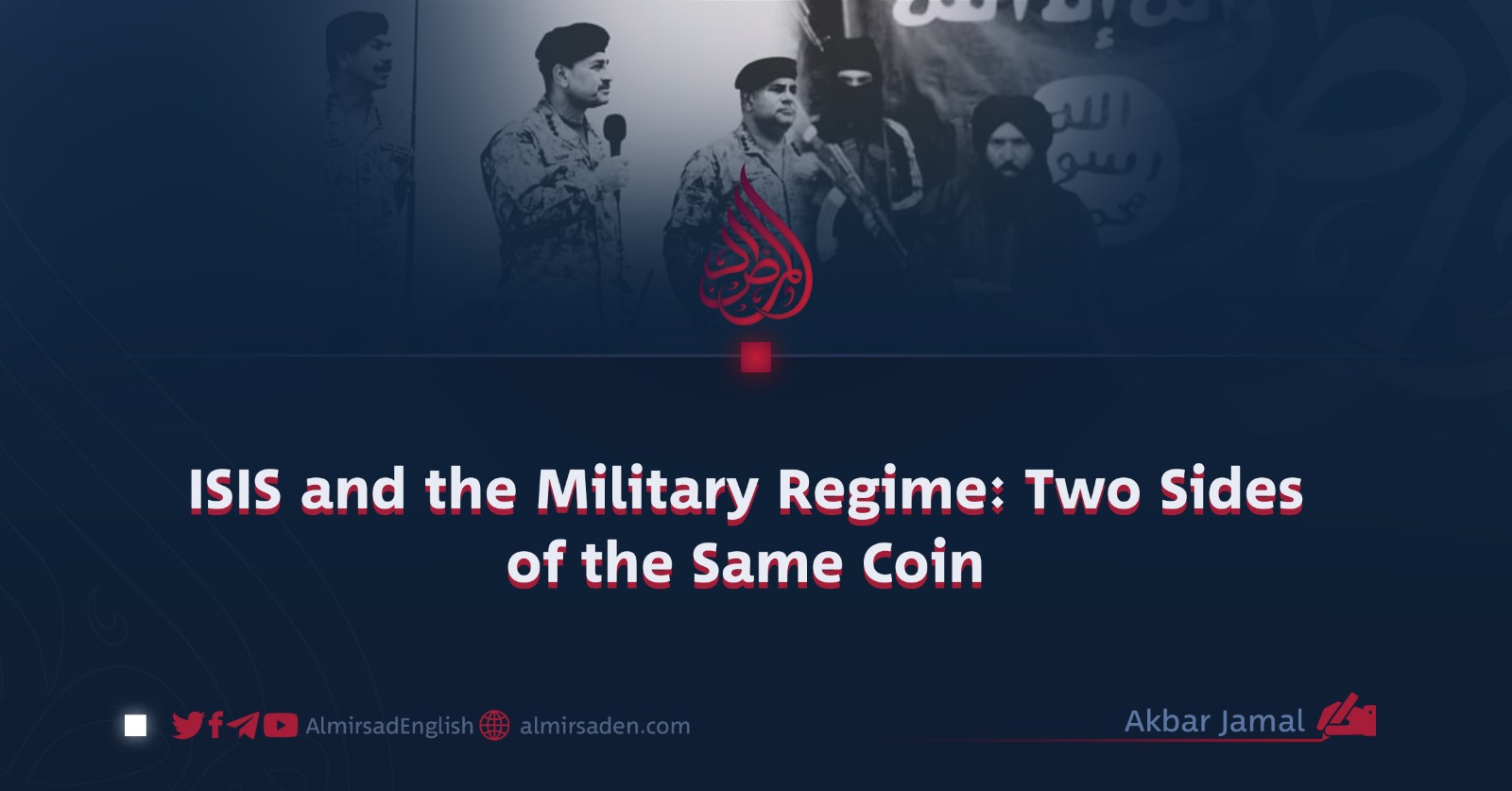
By Akbar Jamal
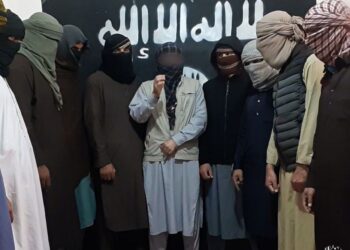
The martyrdom of Sheikh al-Hadith Maulana Muhammad Idrees, followed almost immediately by ISIS-K’s Pakistani wing claiming responsibility for the attack, has exposed deep cracks in the military-backed narrative promoted by the Pakistani state.
Look at the details because they tell the real story.
In its propaganda statement, ISIS described the attack as having taken place “near the Afghan border.” But Sheikh Idrees was martyred in Charsadda, which is a crowded city more than 100 kilometers away from the Durand Line.
That geographical error by ISIS only reinforces what many already suspect: that this terrorist organization is being directed from the very heart of Pakistan’s military establishment, the General Headquarters (GHQ) in Rawalpindi.
The phrase “near the Afghan border” is not an innocent mistake. It is a familiar talking point, repeatedly used by the Pakistani military whenever it seeks to shift responsibility for its own failures onto Afghanistan. When ISIS adopts the same language, the implication is difficult to ignore. The goal is simple: to pin Pakistan’s internal crises on the Islamic Emirate of Afghanistan (IEA).
Pakistan’s political history shows us how this game works.
For decades, both civilian and military circles have treated religious scholars as expendable assets, using them to advance strategic objectives. When convenient, they were glorified as mujahideen and sent to the war zones. When global pressure mounted or policy priorities changed, those same scholars were discarded, silenced either directly by the state or through proxy groups such as ISIS.
Today, as top religious scholars in KP are picked off one by one, the suspicion grows stronger: these scholars were useful only for as long as they served the military regime’s purposes. Once they ceased to be politically valuable, they were left exposed to assassination.
It is very clear. Many of the scholars who aligned themselves most closely with the state’s narrative have become the first to fall to ISIS bullets.
This has fueled a pressing question within Pakistan’s political and public circles: is there a secret deal between ISIS and the military?
ISIS’s organized presence in major urban centers, combined with statements that closely mirror the military’s own rhetoric, has deepened the belief that the group serves as a “facilitator,” a tool used to manufacture justification for military operations that advance American strategic interests.
Look at Tirah Valley.
Under the banner of counterterrorism, they kicked thousands of families out in the freezing winter. Yet instead of bringing peace, the operation only strengthened ISIS’s foothold in the region.
It is becoming impossible to dismiss that the military preserves ISIS as an instrument of fear, deploying it to eliminate political opponents and religious figures who are no longer useful.
ISIS’s presence in Pakistan is no longer in doubt. But its true roots lie less in the mountains than in the “safe havens” and strategic policies that continue to nourish it from within. The assassination of Sheikh Idrees demonstrated another painful reality: Pakistan’s re religious scholars stand between two blades.
On one side, they are targets of terrorist violence. On the other, they are victims of a duplicitous state policy that exploits them when convenient, then either fails to protect them or deliberately looks the other way.
If the military were genuinely committed to dismantling ISIS, such assassinations in heavily monitored cities would be nearly impossible. When a scholar can be murdered in an area under constant security surveillance, the reality is that the crime occurred under the shadow of that very surveillance.
This is the time for the people of Pakistan, especially its religious scholars, to stand united against the military’s war economy and the strategic games being played with the blood of the ulema.
If they fail to do so, even what remains of the country’s scholarly class may be consumed by this cycle of violence. Allah forbid.