
















By Akbar Jamal
In light of the rising tension between the United States and Iran, international diplomacy seems active once again. Pakistan’s sudden appearance as a potential key mediator may seem like a positive development. Yet a closer look reveals many layers, some based in reality, and others shaped by propaganda and constructed narratives.
Due to the contradictions within Pakistan’s civilian and military regimes, the situation remains much the same as before. From this perspective, Pakistan’s offer to host talks on the Iran–U.S. conflict, while praised as a “peace effort,” may in fact overlook the full truth. International media portray Pakistan’s contradictory role strongly in some reports, but completely rejecting it would also be unfair.
The question is not why Pakistan mediates in the current U.S.–Iran crisis, but why it always becomes active in such sensitive moments, while on the other hand, it creates a warlike atmosphere with Afghanistan. The main question is: what are Pakistan’s priorities behind this contradictory policy?
To answer this, a brief look at history is enough. This is not just a general impression, but a fact based on clear historical events. For example, during the Soviet–Afghan war, Pakistan formed a close alliance with the United States and presented itself as the frontline state in this conflict. As a result, Pakistan received extensive financial and military support. Yet the consequences of this policy later emerged in the region as extremism and instability, a price that Pakistan itself had to pay.
After the September 11 attacks, under the banner of the “war on terror,” the Pakistani military once again supported the United States and provided practical facilities for American operations in neighboring Afghanistan, even though it had previously presented itself as the closest supporter of the Taliban government. This sudden shift after September 11 was not just an ideological change; it was a strategy shaped by international pressures and interests, continuing the long-standing approach of aligning with the world’s dominant powers.
Through this U-turn, Pakistan received billions of dollars in aid. Yet the natural consequences of this policy toward Afghanistan also brought domestic insecurity, terrorism, and social divisions. In recent years, Pakistan has shown another clear inclination toward China, particularly within the framework of the China–Pakistan Economic Corridor (CPEC). Still, its ties with the United States have not been completely severed. Pakistan has tried to balance relations with both powerful countries. This approach may demonstrate diplomatic skill, but critics see it as a sign of the absence of a clear and consistent policy, especially since the China–Pakistan Economic Corridor has yet to be fully realized as intended.
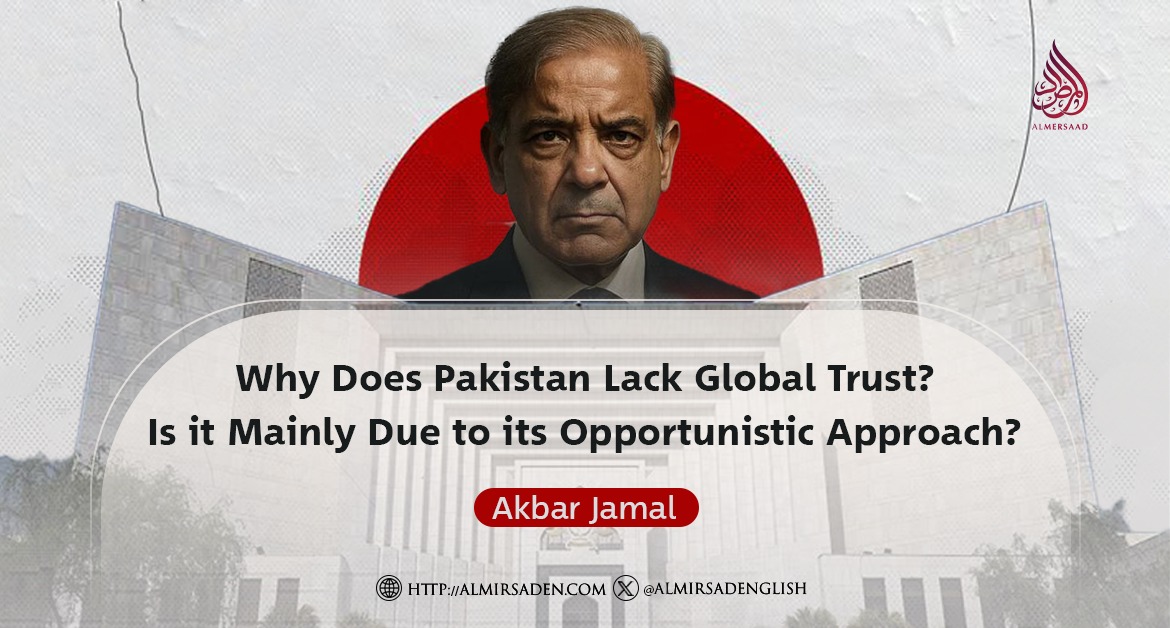
Pakistan’s potential diplomacy regarding the U.S.–Iran crisis reflects the same approach. On one hand, there are issues with Iran, such as smuggling, border violence, and lack of trust. On the other hand, Pakistan suddenly claims a role as mediator. This contradiction is not just diplomacy, it is a clear example of policy inconsistency, showing Pakistan as an opportunistic, interest-driven state. The main question remains: does Pakistan truly have a stable and principled foreign policy, or does it simply adjust its course under the shadow of powerful countries as global circumstances change?
While it is true that every state acts in its own interest, Pakistan has that right as well. The key difference lies in consistency and transparency. Even weaker countries pursue their interests, but they do so with a clear strategy and long-term goals. In Pakistan’s case, it often appears that its regional policy is not based on prior planning, but on immediate, reactive measures.
Moreover, Pakistan’s domestic instability reinforces the perception of it as an “interest-driven state.” Political inconsistency, the balance of power between civilian and military leadership, and a weak economy, all these factors hinder the development of a stable foreign policy. Taking advantage of temporary opportunities becomes almost a necessary choice for Pakistan, but at the same time, it creates a habit of being inconsistent and short-term in approach.
Although it is easy for Western media to judge Pakistan with bias, an important question remains: has Pakistan itself not strengthened this perception through its own actions? When a country repeatedly builds and breaks alliances based solely on power, it is no surprise that it is labeled “opportunistic.” This is why the lack of consistency and the prioritization of short-term gains in Pakistan’s foreign policy repeatedly bring it to a point where its intentions are questioned.
Analysts argue that if Pakistan truly wants to play a credible and serious role internationally, it must adopt a clear, stable, and principled foreign policy instead of relying on mediation in distant conflicts. Above all, it should first improve its relations with its neighbor, Afghanistan. Otherwise, every new diplomatic effort, no matter how positive, will be viewed with suspicion and ultimately further weaken the country’s trust and credibility.