








By Walid Wyar
With each passing day, Pakistan’s military regime finds itself confronting new and unfolding realities, as different aspects of its concealed and terror-aligned policies come to light before the world.
The country’s authoritarian military regime, in its pursuit of survival and the preservation of its generals’ power and influence, has consistently placed its soldiers at the disposal of global military and intelligence powers. Meanwhile, the national budget, drawn from its long-suffering citizens, has been directed toward enriching senior officials and a select political class, expanding their privileges and business interests, or channeling vast resources into financing militant groups and proxy conflicts within its own territory.
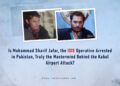
One of these proxy and Khariji groups is IS-K, which, as in the past, continues to receive support and investment shaped by consultations with the United States and certain Western countries. The objective is to use the group as a destabilizing instrument and a frightening tool in the geopolitical marketplace of dark politics. Publicly, however, such involvement is denied, and Pakistan portrays itself to the world as a victim of terrorism rather than a participant in policies that have fueled it.
Since the IEA’s return to power in Afghanistan, ISIS activities have not only been reduced to near zero inside the country, but many of its members have also been killed outside Afghanistan, particularly on Pakistani soil, as even reported by Pakistani media.
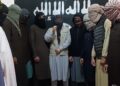
The arrests of ISIS-K leaders, especially spokesman Sultan Aziz Azzam, in secure areas under strict military control in Pakistan indicate that ISIS has long functioned as a tool of the Pakistani military and continues to operate under its influence. However, only those members who defy military directives or fail to carry out assigned operations appear to be exposed or apprehended.
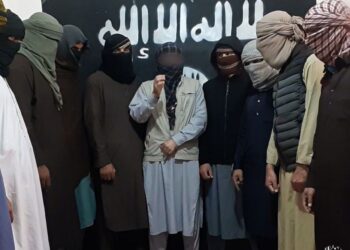
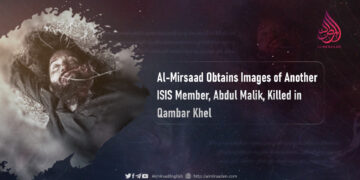
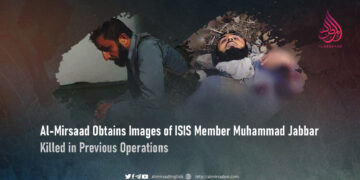
In the same context, deep internal divisions have emerged within ISIS ranks, and many members have been killed in internal disputes. Reports indicate that in a recent development, clashes occurred with ISIS fighters in the Turkani and Narek areas of Orakzai, resulting in the deaths of two key commanders, Haji Abdul Rehman, known as Abu Nasir, and Mullah Farooqi.
All these ISIS leaders were considered key figures within ISIS networks and sought to implement the Punjabi military and ISIS projects on Afghan soil, targeting civilians and damaging public infrastructure. Fortunately, thanks to the vigilance and dedication of the IEA’s security forces, their efforts were thwarted, and they were held accountable for their actions.
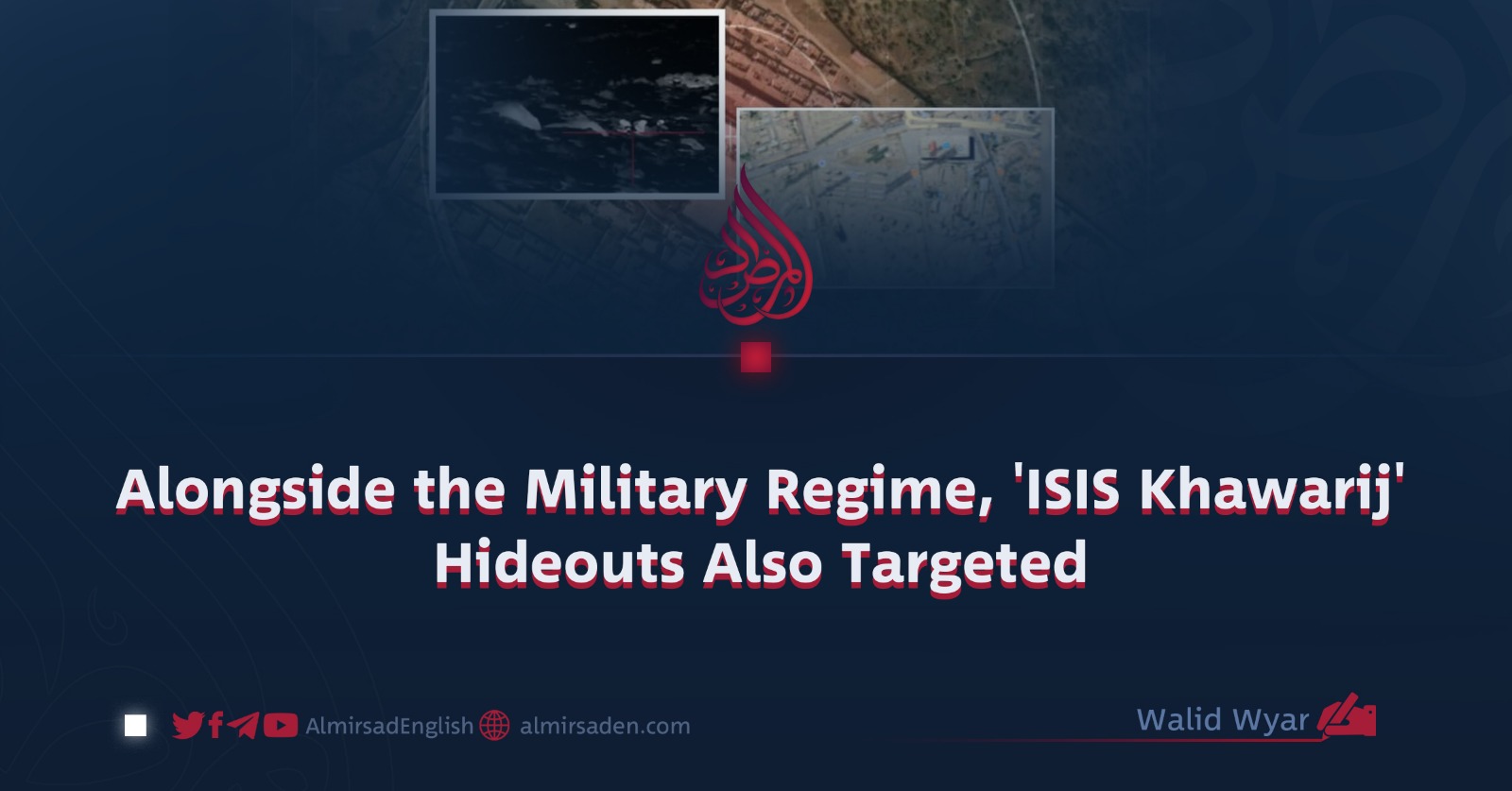
This is not the first instance of eliminating ISIS hideouts and members in Pakistan; earlier, drone strikes had targeted them in various areas. A recent example includes the elimination of an ISIS cell in the Tor Dara area of Tirah, which was documented in videos released by Al-Mirsaad and other credible news agencies.
If the Pakistani military regime believes that it can, through airstrikes on Afghan territory and the killing of civilians, divert the IEA’s policies and military strength in another direction, or make the ISIS Khawarij under its influence go unnoticed by the world, it would be a grave miscalculation.
The IEA never forgets its principal enemies, because ISIS-K militants are not merely killers and adversaries of Afghan soil and its people, they represent a contemporary fitna against Islamic law, nurtured by the hired killers of the US, Israel, and the military regime. The very philosophy behind the IEA’s establishment is the defense of true Islam, a Shariah-based system, and sacred values.
Even during the intense and widespread operations carried out by NATO member states, the United States, and the puppet forces of the Kabul regime, the IEA’s forces never ceased their fight against ISIS. On every front, they simultaneously confronted this fitna, achieving significant results. In the current situation, there is no possibility that this Khariji fitna will be ignored; rather, the IEA is determined to eliminate these hired killers in the strongholds and safe havens of their patrons, as past successes and examples clearly demonstrate.
Pakistan and other supporters of ISIS must understand that Afghanistan is no longer a proxy battlefield for the implementation of foreign ideological or military projects.
Today, the country enjoys widespread security, and Afghan forces respond decisively to any threat.
The clearest example of this is the retaliatory ground operations and airstrikes against the Pakistani military regime, which have instilled fear throughout the entire Punjabi establishment.
At the same time, it must not be forgotten that Afghans never forget their respect for the Pakistani Muslim population and recognize that ordinary Pakistanis, especially those living in Khyber Pakhtunkhwa and Balochistan, are themselves victims of oppression.
Just as the Pakistani military regime kills civilians in Afghan territory through indiscriminate bombings, it has also subjected its own people to death, destruction, and displacement within its borders. However, one undeniable truth remains: oppressive and tyrannical regimes are never permanent. The palace of oppression inevitably collapses, and that day is approaching for the military regime. Indeed, it is very near.