














By Ajmal Ghaznavi
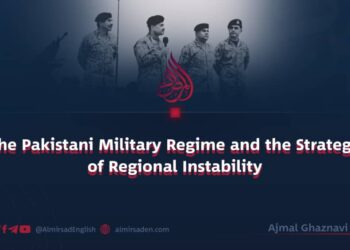
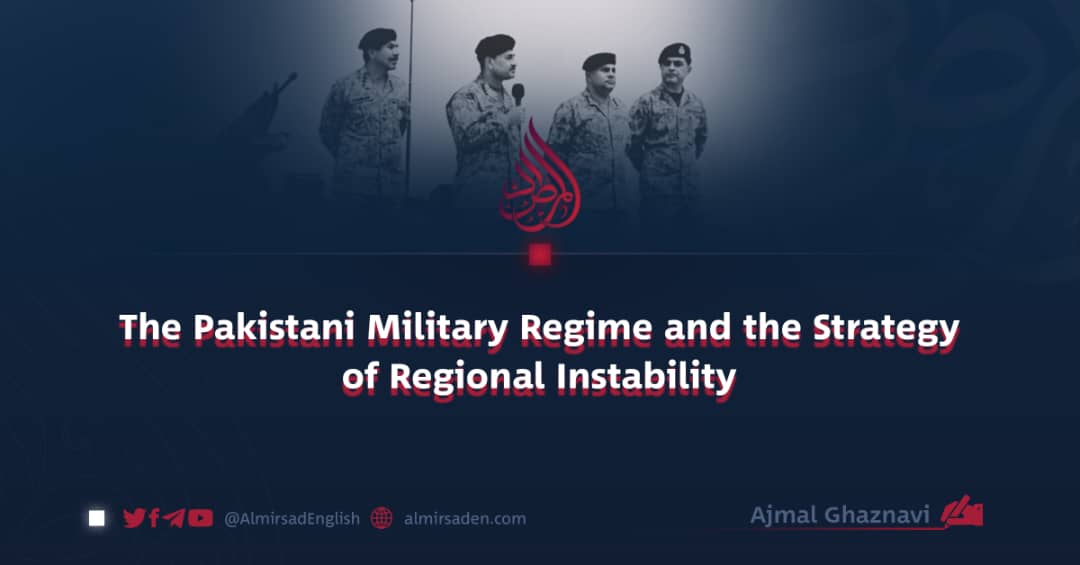
In international politics, the power of states is not measured solely by the size of their weapons or armies, but also by the rationality of their strategies, their contribution to regional stability, and the trust they build among nations. However, when a regime, instead of being a builder of stability, enters the arena of instability, the result emerges in the form of long-term crises. The Pakistani military regime has represented this very policy for decades.
A dangerous idea has always been alive in the security thinking of this regime: the use of proxy groups against the region. Under this policy, certain extremist networks have been employed as strategic tools.
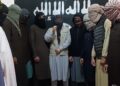
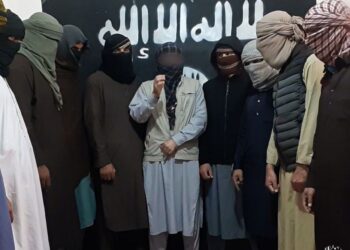
ISIS-Khawarij is one of those groups whose name has repeatedly surfaced in the regional instability equation. Reports about their hideouts, training centers, and logistical networks in Khyber Pakhtunkhwa raise a pressing question: why are the activities of such groups not completely stopped?
This situation is not merely a matter of a single group, but rather a sign of a strategy. When extremist networks are provided space, hideouts, and resources, they quickly become instruments for regional instability projects. Many of the schemes aimed at destabilizing Afghanistan have emerged from the shadows of these covert centers, schemes designed to weaken stability and prolong crises.
History has repeatedly proven one truth: the power that sows the seeds of instability will eventually reap the consequences of that very instability. Extremism is a fire that recognizes no borders. When used as a tool of political strategy, it quickly spirals out of control and heats up the atmosphere across an entire region.
Throughout their history, Afghans have gained extensive experience in resisting pressure, invasions, and covert schemes. War is not merely a contest of weapons; it requires patience, faith, and conviction. It is this strength that allows nations to stand firm and maintain their stance against all forms of pressure.
Today, Pakistan stands at the threshold of a critical historical choice. If the country’s political and civil sectors fail to demand reform against the military regime’s flawed strategies, the crisis which currently shows only signs, will deepen and expand tomorrow. History shows that states that plot for the instability of others soon find themselves facing the waves of instability themselves.
The future of the region is shaped not by the maps of war, but by the philosophy of stability. Those who understand this truth will find the path forward, while those who still play with the fire of insecurity will not remain safe from its flames.