









By Abid Mujahid
I was still in school when the group known as ISIS swept across Iraq and Syria with astonishing speed. Because it claimed to represent the Muslim Ummah, it attracted no shortage of supporters. But the illusion did not last long. Within days, this sinister creation of the CIA was exposed, and the momentum behind its so-called Islamic State quickly began to fade.
It was not long before the group brought its campaign of terror to eastern Afghanistan. There, it committed atrocities so savage that we had neither seen nor heard of anything comparable in our lifetimes.
Yet one question always lingered in my mind. Our neighboring countries are certainly no more pious than Afghanistan. If ISIS truly considered itself the purest embodiment of Islam and the rightful bearer of the caliphate, why did it not unleash the same brutality there?
However, at that time the mujahideen of the Islamic Emirate of Afghanistan struck ISIS so decisively that within a few years the group was shattered, and even its sponsors were forced to retreat. After the IEA returned to power in Afghanistan, ISIS attacks became sporadic and isolated, and most were eliminated before they could take root.
When Pakistan’s military regime realized that its ISIS card had failed in Afghanistan, it turned to other forms of pressure. First came the expulsion of Afghan refugees and the closure of Durand Line crossings. When that proved ineffective, Pakistani officials accused the Afghan government of training ISIS militants. When that accusation gained no traction, they escalated further, carrying out direct attacks in Kabul that martyred vulnerable civilians, including drug addicts, while continuing abuses along the Durand Line. But even that was not the end of it.
Inside Pakistan itself, under the banner of ISIS, they targeted and martyred ordinary Muslims, religious scholars, madrasa students, worshippers in mosques, and even college students. A recent example is the martyrdom of Sheikh Muhammad Idrees (RH), whose assassination was claimed by ISIS in language carefully crafted to cast suspicion on Afghanistan.
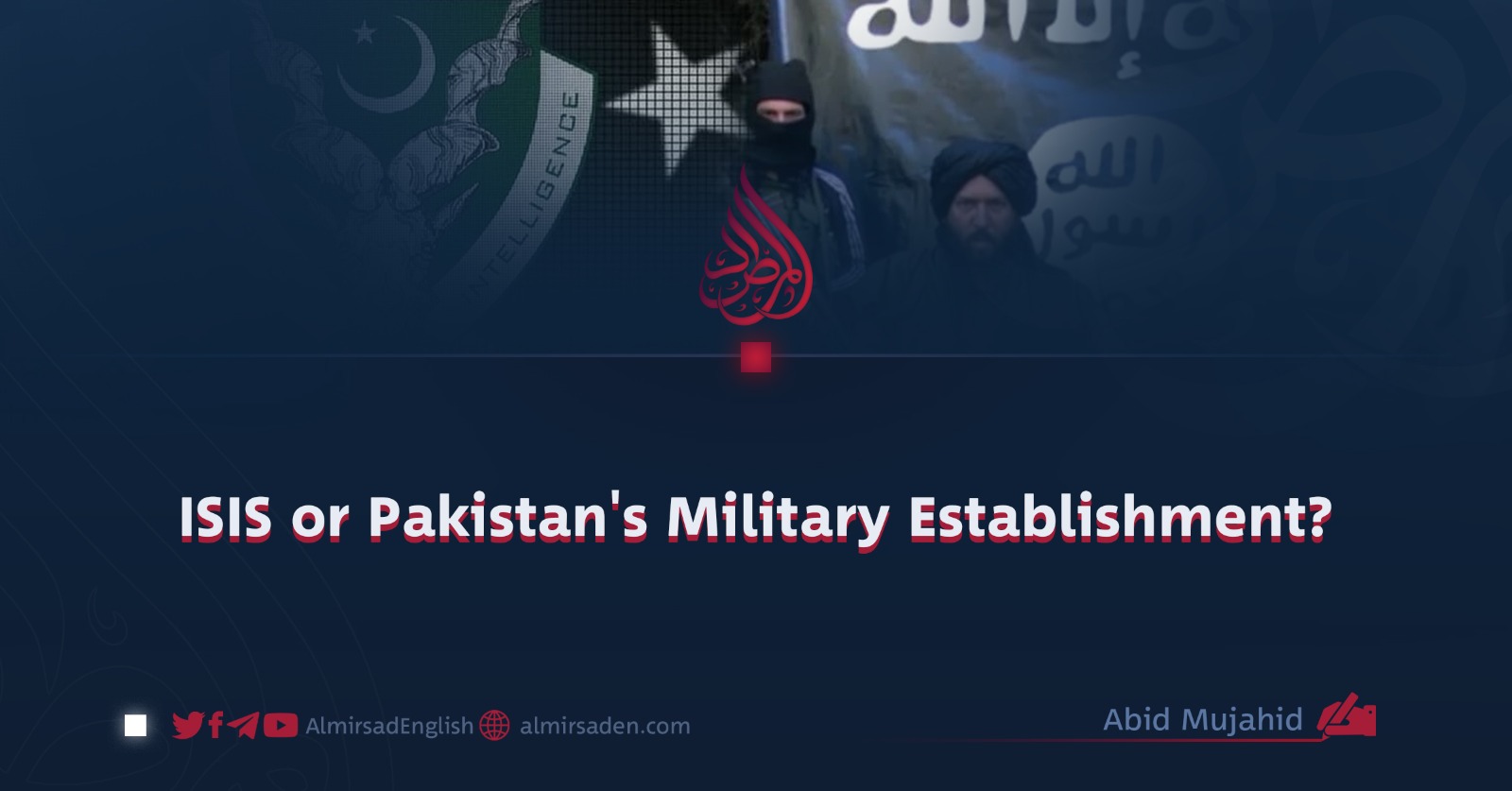
The attacks in Afghanistan, Iran, and Russia; terrorist operations near the borders of China and Tajikistan; Pakistan’s direct intervention after ISIS was crushed in Afghanistan; and the repeated targeting and elimination of ISIS operatives and facilitators in areas under the close watch of the Pakistani military and the ISI all point to the same conclusion: ISIS is trained, supplied, provided with safe havens, assigned targets, and fully supported by Pakistani institutions.
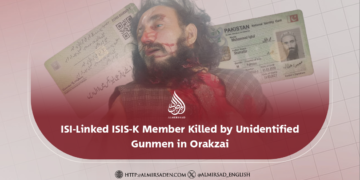
A telling example of this is the killing of Muhammad Iqbal, a mid-level ISIS commander, in the Orakzai region of Khyber Pakhtunkhwa.