







By Khalil Tasal
Although war is inherently a destructive and undesirable phenomenon, once a nation and a government become involved in it, it becomes necessary to uphold certain principles and conduct the conflict in accordance with established rules of warfare. There is a common saying that “halwa is not distributed in war,” a phrase often invoked by those combatants who seek to justify their actions when they fail to adhere to these principles.
According to the established principles of warfare, the lives of civilians, including women, the elderly, and children, must be protected under all circumstances. Their homes and property should be respected, and, more broadly, safeguarding the lives and security of those who are not parties to the conflict is a fundamental humanitarian principle.
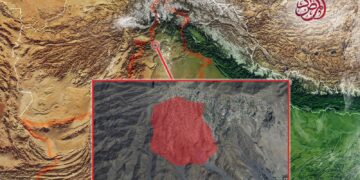
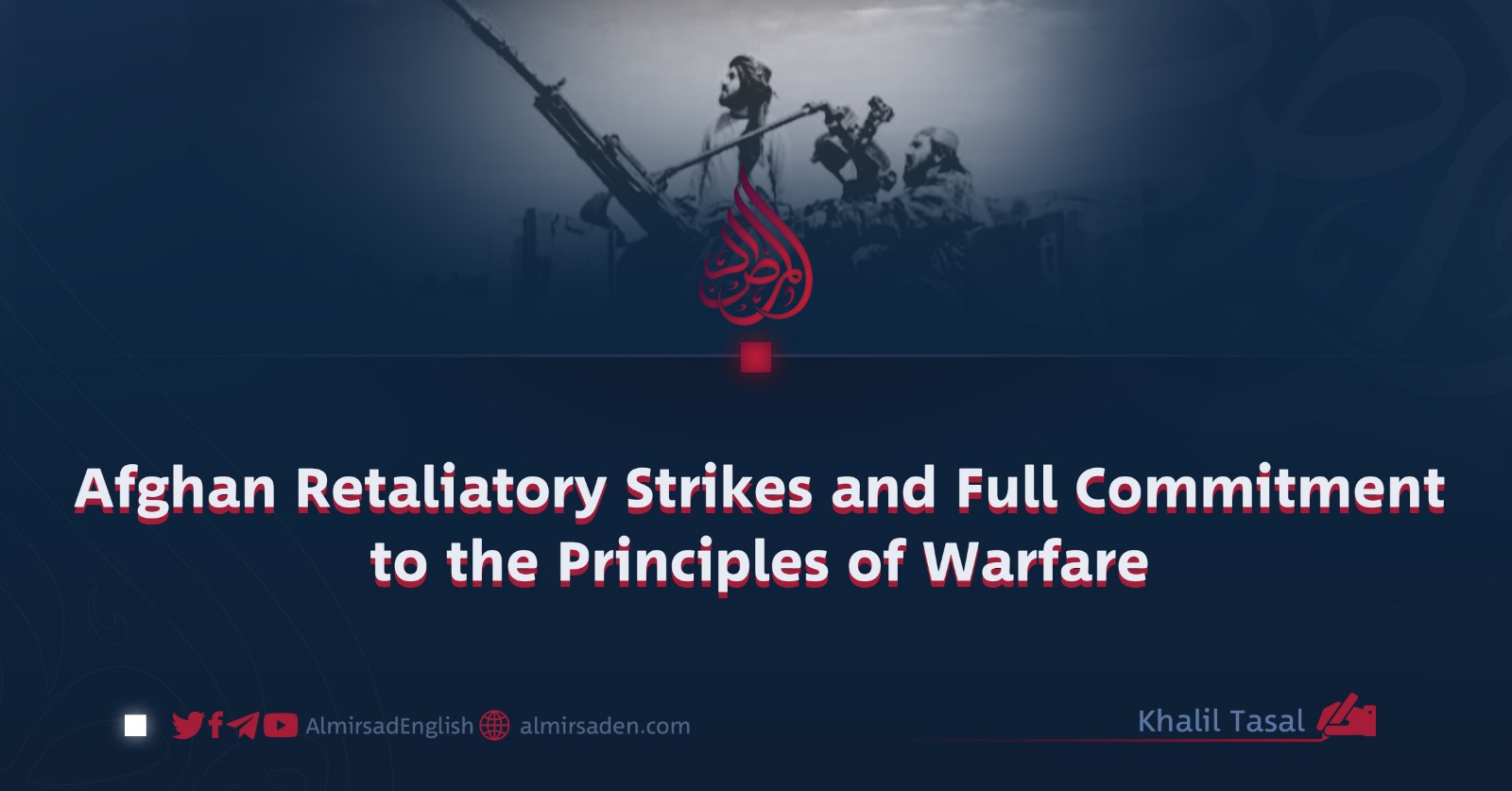
In this context, the discussion concerns the extent of adherence to the rules of war during the ongoing confrontation on Afghan soil between the Pakistani military regime and the Islamic Emirate of Afghanistan (IEA), particularly in relation to the IEA’s retaliatory operation known as “Rad al-Zulm”.
The Pakistani military regime presents itself as one of the world’s modern armies committed to established principles. However, its dark record suggests otherwise, showing little regard for such principles and repeatedly demonstrating a lack of restraint toward civilians. Within its own territory, the military regime has on numerous occasions targeted civilians, protest movements, and civilian locations, labeling the victims as “wanted individuals,” “terrorists,” or “troublemakers.” Many have been killed, forcibly disappeared, or had their homes destroyed under these pretexts.
Likewise, its campaign of attacks on Afghan soil is not a new development; it forms part of a long and troubling history marked by acts of violence and brutality.
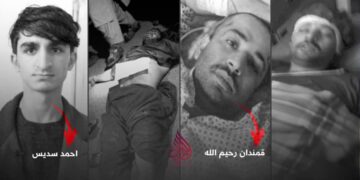
Along the hypothetical Durand Line, its indiscriminate attacks have targeted civilian homes, placing hundreds of Afghan civilians in the line of fire and resulting in their deaths. During the holy month of Ramadan as well, its latest strikes claimed the lives of dozens of children, women, and elderly people. The evidence and reports of these incidents continue to circulate in regional and international media, where they are cited as stark examples of brutality.
On the other hand, the IEA’s security and defense forces, despite their limited resources, have observed the principles of warfare with full restraint. They refrain from targeting any location unless they possess verified intelligence and clear strategic information. So far, their operations have focused solely on Pakistani military personnel, their posts, and their positions.
The intelligence capabilities on the two sides are not comparable. The military intelligence apparatus of the Pakistani regime is operating blindly, relying largely on its capacity to deploy force. In contrast, Afghan intelligence sources, driven by a sense of responsibility to protect the homeland and its people, are gathering precise information and directing operations only against armed adversaries. In order to safeguard civilians, they at times slow the pace of military action and exercise restraint while awaiting more accurate intelligence.
This approach of the IEA’s defense forces has also been acknowledged by a number of current and former military experts and officials, many of whom share the view that the IEA’s precise intelligence and careful identification of targets have ensured that operations are directed solely against those combatants of the military regime and its hired fighters who have repeatedly fueled violence by targeting civilians and civilian sites.
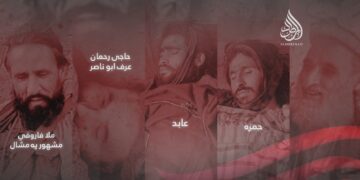
Within the conduct of the military regime, numerous incidents have also been reported involving the desecration of the bodies of slain civilians and opposing fighters. There have even been cases in which the bodies of members of the Tehreek-e-Taliban Pakistan (TTP) and Baloch separatist fighters were publicly set on fire, after which such acts were documented and presented to their superiors as supposed achievements.
According to reports by Pakistan-based and international human rights organizations, many disturbing accounts of torture and abuse inside the military regime’s detention facilities have likewise remained concealed. To justify such practices, the regime’s leadership has granted broad latitude to its forces under the pretext of proving individuals to be enemies, while effectively shielding those responsible from accountability.
In contrast, the IEA’s forces have never targeted civilian locations or non-combatants, nor have they mistreated the bodies of slain attackers. Instead, such remains have been handled with respect and returned appropriately. They have also provided care and treatment for wounded fighters and, in matters concerning detainees, several examples have been cited as positive precedents.
One recent example was the handover of captured Pakistani soldiers through the mediation of Saudi Arabia, an act intended to demonstrate goodwill and encourage the military regime to move toward ending the conflict. However, since the conduct of the brutal military regime is not fully under its own independent control and instead influenced by external directions, opportunities for a ceasefire, dialogue, and direct negotiations have repeatedly been lost.
Just as the IEA does not recognize the Durand Line as an official border, it likewise regards the people living on both sides of this so-called line as part of its own community and asserts that it will never deliberately endanger their lives or property. For this reason, it maintains that the precision and caution exercised during retaliatory operations are intended to ensure that intelligence and local information are thoroughly gathered and targets clearly identified before any strike is carried out, an approach that represents a fundamental principle of warfare.
The aerial operations of the Afghan defense forces, largely based on modern military technology and the use of drones, have also been directed solely at military installations, even in distant Pakistani cities and the capital, Islamabad. The stated objective of these operations is to disable command structures and military capabilities while avoiding harm to civilians.
To date, they have not targeted civilian institutions of the Pakistani regime and have treated them with respect. In contrast, the Pakistani side values only the use of indiscriminate missiles against civilian and government buildings in densely populated areas, aiming to intimidate the population and showcase its military capabilities to its superiors.
They should understand that Afghans are not unfamiliar with war. The IEA has a long history of both conducting and managing military operations. It possesses expertise in politics and warfare alike, and it holds the belief that the Afghan people will spare nothing in defense of their homeland and the protection of their territory. They know no fear or intimidation. Most importantly, every missile and attack launched by the military regime only strengthens the morale and resilience of the Afghan population, creating a bitter generational memory from which the regime may never fully recover.
They must understand that every drop of Afghan blood is accounted for. The Afghan defense and security forces are currently in a position where they have ended internal conflict and now possess stronger defensive capabilities and higher morale than ever before in the face of foreign conspiracies and invasions. Over the past few years, they have demonstrated this strength and resolve to neighboring countries.