











By Saifuddin
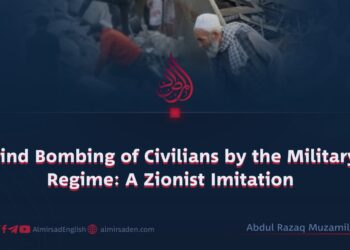
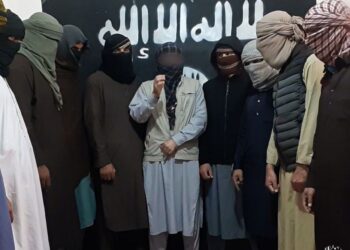
In the region, the Pakistani military regime has earned the top position in the “black market of politics” because of its hypocritical conduct. For a long time, it has repeatedly promised peace during difficult circumstances, yet in normal conditions it has paved the way for the continuation of war. Since a brutal organization like ISIS extensive influence, networks, and safe havens in Pakistan, whenever political pressure from the international community increases on Pakistan, calls for peace and agreements begin to rise. However, when the situation returns to normal, it once again resorts to oppression against civilians and blind bombardments along the so-called Durand Line.
This kind of repeated and two-faced behavior not only weakens the trust of the civilian populations of Pakistan and Afghanistan in the idea of peace, but also creates the feeling in their hearts that political slogans cannot replace real and practical actions.
Likewise, in view of this hypocritical conduct of the Pakistani military regime, many influential political leaders have also been left confused. On the one hand, the ruling circle in Pakistan’s government repeatedly calls for peace, yet on the other hand, once political pressures ease, the outcome of these statements often ends with the martyrdom of innocent and oppressed Afghans and an increase in injustice.
Regarding the Pakistani government, reports from well-informed sources in the region also indicate that Pakistan has long had a history of supporting armed groups. In recent times, however, it has given particular attention to the training, financing, and support of militant opponents, especially ISIS. When the Pakistani government threatens regional and global security through its proxy groups, talks of peace cannot last long in such a situation. Therefore, political statements alone are not enough; practical steps are essential to build trust.
In contrast, the Islamic Emirate of Afghanistan (IEA) has consistently expressed its commitment to the peace and stability of the region and the world, and has also taken practical steps toward this goal. It believes that international peace holds special value, and it has likewise taken necessary measures to maintain sincere relations with its neighboring countries.
Pakistan is not our only neighboring country; we have five other neighbors as well, with whom we maintain good relations based on positive engagement. All five of these neighbors are satisfied and pleased with us, because we do not seek hostility with anyone. Just as peace prevails in our beloved country, we also desire peace and stability throughout the region.
Unfortunately, the propaganda output of the Pakistani military regime relies only on the language of political accusations. In order to defame the IEA, it raises superficial issues that either have no connection to the IEA at all or are merely false allegations and rumors. The international community should therefore ignore the propaganda reports produced by external actors about the IEA and instead take seriously the information provided by the IEA’s official sources, in which the concept of peace and stability for the region and the world is emphasized.