






By Akbar Jamal
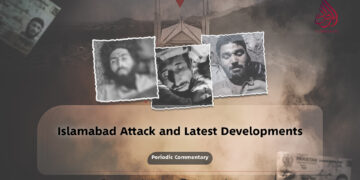
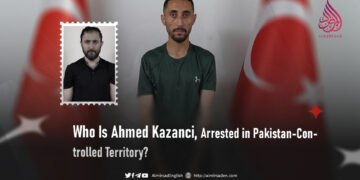
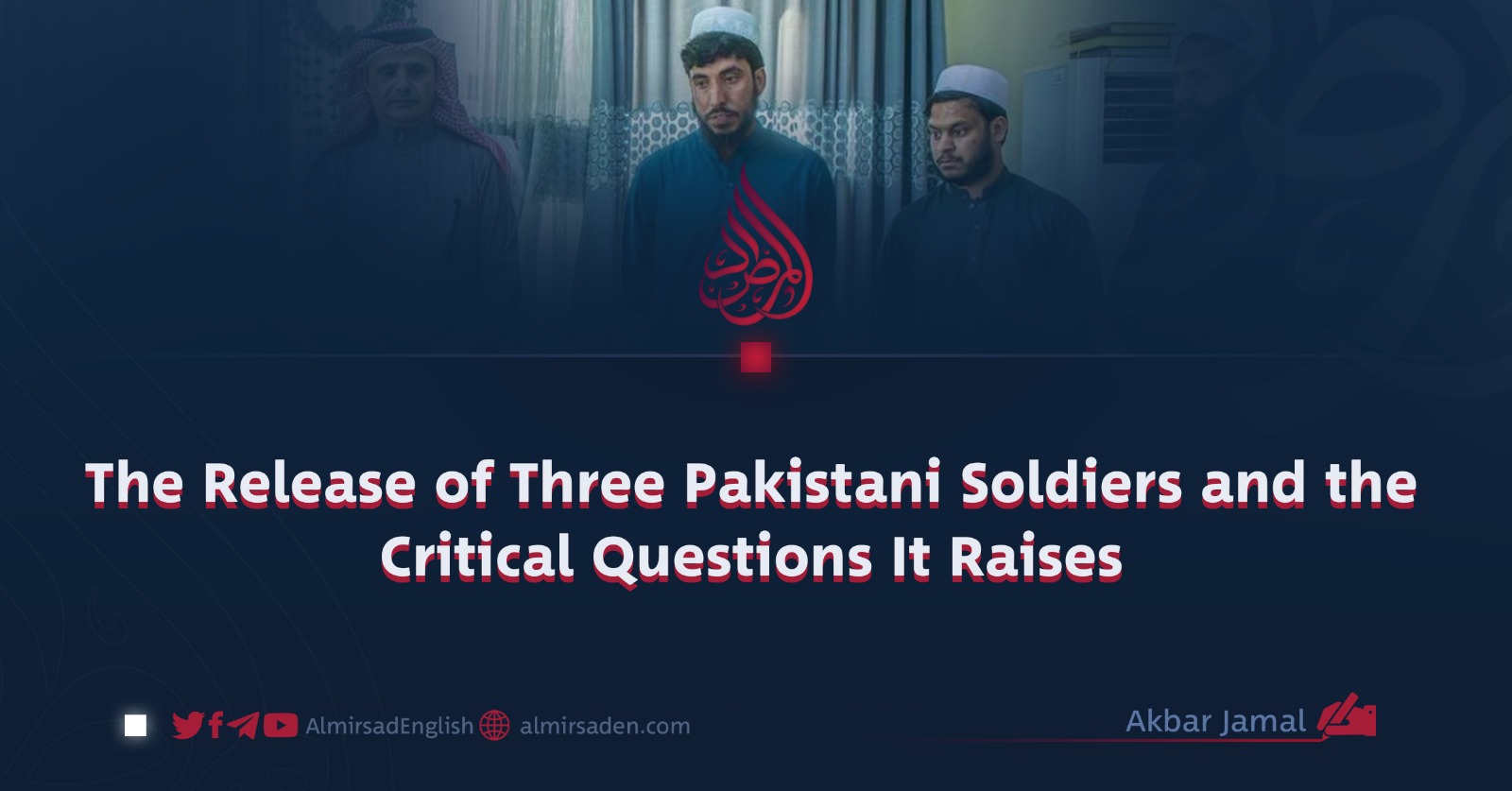
On February 17, 2026, the Islamic Emirate of Afghanistan (IEA) announced that it had released three Pakistani soldiers who had been captured during a retaliatory operation carried out on October 12, 2025. According to the statement, the operation was conducted in response to an unprovoked attack launched by Pakistani forces against Afghanistan on October 9, 2025.
The release followed the completion of diplomatic mediation by Saudi Arabia. The three soldiers were handed over to a visiting Saudi delegation in Kabul, which was tasked with facilitating their return to Pakistan.
The spokesperson of the IEA, Zabihullah Mujahid, described the move as a gesture made in respect of the blessed month of Ramadan, in response to the request of the brotherly country of Saudi Arabia, and as part of the continuation of a policy aimed at maintaining positive relations with all countries.
International news agencies, particularly Reuters and Associated Press, reported the development extensively. However, contrary to expectations, there was not even a brief mention of the matter in Pakistan’s official or domestic media outlets. Likewise, no clear or formal public statement was issued either by Pakistan’s Ministry of Foreign Affairs or by the country’s military leadership.
This silence in itself raises serious questions about Pakistan’s role and position. While the issue may have been deemed sensitive at the state level, observers of Pakistan’s military affairs suggest that the silence could reflect an attempt to conceal a position of weakness.
By way of background, it is important to note that during the clashes in October 2025, the mujahidin of the IEA claimed that, in their retaliatory operations, they killed 58 soldiers of Pakistan’s military establishment and wounded nearly 30 others.
On the other hand, Pakistan’s military media wing, Inter-Services Public Relations (ISPR), in what critics describe as a clear departure from the facts, reported casualty figures significantly lower than what was claimed on the ground.
During the same period, sections of the Pakistani media were circulating claims that Pakistan’s military establishment had made advances near the Durand Line and had taken control of several Afghan border posts. Yet throughout the days of intense clashes, those very outlets, busy broadcasting sweeping and often dramatic assertions, remained completely silent about the capture of three Pakistani soldiers.
This raises an obvious question: when Pakistani media and the military establishment were actively projecting a narrative of battlefield gains, what prevented them from disclosing the capture of their own personnel? Why was complete silence chosen on this particular issue?
It is important to bear in mind that in Pakistan, sensitive military matters rarely reach the media unless they are formally acknowledged by the military establishment. The Official Secrets Act, the regulatory framework of Pakistan Electronic Media Regulatory Authority (PEMRA), and the unwritten red lines enforced under the banner of national security significantly restrict the operational space of Pakistani media outlets.
For this reason, the silence of local media cannot be viewed in isolation from pressure exerted by the military establishment. However, the issue extends beyond legal constraints alone; it also raises broader questions of credibility and public trust.
In today’s digital age, maintaining complete control over information is no longer feasible. When international institutions disseminate news and details circulate rapidly across social media platforms, the silence of official and domestic authorities itself becomes a spectacle.
This inevitably raises questions in the public mind: if claims of battlefield successes were amplified in every direction, why was news of setbacks withheld? And if no losses were sustained, then how did the story of the soldiers’ release emerge in the first place?
In Pakistan, this widening disconnect is what communication experts describe as a “credibility gap” the growing distance between official state narratives and public trust.
In recent years, a new pattern has also emerged from Pakistan’s military establishment: any video that exposes serious shortcomings or mistakes of the army, or even claims made by the opposing side, is immediately labeled as “AI-generated” or a “deepfake.”
Undoubtedly, in the age of artificial intelligence, the fabrication of content is possible. However, the question remains whether dismissing every inconvenient report as fake could, in the long run, serve as a genuinely effective or beneficial strategy for the military.
According to critics, such reactions tend to create further ambiguity rather than clarify the issue and are often seen as an attempt to evade accountability. However, in the case of the release of the three Pakistani soldiers, one factor made it impossible for the military to dismiss the matter as “AI-generated” or a “deepfake”: the release was carried out through the mediation of Saudi Arabia.
Nevertheless, while the silence of Pakistan’s media is surprising, it is not entirely unexpected. This is why many in Pakistan interpret the military’s silence, or its repeated denials, as a sign of weakness. Consequently, among the Pakistani public, a growing perception has taken hold: that the Pakistan Army has reached a point in its dealings with the Islamic Emirate of Afghanistan where even clear and straightforward issues cannot be resolved without third-party mediation.
Another notable aspect of this incident is that the three soldiers had been in captivity since October, and their release was facilitated through Saudi mediation. This indicates that the Islamic Emirate sought, to the extent possible, to keep the matter away from military confrontation and resolve it within a diplomatic framework.
The announcement of the release, made in respect of the blessed month of Ramadan and in the context of regional relations, carries a clear political message. At the same time, it signals that despite tensions, the door to dialogue and negotiation remains open. This approach by the IEA is seen as a reflection of both its diplomatic confidence and its awareness of the balance of power in the region.
In light of the Pakistani military’s silence, it is also important to understand the usual rationale offered: in such cases, media silence is considered necessary to protect military morale, so that the public does not perceive weaknesses within the army and the forces themselves do not feel vulnerable or defeated.
However, today’s era is not the 1990s. Every individual now carries a mobile phone, and the truth is no longer confined under the restrictions of the PEMRA Act.
When the public learns about their country’s losses only through foreign sources, it not only undermines military morale but also severely damages public trust. The perception among citizens that “we are being kept in the dark” can pose a serious long-term risk for any government. While a strategy of withholding information may, in the short term, protect an illusory image, it ultimately deepens the credibility crisis.
One thing is clear: in the modern era, withholding information is rarely a national benefit; more often, it becomes a national liability. The prestige of a government is not built on complete silence, but on systematic, transparent, and consistent truth-telling. The release of the three soldiers may appear to be a minor incident, yet within Pakistani society, it has raised major questions about the credibility of military statements.