















Part 1
By Saifuddin
In every society, both reform and corruption tend to originate from a key segment of the community, the scholars, often referred to as the religious learned class. It is they who steer society either toward righteousness or toward decline, for they play a central role in shaping intellectual and moral guidance. They bear the responsibility of conveying and teaching the true understanding of religion to the people.
However, when this influential group strays from its fundamental duty, distorting religion for personal interests and favoring extremism over moderation and balance, they can no longer be regarded as true heirs of the prophets, but rather as misguided or ineffective scholars. The presence of such extremist and unworthy scholars not only tarnishes the image of religion, but also keeps society and their followers in darkness instead of guiding them toward light. Instead of leading people along the straight path, they divert them onto crooked and misleading roads.
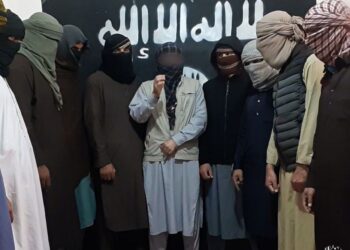
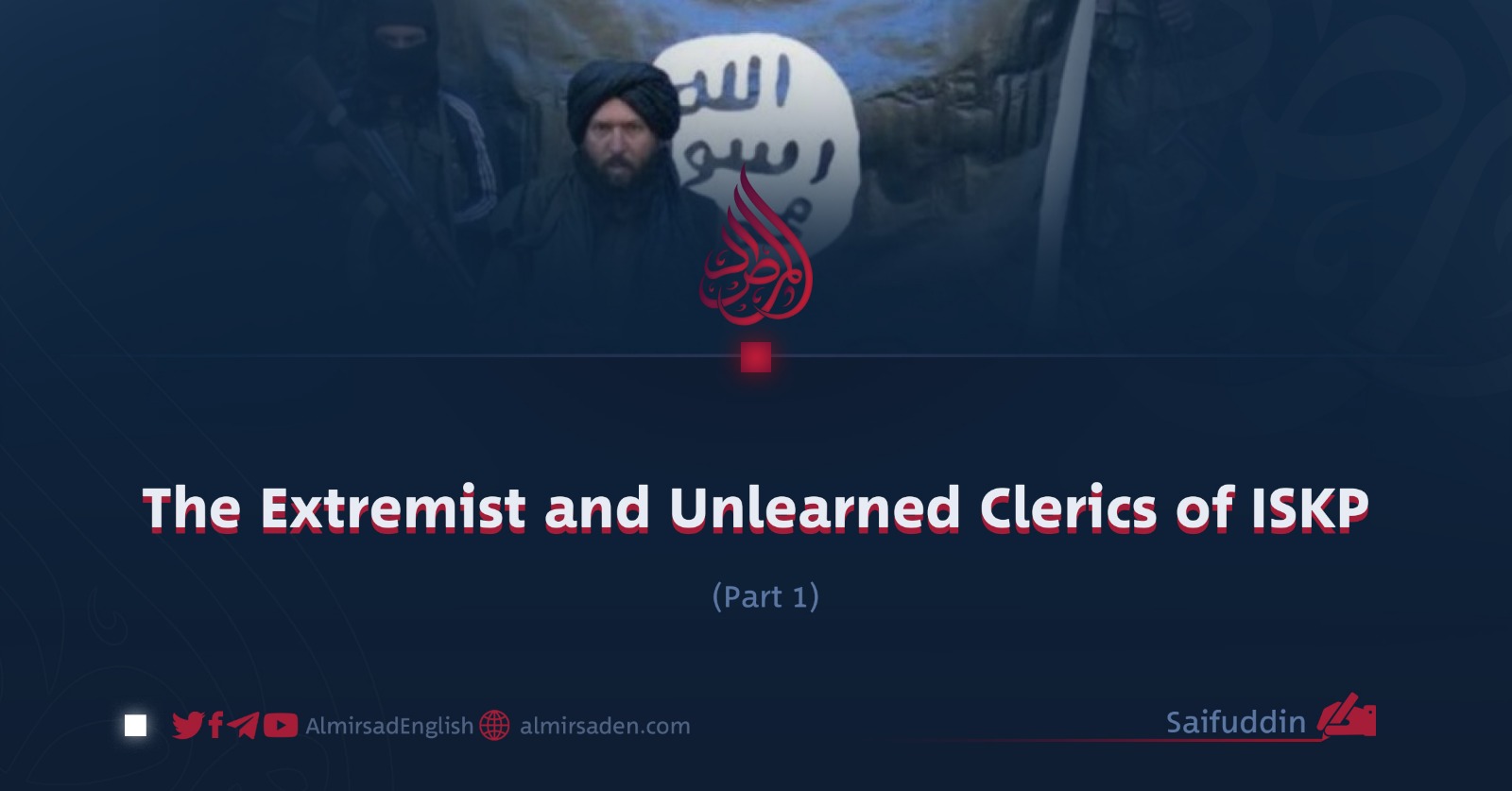
A clear example of the aforementioned extremist scholars in the contemporary era can be seen in the Islamic State Khorasan Province (ISKP). In recent years, through extremist propaganda in Afghanistan, they have launched numerous initiatives aimed at ideologically misguiding the country’s Muslim population, particularly targeting the religious class.
What is even more astonishing is that this group’s propaganda machinery is sustained by individuals who present themselves as “scholars.” Yet not only do they lack profound religious knowledge, they also promote extreme and distorted interpretations of Islamic texts, interpretations for which no precedent can be found in the era of the righteous early generations (Khair al-Qurūn).
In the following, we present several examples of the ignorance and extremism reflected in the leadership and propaganda output of this Kharijite project, in order to clearly illustrate the nature of their radical stance and bring the facts to light. The aim is to enable readers to make an informed judgment, so that, rather than aligning themselves with those who lead toward darkness, they may choose the company of those who guide toward light.
1. Fundamental Deviations in the Propaganda of ISKP
The group is profoundly ignorant of the core principles, characteristics, and definitions of Ahl al-Sunnah wa al-Jama‘ah. In the early period of Islam, the Kharijite project established its own framework, which purported to define the principles of Ahl al-Sunnah wa al-Jama‘ah. However, in practice, ISKP adopts an extremely rigid stance on issues such as takfīr (declaring someone a disbeliever). They label anyone who does not conform to their extremist methodology as “apostate” or a “follower of tyrants”.
Such extremist takfīr has historically been the hallmark of deviant groups in Islam. These groups take superficial and selective readings from the Sharia sources, the Qur’an, Hadith, consensus (ijmā‘), and legal reasoning, without considering the broader principles of Islamic jurisprudence, the objectives of Sharī‘ah (maqāṣid al-sharī‘ah), or the established consensus of the Muslim community.
For further clarification, it should be noted that the contemporary Khawarij, based on this same extremist and ignorant principle, declare the majority of the Muslim community as apostates, including virtually all jihadi, political, and religious groups, except themselves, who are gathered under the banner of their imagined “caliphate.”
In particular, they have even declared takfīr on those noble mujahidin who, for many years, dedicated themselves to defending Islam, Muslims, and Islamic sanctities against Western coalitions. Guided by their ignorance and superficial interpretations, they deemed the blood, wealth, and lives of these defenders permissible, demonstrating that their extremist principles are a direct reflection of their profound lack of knowledge.
They even declared takfīr on many of their own members and demanded istibāh (repentance) from them when, as a result of the determined campaigns by the mujahidin of the Islamic Emirate, these individuals surrendered to the former republican government officials and followed their path. Their so-called judges then considered all these surrendered members to be apostates and demanded that they renew their faith. In this way, they treat the label of takfīr as if it were a staple of their diet, using it indiscriminately, an act that constitutes illegitimate takfīr from the perspective of Islam.