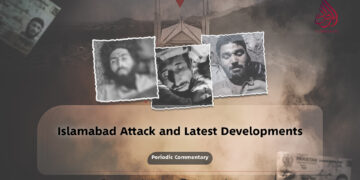



















According to reports, on Wednesday, the 3rd of the month of Jadi 1404, an armed attack was carried out against Commander Ikramuddin Saree and his associates at Imam Hussein Square in Tehran, the capital of Iran. In the incident, Commander Saree was killed along with another commander, Almas, while a third associate was wounded. Shortly after the incident, the so-called Resistance Front (NRF) led by Ahmad Massoud, along with several other fugitive figures, claimed that the killing had been carried out by the security agencies of the Islamic Emirate of Afghanistan (IEA). The speed with which these accusations were made, and the rapid circulation of such claims, raised serious questions about how this information was obtained and why the IEA’s security institutions were blamed so quickly.
According to several sources in Iran, Commander Ikramuddin Saree had been working with the Ansar Headquarters of Iran’s Islamic Revolutionary Guard Corps (IRGC) on matters related to former military officers of Afghanistan’s previous republican government. His responsibilities reportedly included recruiting, organizing, and coordinating these officers in line with their preferences. In recent months, a similar intelligence-driven project has reportedly been launched by Pakistan’s intelligence service, the Inter-Services Intelligence (ISI), with the cooperation of General Abdul Matin Hussainkhail and General Jorat. This project aims to invite former military and security generals and officers from the republican era to Pakistan, organize and integrate them under ISI supervision, and use them for activities that could disrupt Afghanistan’s security as well as for espionage among tribal migrant communities.
Sources indicate, however, that Commander Ikramuddin Saree strongly opposed the transfer of former generals and officers residing in Iran and other countries to Pakistan. His refusal was reportedly based on multiple considerations, the details of which vary according to different accounts.
In any case, Commander Ikramuddin Saree was widely viewed as a major obstacle to the objectives of Pakistan’s intelligence service. As a result, efforts were initiated through General Jorat and General Abdul Mateen to pressure Saree into abandoning his position by creating difficulties for him, or alternatively to eliminate him altogether.
Multiple sources have asserted that Pakistan’s intelligence service, the ISI, was behind the killing of Commander Ikramuddin Saree. According to these accounts, Pakistan may have taken a series of pre-emptive and misleading measures in advance in order to deflect blame toward Afghanistan. This, sources argue, explains why fugitive individuals who had recently traveled to and from Pakistan were quick to accuse Afghanistan following the attack. A source within the Afghan government confirmed to Al-Mirsaad that the attack was carried out by individuals within the circles of Commander Ikramuddin Saree and Ahmad Massoud’s group who had internal disputes with Saree and his associates.
The same source emphasized that the IEA has no extraterritorial operational agenda. During its twenty-year struggle against foreign occupation, the IEA did not assassinate its opponents abroad, and it does not intend to do so now. The IEA, the source added, remains committed to the implementation of the general amnesty and maintains that anyone who feels threatened abroad is free to return to Afghanistan and live in safety.
The source further stated that the attack carried out in Mashhad against Ghulam Marouf was also perpetrated by an individual named Javid, a resident of Kohsan district in Herat province. According to the account, Javid is a member of Ahmad Massoud’s group and was involved in three grenade-throwing incidents inside Afghanistan, carried out two murders, and participated in numerous kidnappings and robberies. On the 25th of Dalwa 1401, he kidnapped a Shia youth named Ahmad Sudais and demanded one hundred thousand US dollars from the victim’s family in exchange for his release. Ahmad Sudais was reportedly held in a bathroom inside a house until security operations by the IEA resulted in his rescue. During those operations, Javid’s brother, Naveed, was killed, while Javid himself managed to flee to Iran, where he went into hiding. According to the analysis presented by the source, Javid later killed Ghulam Marouf, also known as Marouf Lang, due to internal disputes.
The source added that investigations into both the Tehran and Mashhad killings are currently underway, and that the findings will be shared with the families of the victims and the media in the near future.
Meanwhile, Pakistan’s intelligence service is reported to have intensified efforts to sow discord among former Afghan commanders residing abroad. On the 23rd of Qaws 1404, violent physical clashes erupted among former republican-era commanders from Kandahar province who are currently living in Iran, following the escalation of internal disputes. One side included Commander Hashim Rigwal, Commander Esmat, and Commander Mustafa, while the opposing side consisted of commanders loyal to the family of the late General Raziq, namely Siraj, Rahimullah Khan, and Bismillah. Knives and other sharp weapons were used in the confrontation, and there was an apparent attempt to kill Rahimullah Khan and his companions. As a result of the clash, Rahimullah Khan was seriously wounded by Hashim Rigwal.
Reports further indicate that Commander Hashim Rigwal established close ties with Pakistan’s intelligence service through a trusted associate, Commander Wali Jan, who resides in Quetta. At the same time, the family of General Raziq has rejected recent demands made by Pakistan. Analysts suggest that the attempted assassination of Rahimullah Khan was linked to this refusal to comply with Pakistani requests.
In addition to these developments, sources claim that the ISI has continued efforts to use individuals affiliated with its intelligence projects to carry out acts of sabotage from Afghan territory inside Iran, with the broader objective of straining relations between Tehran and Kabul. According to this analysis, the assassination of Commander Ikramuddin Saree in Tehran, along with the extensive media and propaganda campaign that followed, also served another strategic aim: fostering mistrust and tension between Iran and Afghanistan.