









By Khalid Ahrar
As the blessed month of Ramadan approached, the month of mercy, forgiveness, and divine blessings, an atmosphere of tranquility, compassion, and reconciliation prevailed. The hearts of the Afghan people turned devotedly toward Allah Almighty, and in the spirit of Ramadan’s grace, they extended a hand of kindness toward their adversary.
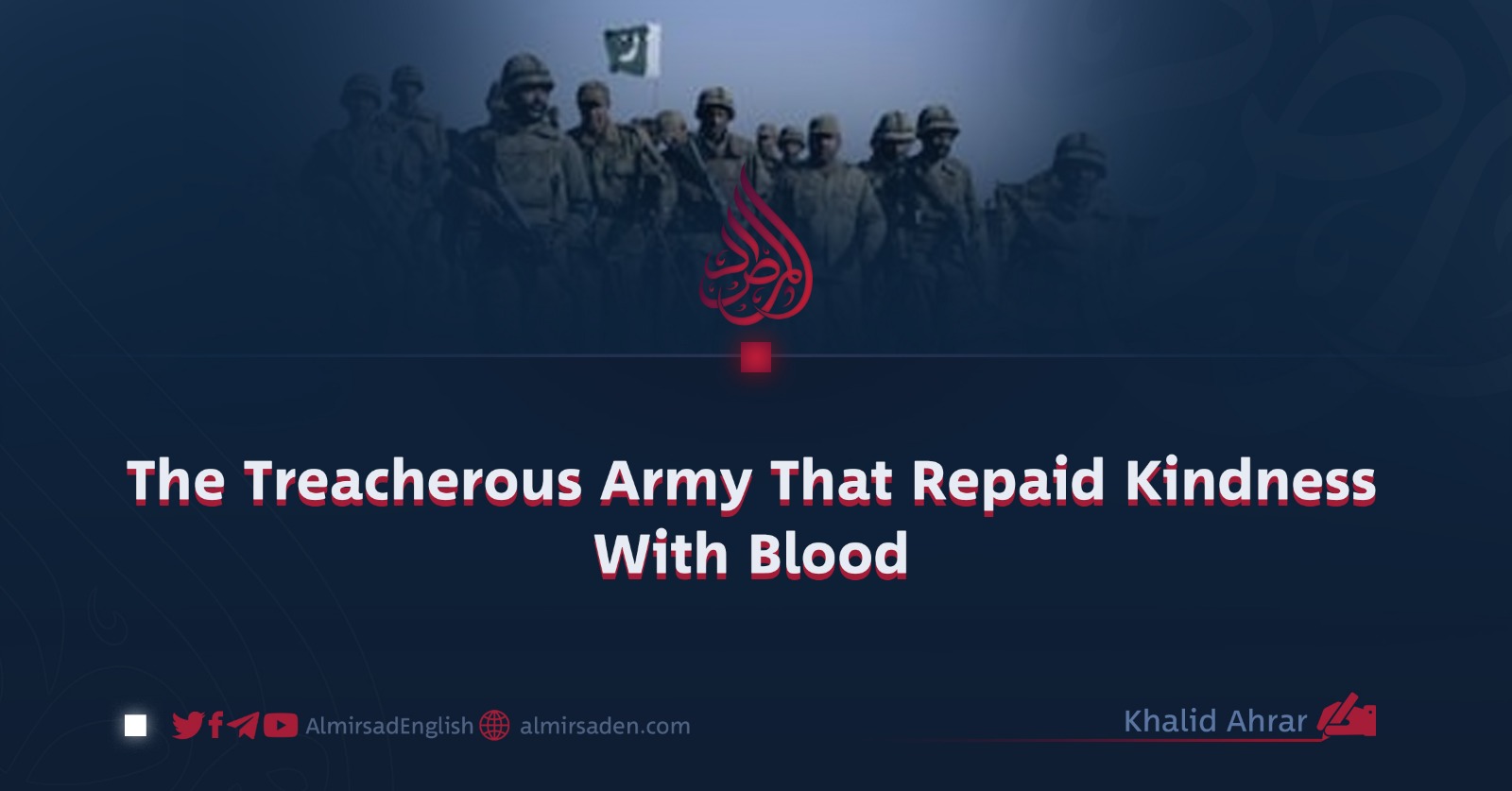
In observance of the sanctity of the holy month, the Islamic Emirate of Afghanistan (IEA) released three Pakistani soldiers who had been captured during last year’s border clashes, setting them free in a gesture described as one of goodwill and magnanimity.
This was a profound act of benevolence by the Afghan people, a clear message that we stand for peace, brotherhood, and Islamic moral values. The intention was that Ramadan be observed as a month of mercy rather than hardship.
Yet, only a few days later, the Pakistani military deployed its air force and launched brutal aerial bombardments against the very Afghan people who had extended kindness during the holy month. In Nangarhar, an entire family, including women and children, was killed, with only two survivors left. In Paktika, a religious school (madrasa) was struck, and the sacred pages of the Holy Qur’an were torn apart.
Just as the Zionists have done in oppressed Gaza, destroying houses of worship and desecrating the Holy Book.
Is this your return for our kindness? Is this your claim to Islam and neighborly conduct? No, no, no. This is neither Islam nor neighborliness. It is hostility toward Islam and toward humanity to repay benevolence with aggression.
The IEA stated in documented media releases that the Pakistani military regime had targeted civilians. Yet the cowardly army, mounted on the steed of its arrogance, insisted that it had struck the centers of Tehrik-e-Taliban Pakistan (TTP) and the Daesh Khorasan (ISKP) group, which it accused of involvement in Pakistan’s recent deadly attacks.
The United Nations Assistance Mission in Afghanistan reported that civilian casualties resulted from Pakistan’s airstrikes. Al Jazeera broadcast documented reports from the affected areas, and in response, Pakistan imposed a ban on the network’s transmissions within its territory.
Afghanistan’s Ministry of Defense described the strikes as a violation of national sovereignty and an act contrary to international law, warning of a calculated response at an appropriate time.
Then, only a few days later, the brave Mujahideen of the IEA were given the command to avenge their nation. Along the length of the disputed line, the frontier warriors descended upon the positions and centers of the ungrateful army like a flock of Ababil birds. Within hours of fierce combat, they shattered the lines of the enemy.
Dozens of soldiers were killed, and their posts, camps, and equipment were damaged or destroyed. Both the dead and the captured were brought across to this side.
When the army once again resorted to aggression and carried out blind and indiscriminate bombardment of civilian areas in Afghanistan’s border provinces, and even targeted the capital Kabul, Afghan forces quietly dispatched their Ababils toward the Margalla Hills, striking military and other sensitive installations in the heart of Pakistan.
Not only Islamabad, but also military centers in Swabi, Abbottabad, Nowshera, Jamrud, Waziristan, and Quetta were reportedly targeted. It was as though a capital was answered with a capital, and other cities with their counterparts.
The mercenary army had underestimated Afghan forces and miscalculated their strength, but the response it received was far faster and far more devastating than anticipated. Now, the hands of the Afghan people have reached their adversaries’ throats, and they are capable of delivering a sharp response to every provocation.
If Asim Munir, the broker of American projects, shows insolence regarding Afghans and says:
“When it comes to the security and safety of every Pakistani, all of Afghanistan is cursed,”
or utters other words filled with insult:
“The life of a single Pakistani is more important than all of Afghanistan,”
then for every young and senior Mujahid of the IEA, the hair of a single Afghan is worth a hundred times more than the entire mercenary army. If, in the past, our leaders sacrificed their thrones for the sake of a single migrant brother, then now, Noor Alam, child of our land, we are ready to unleash fire on Islamabad, Rawalpindi, Lahore, and Karachi in exchange for your tears.
The Afghan people, who have been victims of Pakistan’s intelligence, military, and economic aggression for decades, now feel their hearts even more shattered. But this broken heart will not only weep; it will ignite the flames of revenge. The forces that showed mercy to the enemy in the spirit of Ramadan are now also ready to avenge the blood of their oppressed people in response to the same enemy’s brutality.