
By Dr. Ajmal
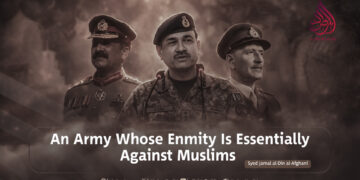
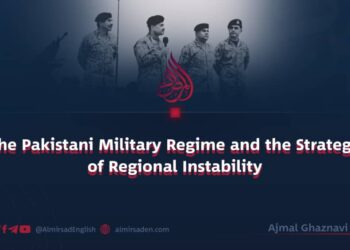
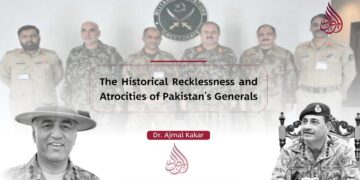
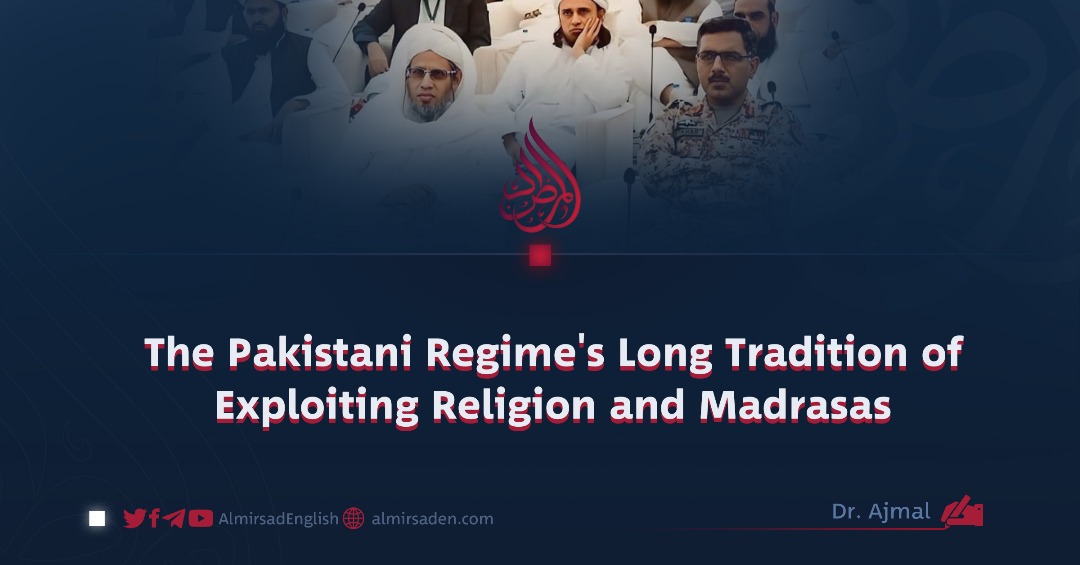
For decades, those who have ruled Pakistan have treated religion as a political instrument. Successive military leaders, along with the dictatorial generals who repeatedly dismantled civilian governments, have consistently exploited religious sentiment to safeguard their authority, secure personal gain, and align themselves with global oppressors. They cultivated their preferred muftis, built compliant madrasas, and used them as props to give a religious appearance to their secular politics and worldly agendas. A recent example is the group of so-called muftis at Jamia Rasheed, who publicly celebrated military officers long implicated in the bloodshed of their own people and the deaths of countless civilians, officers whose actions often served foreign agendas and empowered movements like the Daeshi Khawarij.
The military regime’s record speaks for itself. It is a long catalogue of actions that contradict Islamic principles and continue to wound the collective memory of Pakistan’s Muslims. The Lal Masjid assault, the Hafsa Madrasa tragedy, the open and covert killings of scholars, the handing over of Dr. Aafia Siddiqui, the targeted attacks on Tehreek-e-Labbaik members, and its open cooperation with the Zionist regime despite the suffering in Palestine are only a few chapters of this painful history. Overlooking such crimes is a great sin.
It is therefore troubling to see military agents and so-called scholars such as Mufti Abdul Rahim describe this same army as an Islamic force. They use the Qur’an and Hadith as bargaining tools, issuing rulings that forbid resistance against a regime responsible for years of oppression. The military agents of Jamia Rasheed have even spoken against the Islamic Emirate of Afghanistan (IEA). Acting at the direction of the military regime, they attempt to persuade Pakistanis that the IEA is not a legitimate Islamic system, that it fuels Pakistan’s internal problems, and that it supports the TTP. Yet truth does not bend to propaganda. The IEA remains widely recognized as an Islamic government that brought peace to Afghanistan after decades of conflict.
Pakistan is now confronting the consequences of its own policies. The TTP issue is not an imported problem. It grew out of the injustices carried out by certain powerful circles within the military against the people of Khyber Pakhtunkhwa and other non-Punjabi regions.
Mufti Abdul Rahim himself has a long history of deceit. He imagined he could once again mislead people by traveling to Afghanistan, but the IEA distinguishes clearly between genuine scholars and figures manufactured by ISI. For this reason, he was treated as he deserved and sent back. This perceived slight may well be the reason behind the recent wave of malicious propaganda unleashed by Jamia Rasheed against the IEA on behalf of the military. With Allah’s will, this harm will ultimately rebound upon these merchants of religion and upon the oppressive regime in Islamabad.
Another undeniable reality is that the Pakistani regime, in its present form, lacks any form of genuine legitimacy, whether public or, according to its own framework, democratic. The former prime minister remains in prison without fair justification, along with much of his cabinet and party leadership. The army chief now acts with authority above both the prime minister and the president. Several members of the Supreme Court and parliament have resigned in protest. Yet these developments remain largely hidden from the public because the media operates under military control. Even so, State puppet muftis continue to dress this hollow structure in religious language.
These clerics ignore the fact that the Pakistani military maintains warm relations with anti-Islamic regimes and occupying powers, including Israel. Its record of obedience to American leaders is well known. Nothing in this regime’s behavior suggests that it is an Islamic army, or even a genuine national army. It operates as a mercenary force serving political and financial interests, and many of its own soldiers suffer under the very system they serve.
In truth, Jamia Rasheed and its affiliated muftis have chosen to praise a regime that maintains friendly relations with Zionist actors, has murdered hundreds of sincere scholars, destroyed their reputations, and handed many of them to foreign powers. They defend a military responsible for demolishing hundreds of mosques, madrasas, schools, public buildings, and civilian homes in Khyber Pakhtunkhwa, a military known even for letting dogs enter mosques and for desecrating the Holy Qur’an.
Those who assist such wrongdoing should realize that the Muslims of Pakistan will not be misled by the flattery of government-appointed muftis or by self-proclaimed tribal representatives who lack any standing in their own communities, yet raise slogans in favor of the Pakistani army and against the IEA. The IEA is an authentic Islamic system built by genuine scholars and deeply rooted among the people. No amount of malicious propaganda from those who trade their faith for worldly gain will ever undermine it.