


By Mawlawi Abdul Jabbar
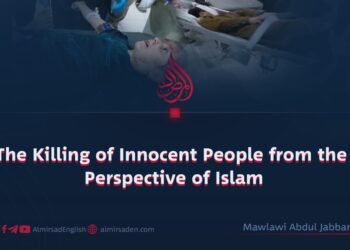
Before the advent of Islam, the Arabs lived in the period of ignorance, facing various challenges and great trials. Human dignity was not valued, but with the arrival of the Prophet Muhammad (PBUH), it was made clear that Islam is a religion of mercy, justice, and human dignity. In Islam, human life is granted the highest respect, to the extent that the unjust killing of a single person is considered equivalent to the killing of all humanity. Therefore, the killing of innocent and ordinary people is not only a grave moral crime but is also regarded in Islamic law as one of the greatest sins.
In this context, we present a number of verses from the Holy Qur’an to help recognize the value of human life and to understand that the Qur’an explicitly forbids the unjust killing of a human being.
1. Allah Almighty says:
{مَن قَتَلَ نَفْسًا بِغَيْرِ نَفْسٍ أَوْ فَسَادٍ فِي الْأَرْضِ فَكَأَنَّمَا قَتَلَ النَّاسَ جَمِيعًا وَمَنْ أَحْيَاهَا فَكَأَنَّمَا أَحْيَا النَّاسَ جَمِيعًا}، [المائدة: 32]
“Whoever kills a soul unless for a soul or for corruption [done] in the land – it is as if he had slain mankind entirely. And whoever saves one – it is as if he had saved mankind entirely.” (Surah al-Maidah: 32)
This verse makes it clear that the killing of an innocent person is such a grave crime that it is considered equivalent to the killing of all humanity. Unjust murder brings with it numerous worldly and spiritual harms and devastating consequences. Even the killer often feels deep remorse and regret after committing the act. Yet the shedding of innocent blood can also embolden others to commit similar crimes. In this way, anyone who kills another person spreads corruption and essentially opens the door to the destruction of all humanity and widespread disorder.
2. Regarding those who unjustly kill innocent people, Allah Almighty says about their severe punishment:
{وَمَن يَقْتُلْ مُؤْمِنًا مُّتَعَمِّدًا فَجَزَاؤُهُ جَهَنَّمُ خَالِدًا فِيهَا وَغَضِبَ اللَّهُ عَلَيْهِ وَلَعَنَهُ وَأَعَدَّ لَهُ عَذَابًا عَظِيمًا}، [النساء: 93]
“But whoever kills a believer intentionally – his recompense is Hell, wherein he will abide eternally, and Allah has become angry with him and has cursed him and has prepared for him a great punishment.” (Surah an-Nisa: 93)
This verse describes the severe punishment in the Hereafter for deliberate murder, highlighting the gravity and seriousness of this act. If a Muslim intentionally kills another Muslim, fully aware that the victim is a fellow believer, just as the aggressive and murderous Pakistani military regime intentionally kills our innocent countrymen, then such people face Hell, divine curse, and severe torment in the Hereafter, and they cannot be absolved even through expiation.
Lesson: Those who issue religious rulings justifying the killing of Muslims, or who label such unjust murders as jihad or as meritorious deeds, share in the accountability and punishment alongside the aggressor military.
3. Allah Almighty has forbidden unjust killings, oppression, and aggression, and He says:
{أَلَا لَعْنَةُ اللَّهِ عَلَى الظَّالِمِينَ}، [سورة الهود: 18].
“Indeed, the curse of Allah is upon the oppressors.” (Surah Hud: 18)
This verse makes it clear that the killing of innocent people is a manifest act of oppression, and Islam strongly condemns all forms of injustice, describing the oppressor as a cursed individual.
The Hadiths also emphasize the sanctity of innocent human life, particularly that of an oppressed Muslim, and explicitly forbid such actions, warning the Muslim ummah against committing them.
1. In Sahih Bukhari and Sahih Muslim, a Hadith is narrated from the Prophet Muhammad (PBUH), in which he said:
(لا يَحِلُّ دَمُ امرِئٍ مُسلِمٍ يَشهَدُ أنْ لا إلَهَ إلَّا اللهُ وأنِّي رَسولُ اللهِ، إلَّا بإحدى ثَلاثٍ: النَّفسُ بالنَّفسِ، والثَّيِّبُ الزَّاني، والمارِقُ مِنَ الدِّينِ التَّارِكُ للجَماعةِ).
The narrator of the above Hadith is Abdullah ibn Mas’ud (RA).
This Hadith is narrated in Sahih al-Bukhari as number 6878 and in Sahih Muslim as number 1676, and the scholars of Hadith have classified it as authentic (Sahih).
“Allah’s Messenger (PBUH) said, “The blood of a Muslim who confesses that none has the right to be worshipped but Allah and that I am His Apostle, cannot be shed except in three cases: In Qisas for murder, a married person who commits illegal sexual intercourse and the one who reverts from Islam (apostate) and leaves the Muslims.”
2. Likewise, considering the rules of warfare, the Prophet Muhammad (PBUH) instructed that during battle, women, children, and the elderly should not be killed. The Prophet (PBUH) said:
(كان رسولُ اللهِ صلَّى اللهُ عليه وسلَّم إذا بعَث سَريَّةً قال اغزُوا بِسمِ اللهِ وفي سبيلِ اللهِ فقاتِلوا مَن كفَر باللهِ لا تغُلُّوا ولا تغدِروا ولا تُمثِّلوا ولا تقتُلوا وليدًا ولا امرأةً ولا شيخًا).
The narrator of the above Hadith is Abdullah ibn Abbas (RA). This Hadith is narrated by Imam al-Tabarani in Al-Mu’jam al-Awsat (4/268) and by Imam Ahmad in his Musnad as number 2728.
“Whenever the Messenger of Allah (PBUH) sent out a military expedition, he would say: ‘Fight in the name of Allah and for the sake of Allah. Fight those who disbelieve in Allah. Do not embezzle (the spoils), do not be treacherous, do not mutilate (the dead), and do not kill any child, woman, or elderly person.'”
This Hadith demonstrates that even in times of war, ordinary and innocent people are to be protected.
3. The Hadiths also state that on the Day of Judgment, the first matters to be adjudicated among people will concern bloodshed.
The Prophet Muhammad (PBUH) said:
(أولُ ما يحاسبُ عليهِ العبدُ الصلاةَ ، وإنَّ أولَ ما يُقضَى بين الناسِ في الدماءِ).
The narrator of the above Hadith is Abdullah ibn Mas’ud (RA).
This Hadith is narrated in Sahih al-Bukhari as number 6864 and in Sahih Muslim as number 1678, and the scholars of Hadith have classified it as authentic (Sahih). Imam al-Nasa’i has also narrated it as number 3991.
The Prophet (PBUH) said, “The first cases to be decided among the people (on the Day of Resurrection) will be those of blood-shed.”
This Hadith also highlights the severity of the crime of killing innocent people.
The sanctity of innocent human life has also been explicitly and consistently affirmed by the Salaf.
The statement of Abdullah ibn Umar (RA): He said:
قال ابن عمر رضي الله عنهما: “إن من ورطات الأمور التي لا مخرج من وقع نفسه فيها: سفك الدم الحرام بغير حله”، [رواه البخاري والحاكم].
“Indeed, among the gravest corruptions that a person can become entangled in is the shedding of blood without a legitimate right. Once involved, there is no way out.”
(Reported by al-Bukhari and al-Hakim)
This demonstrates that the spilling of an innocent person’s blood is such a major crime that anyone who becomes involved in it cannot easily escape, due to the severe consequences in both this world and the Hereafter.
2. Likewise, the statement of Mu’awiyah (RA): He said:
عن معاوية رضي الله عنه قال: سمعت رسول الله صلى الله عليه وسلم يقول: “كل ذنب عسى الله أن يغفره إلا من مات مشركا أو قتل مؤمنا متعمدا” [رواه أبو داود وأحمد].
“Every sin may be forgiven by Allah, except for one who dies upon shirk or one who kills a believer intentionally.”
(Reported by Abu Dawud and Ahmad)
3. Likewise, the statement of the Prophet Muhammad (PBUH), who said:
“من أعان على قتل مسلم بشطر كلمة لقي الله مكتوب بين عينيه: آيس من رحمة الله” [رواه أحمد وابن ماجة].
“Whoever assists, even with half a word, in the killing of a Muslim will stand before Allah with these words written between his eyes: ‘Despised by Allah’s mercy.”‘
(Reported by Ahmad and Ibn Majah)
4. The statement of Sufyan ibn ‘Uyaynah, who said:
في “شطر كلمة” “هو أن يقول: اقت” يعني لا يتم كلمة اقتل، فيا له من ذنب عظيم ما أثقله، ويا لها من جريمة ما أصبر مرتكبها على النار: (يَوْمَ لَا يَنفَعُ الظَّالِمِينَ مَعْذِرَتُهُمْ وَلَهُمُ اللَّعْنَةُ وَلَهُمْ سُوءُ الدَّارِ)[غافر: ۵۲].
“A ‘half-word’ means that someone utters only the beginning of the word ‘iqtul’ (kill) but does not complete it. Consider how grave a sin this is and how heavy a burden it carries. It is such a serious crime that the one who commits it will face the torment of the Fire. On that Day, the oppressors’ excuses will benefit them nothing, the curse will be upon them, and they will have a terrible abode.”
Lesson: In Imam Sufyan ibn ‘Uyaynah’s statement, this specifically includes ignorant jurists who issue fatwas permitting the killing of innocent Muslims or consider it a form of jihad and a means of reward. They must understand that they too will face such severe consequences.
5. Bara’ ibn ‘Azib (RA) narrated that the Prophet Muhammad (PBUH) said:
“لزوال الدنيا أهون على الله من قتل مؤمن بغير حق” [رواه ابن ماجة بإسناد حسن، ورواه البيهقي والأصبهاني وزاد فيه: “ولو أن أهل سماواته وأهل أرضه اشتركوا في دم مؤمن لأدخلهم الله النار”].
The killing of a Muslim is one of the greatest sins in this world. This Hadith has also been narrated by Imam al-Bayhaqi and Imam al-Isfahani, with the added statement: “If the inhabitants of the heavens and the inhabitants of the earth were all to partake in shedding the blood of a single believer, Allah would cast them all into the Fire (Hell).”
6. Imam al-Nawawi (may Allah have mercy on him) has reported a consensus on the prohibition of killing innocent people, and he said:
وأما تحريم قتل النفس المعصومة فمما انعقد عليه إجماع المسلمين، وهو من أعظم المحرمات، [شرح المسلم].
“The killing of an innocent soul is forbidden, and there is a consensus among the Muslims on this matter. It is considered one of the gravest of prohibited acts.” (Sharh Sahih Muslim)
All of the above texts clearly demonstrate that the killing of an innocent person is among the gravest sins in Islam. Even the slightest assistance or indication in committing such an act leads to severe punishment.
Therefore, the aggressive Pakistani military and the scholars who support them must learn from these texts and understand that every human life is sacred and precious. No one has the right to support or facilitate unjust killings. Likewise, influential figures must make every effort to prevent those jurists who, under the guise of religion, have issued fatwas that have led to the shedding of innocent blood, as such actions carry a heavy accountability before Allah.