
By Ayub Khalil
IS-KP first announced its presence from the Tirah region of Khyber Pakhtunkhwa, and later expanded its influence into districts of Nangarhar. The group then formally declared its branch under the name of ISKP and appointed the Pakistani national Hafiz Saeed Khan as its leader.
In 2019, the major centers of ISKP were destroyed. After the victory, and with the return of the Islamic Emirate of Afghanistan (IEA) to power, ISKP networks were further crushed during security operations. At present, ISKP no longer possesses any major centers or significant influence inside Afghanistan. It is clear that the group’s operational centers, financial resources, and propaganda activities are being organized from the side of Pakistan’s military regime.
This raises the question of how ISKP emerges under the shadow of Pakistan’s military structure. The Pakistani military regime has always attempted to present itself to the world as a partner against terrorism, yet the realities of the region portray a different picture. The hidden centers of the ISKP project and the regional games operating under the shadow of the military regime are regarded by many analysts and political observers as part of an organized and long-term strategy.
They believe that the continuation of ISKP activities in the region, its sources of funding, movement networks, extensive propaganda, and operational organization are not things that could exist without strong intelligence and logistical support.
On this basis, many questions arise: why does ISKP mostly emerge in areas where the security and intelligence influence of the military regime is extensive? And why do many of the group’s propaganda narratives and operations appear aligned with the political and military equations of the region that are connected to the strategic objectives of the military regime?
Critics claim this group is at times used as a tool of pressure, at times as a means of spreading fear, and at other times for influencing regional political changes.
Likewise, the name of ISKP is sometimes used as a proxy to conceal the real actors and the figures operating behind the military regime. The purpose is to keep the region under continuous insecurity, instability, and psychological pressure so that political and military equations can be managed according to the interests of the military regime.
In this context, ISKP is seen not merely as an armed group, but as a complex project tied to regional intelligence and political games.
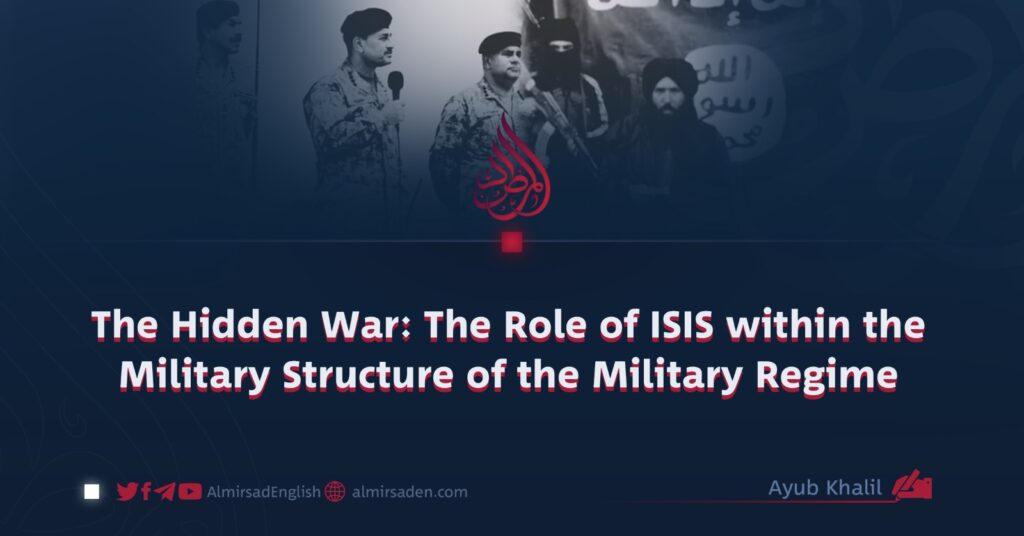
The Pakistani military regime attempts to portray ISKP militants as connected and aligned with itself through its influence in the military and media spheres, and seeks to present the indirect and asymmetrical role of ISKP within its military and media structure in a way that suggests the group is a strategic partner. According to observers, the objective is to later use it as a tool for pressure, influence, and the achievement of regional goals.
This is why much of ISKP’s propaganda literature, media activity, and social narratives appear largely aligned with the war objectives and strategic aims of Pakistan’s military regime. This alignment is seen not as mere coincidence, but as part of broader regional political and intelligence calculations.
The purpose and objectives are said to be that ISIS was created within the framework of regional and international political and intelligence games in order to weaken and keep anti-occupation movements preoccupied. Most of the group’s attacks have been directed against religious scholars, Mujahideen, and ordinary civilians, rather than against foreign forces.
Within the structures of Pakistan’s military regime, the use of the influence of religious scholars, prominent tribal elders, and influential personalities for political and strategic objectives has remained a recurring phenomenon. In the first stage, the military regime attempts to benefit from the social credibility of scholars and prominent figures, their religious influence, and their impact on public beliefs in order to shape and direct public opinion.
However, in the second phase, when political equations change or new necessities arise, those same scholars, prominent leaders, and influential personalities are used within the framework of political rivalries as propaganda tools against opposing sides. The result is often the damaging of their reputation or their political isolation.
Such conduct, which is linked to complex intelligence mechanisms and policies, has continued for a long time. Under this strategy of the military regime, many leading and influential religious figures, political leaders, and social personalities have faced various forms of pressure and have ultimately been eliminated.