


















By Saeed Fateh
The first Islamic state began as a civil polity and, within a remarkably short period, established firm foundations. With each new dawn, the geographical reach of the Islamic realm widened, and groups upon groups entered the fold of Islam. After Mecca and Medina, successive caliphs brought major and influential cities across the world under Islamic rule.
As the state expanded, it absorbed regions that had once served as centers in the eras of numerous prophets, places of special distinction to which messengers had been sent.
Each of these territories was conquered only after tremendous hardship and immense sacrifice. Yet at that time, the insight of military commanders, the depth of their faith, and the divine assistance of the Allah Almighty constituted the decisive factors behind those victories.
No one imagined that such lands would ever slip from Muslim hands, that unbelievers would once again rule them, or that the unified domain of the Islamic state would one day be shattered into fifty-seven separate fragments. Tragically, however, internal rivalries, corruption, and enemies of Islam operating under Muslim guise became the principal causes behind the fall and dismemberment of those cities.
Against all expectations, the once unified Islamic domain was divided into fifty-seven pieces. Even now, the enemy’s appetite remains unsated and seeks to fracture it into eighty-eight, while the custodians of these lands continue to slumber in heedlessness.
Jerusalem bore the imprint of Abu Ubaydah ibn al-Jarrah; Damascus that of Khalid ibn al-Walid and Abu Ubaydah; Egypt that of Amr ibn al-As; al-Andalus that of Tariq ibn Ziyad; Granada that of Ahmad ibn al-Ahmar; Istanbul that of Sultan Muhammad al-Fatih; Samarkand and Bukhara that of Qutaybah ibn Muslim; Balkh that of al-Ahnaf ibn Qais; Delhi that of Muhammad Ghori; Lahore that of Sultan Mahmud of Ghazni; Kashgar that of Sultan Satuq Bughra Khan; Mashhad that of Abdullah ibn Amir; and Tabriz that of Hudhayfah ibn al-Yaman. These were the inheritances left to us. Beyond them lay dozens more cities that had come into Muslim hands, places whose tyrants were driven to ruin, like Pharaoh before them, by the Moses of their own time.
Yet the enemy did not remain idle. It cultivated ambitious individuals within Muslim societies, converted nominal Muslims into agents serving foreign objectives under the banner of Islam, and organized them into coordinated groups. In more recent periods, they established political parties across Islamic cities, instruments that proved highly effective in advancing policies of fragmentation and domination.
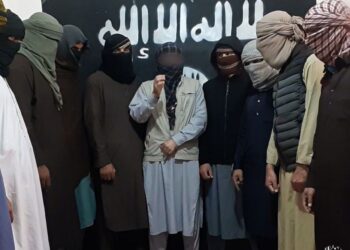
Even more perilous in this campaign of disintegration were those groups within the Ummah that pursued armed activity, coups, and warfare, such as ISIS today.
Daeshi Khawarij pose a grave threat to the security of every Islamic city. Their targets are consistently Muslim populations, Islamic urban centers, and Islamic governments themselves. From their inception until the present day, they have carried Islam as a slogan, while their actions have served only to weaken it and to bring about the collapse of Islamic governance.