














Sayed Jamal al-Din Afghani
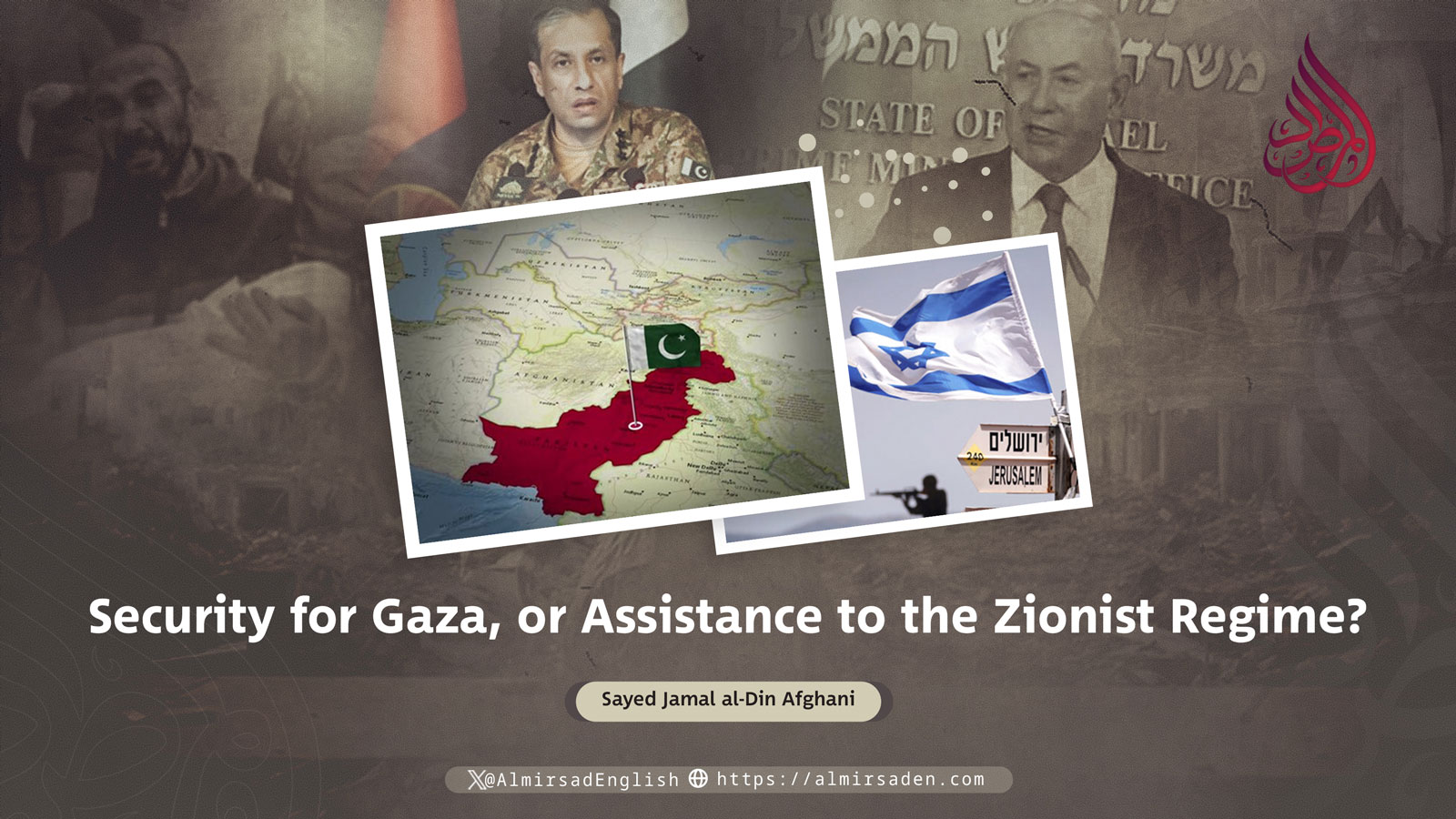
Yesterday in the Swiss city of Davos, a meeting convened under American leadership brought together representatives from a number of Islamic and non-Islamic countries. At this gathering, a new entity called the Board of Peace (BoP) was formally established. Discussions and preparations for this body had been underway since last year, and yesterday it finally assumed a concrete institutional form. What authority will this organization ultimately wield, and how far will its activities extend?
From the outset, it had been widely assumed that the new body would deal exclusively with Gaza’s security, working to halt the ongoing atrocities there and to create a stable environment for civilians. It became clear yesterday, however, that the Board of Peace’s mandate will not be confined to Gaza alone. Although its charter has not yet been fully disclosed, several Western media outlets reported on portions of it and suggested that the organization intends to pursue global security initiatives, promote stability in every region, and operate as a worldwide peacekeeping force.
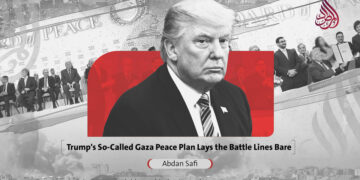
According to these reports, the head of the body will be the President of the United States, accompanied by five other senior figures, including Trump’s son-in-law, the U.S. Secretary of State, and a former British Prime Minister. The right of veto, it is said, will belong exclusively to Washington. Any country seeking membership in the council would reportedly be required to pay one billion dollars, with that membership lasting only three years. States that contribute larger sums would see their participation extended. Control over deliberations and agenda-setting within the council would rest solely with the United States and its president. At present, Israel has reportedly been granted membership ahead of all others. Saudi Arabia, Qatar, Turkey, Pakistan, and several additional Islamic and non-Islamic countries have expressed interest in joining, while the overwhelming majority of European states, including France, have declined. Russia responded with irony, stating that it would consider membership if its frozen assets were released. China, for its part, has voiced concern about the organization’s structure and has refrained from joining.
The newly formed Board of Peace is expected first to establish an executive committee dedicated to Gaza, charged with overseeing reconstruction and clearing away the destruction left by months of conflict. Afterward, it would seek to promote peace in other parts of the world. It was for this reason that Pakistan’s leadership joined the initiative and yesterday signed and ratified the membership document, a move that has provoked intense debate among politicians and the representatives of the public inside Pakistan.
Those backing the decision initially advance a broader philosophical case for the council’s creation. They contend that the United Nations and its Security Council have reached a point at which they no longer possess effective executive authority, are unable to restrain aggressors, and cannot act decisively in moments of crisis. For that reason, they argue, a new force was required, one that would be stronger on the one hand and firmly committed to enforcing security on the other. They further maintain that within the United Nations the so-called permanent powers have always numbered only five, none of them Muslim, while Muslim-majority states were excluded even from the second tier and relegated to a third rank. In their view, this imbalance arose from concerns voiced during the UN’s founding and even earlier in the era of the League of Nations, as well as from delays by Muslim states in fully engaging with those processes.
Supporters also insist that Europe benefited most from the UN framework and therefore now regards Trump’s Peace Council with suspicion, while Muslim countries are rushing to participate so that earlier negligence does not once again consign them to a marginal position in global affairs. They likewise justify Pakistan’s decision by pointing out that Saudi Arabia, Qatar, and Turkey have already joined.
On the other side, much of the Pakistani public, particularly politicians who stress national sovereignty, harbor deep unease about the move. They fear that joining such a process must inevitably have involved concessions. They cite as evidence the reported one-billion-dollar membership fee, arguing that Pakistan’s fragile economy cannot sustain such an expenditure. They therefore suspect that some form of bargain must have been struck, perhaps with Israel or the United States absorbing the cost. Yesterday in Pakistan’s parliament, the leader of the country’s largest religious political party, Maulana Fazal ur Rehman, publicly challenged the initiative. He asked what kind of peace forum this could be and how it could possibly bring peace to Gaza when the principal architects of the Gaza war, Netanyahu and Trump, occupy central roles within the process. He also criticized the fact that such a consequential decision had been taken without informing parliament or the public and that even cabinet members had not been briefed.
Political analysts have echoed these anxieties, noting that Netanyahu appears to be present in a forum ostensibly focused on Gaza while no Palestinian party seems to be represented. Does this not suggest, they ask, that the initiative is designed to consolidate Israel’s position while foreclosing every meaningful avenue for Palestinian liberation? They further point to Trump’s remarks, delivered in unusually harsh language, threatening to eradicate Hamas if it failed to comply, while Islamic states, including Pakistan, remained silent. At precisely that moment, they note, Pakistan was signing its membership document.
According to these critics, the United States and Israel were unable to uproot Palestinian resistance on their own and have now sought, through this new forum, to shift that burden onto Muslim countries. Pakistani forces in particular, they argue, could be placed at the forefront of such efforts. They fear that Hamas might ultimately find itself confronting Pakistani troops, deepening resentment within Pakistan toward its own military and widening internal divisions.
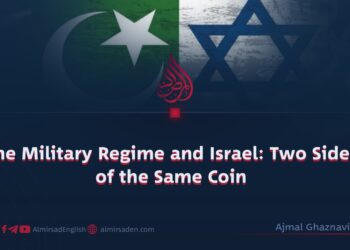
One prominent Pakistani political analyst, Mustafa Nawaz Khokhar, has asserted that the body was created solely to strengthen Israel and to expand American and Israeli influence across the Islamic world. He argues that while the organization claims its central mission is to promote peace globally, tomorrow Washington could choose to move jointly with Israel against Iran, deploy forces there under the banner of peacekeeping, destabilize the existing political order, and impose arrangements of its choosing. In such a scenario, he contends, Pakistan and other Muslim states would be used to advance American objectives while lacking the leverage to resist.
Khokhar’s remarks, observers say, appear more persuasive in light of statements made by the Pakistani side during the membership ceremony emphasizing the country’s longstanding commitment to safeguarding American interests and its historical loyalty to Washington. Critics counter that Pakistan should have focused on protecting its own strategic priorities, yet seems more concerned with pleasing the United States, even if that entails recognizing Israel, advancing its agenda, undermining the dignity of an Islamic state, or exposing its own citizens to unjust harm. They argue that Pakistan has demonstrated this pattern repeatedly, consistently placing American concerns above its own. For this reason, commentators conclude, Pakistan’s participation in a process that appears to strengthen Israel could severely damage the country’s standing and accelerate its political and diplomatic decline.