









Part 1
By Esmatullah Sarwan
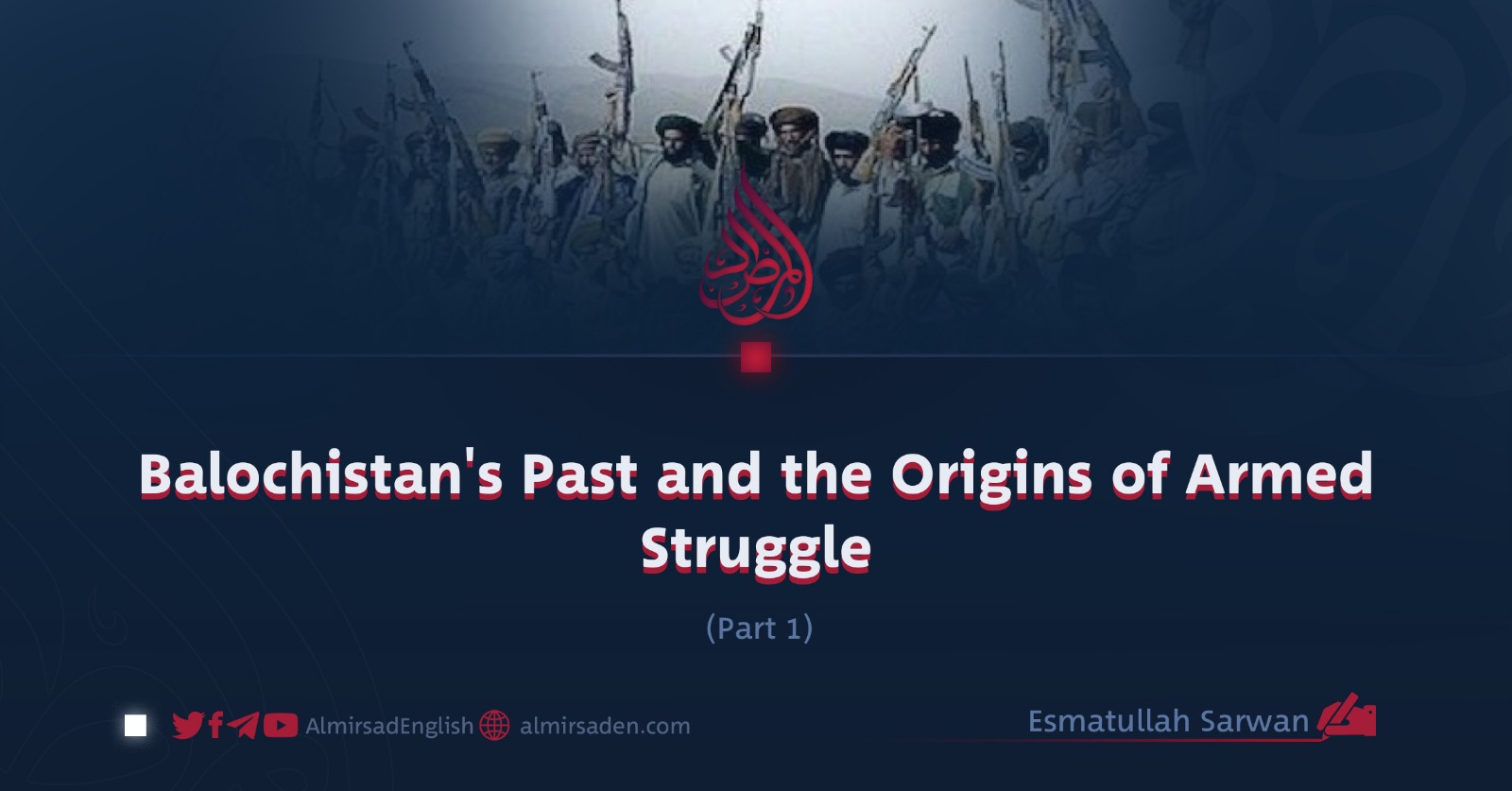
For more than three thousand years, the Baloch have lived along the shores of the Arabian Sea and across the vast deserts and rugged mountains of Balochistan in South Asia. Belonging to the broader Aryan peoples, they developed a society marked by its own language, customs, tribal codes, cultural traditions, and distinctive way of life.
Across centuries of political upheaval and shifting regional orders, the Baloch have maintained a fierce attachment to their identity. They are widely known for pride, loyalty, hospitality, patience, and a strong sense of personal honor. Freedom has always stood at the center of their historical self-understanding. Time and again, when confronted by outside domination, they chose resistance over submission, taking up arms to defend their faith, homeland, culture, and ancestral traditions rather than accept rule by invaders.
The Baloch gradually embraced Islam in the seventh century, during the caliphate of Umar ibn al-Khattab (RA), as Muslim forces reached the region. Many of the values already embedded in Baloch society, including loyalty, dignity, generosity, and a strong sense of moral obligation, resonated deeply with Islamic teachings. As a result, the adoption of Islam unfolded largely through acceptance rather than coercion, weaving religious belief into the fabric of tribal life.
After embracing Islam, the Baloch went on to play a central role in spreading it eastward. Their strategic position between the Middle East and South Asia allowed them to spread the Holy religion of Islam toward the Indus River basin and neighboring regions. During the Umayyad and Abbasid caliphates, they contributed significantly to guarding the frontiers of Muslim lands. For centuries afterward, they remained among Islam’s most devoted bearers and defenders. The courage and sacrifices of Baloch fighters have become an enduring part of Islamic history.
The first serious effort to organize the Baloch into a unified political entity emerged under Mir Muhammad Nasir Khan Baloch. A shrewd and far-sighted leader, he succeeded in bringing fractious tribes under a single banner, forming a standing Baloch army, introducing administrative reforms, and replacing fragmented authority with centralized rule. He gathered around himself tribal elders, scholars, and Ulema, shaping a governing circle that sought to balance religious principles, established Baloch customs, and the practical interests of both the state and its tribes. Domestic and foreign affairs alike were guided by these considerations under Mir Nasir Khan’s stewardship.
A contemporary of Ahmad Shah Durrani, Mir Nasir Khan ruled the Khanate of Kalat from 1747 to 1794. Under a formal pact with the Durrani Empire, remembered as the Treaty of Kalat, the state functioned as a respected ally and retained autonomy in its internal affairs. This era, particularly the years of Mir Nasir Khan’s authority, stands out in Baloch history as a period of stability, prosperity, and cultural vitality. Economic life expanded, language and literature flourished, and tribal communities experienced a degree of dignity and security rarely matched in later generations.
British colonial expansion eventually altered this balance. Like other regional polities, Kalat found its independence constrained. By exploiting the Treaty of Mastung, British authorities brought key territories and strategic transit routes across Balochistan under imperial control. Even so, Kalat was not formally annexed. It continued to function as a semi-autonomous state, self-governing in internal matters but subordinated to British influence in foreign relations. This arrangement endured until the end of colonial rule and the creation of Pakistan in 1947; Kalat was never formally reduced to a colony.
The creation of Pakistan in 1947 and the onset of continuing unrest in Balochistan opened a chapter marked, in Baloch political memory, by deception, betrayal, oppression, injustice, and political distrust. This period stands as a stark illustration of the subjugation engineered by the political and military classes of the newly born country named Pakistan.