
By Muhammad Anwar Rabbani
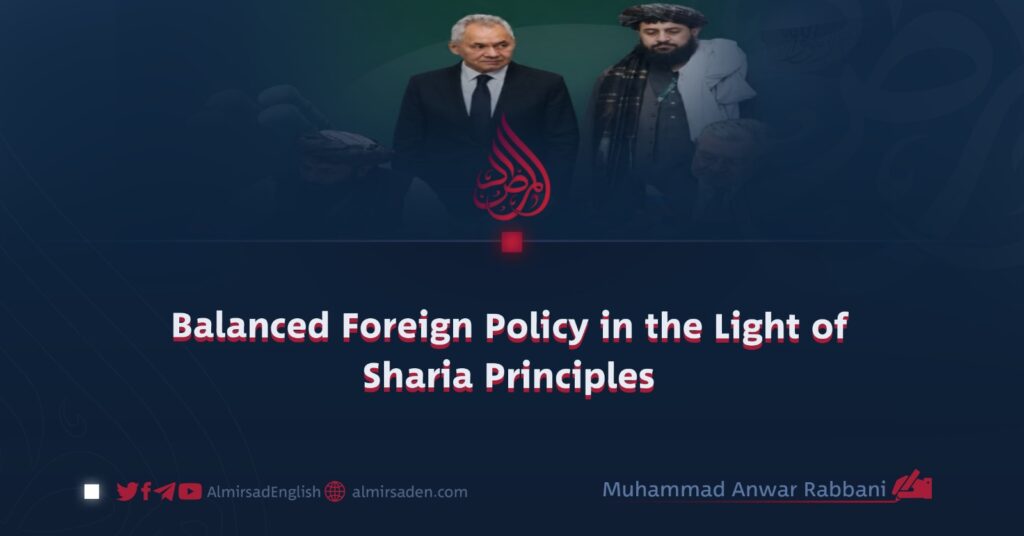
Afghanistan and Russia recently signed a security and defense cooperation agreement. Both sides have described it as an expansion of security and technical cooperation. According to the Islamic Emirate of Afghanistan (IEA), the agreement addresses Afghanistan’s security needs and is not directed against any other country.
Islamic Sharia guides Muslims to deal with other nations and states on the basis of justice, wisdom, and balance. The IEA conducts its foreign policy on exactly that basis: balanced engagement, mutual respect, and national interest. Afghanistan is not part of any global bloc, and it has no interest in becoming a battleground for other countries’ rivalries. What it wants is straightforward relations with Russia, China, the Muslim world, and other states, built on mutual benefit and respect.
The IEA’s position is clear. Afghanistan is ready to cooperate economically, politically, on security, and in trade with any country that respects Afghan sovereignty, Islamic values, and national independence. That approach is in line with Islamic principles and serves the country’s interests.
The propaganda that tries to paint Afghanistan’s legitimate relations with other countries as threats or dangers is out of touch with regional realities. Afghanistan is not looking for wars or rivalries. It wants balanced relations, economic cooperation, and regional stability.
Today the IEA’s foreign policy stands on one principle: engage with everyone, but within the framework of Sharia. Build relations with everyone, but without compromising Afghanistan’s dignity, independence, and Islamic values.
That is the policy. And it is the only kind of policy that can actually move Afghanistan toward greater regional cooperation, stronger economic ties, and lasting stability.