












By Syed Jamal al-Din al-Afghani
This story dates back about eight decades, to a time when the united Indian subcontinent had just been divided into two parts by British forces. One part was named India, while the other came to be known as Pakistan and Bengal. The decision regarding regions with a Muslim majority was that they would be handed over to Pakistan, and among those regions was Kashmir.
However, when both sides moved forward to claim their respective territories and the issue of border demarcation came under discussion, the Indian side openly refused to hand over Kashmir and declared that it would never surrender it to Pakistan.
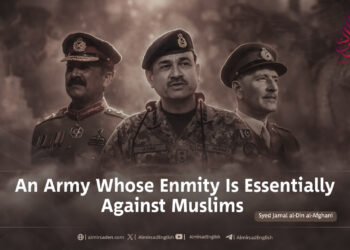
This dispute continued for nearly a year. Eventually, it was decided that Kashmir would be taken by force and that war would make the final decision. For this reason, the leader of Pakistan at that time, Muhammad Ali Jinnah, ordered the Commander-in-Chief of the army, General Gracey, to launch an attack on Kashmir and instructed the army to determine the future of the region through swift military action. Yet Muhammad Ali Jinnah was greatly surprised when General Gracey openly refused the order and stated that the army would never move toward the Kashmir front.
General Gracey belonged to the British Army, and at that time Pakistan did not yet have an organized Muslim leadership within its military. For that reason, the command of the army had been entrusted to British officers, and General Gracey was the second person in that line to lead the Pakistani army.
The question therefore arises: why did General Gracey refuse to obey the order of the founder of Pakistan and the most powerful authority of that time? Over the years, people have offered different explanations. However, what General Gracey himself wrote can be summarized as follows: in his view, Pakistan should direct more hostility toward the Muslims of Afghanistan than toward the Hindus of India. For this reason, he tried to persuade Muhammad Ali Jinnah by presenting various arguments. It is not clear whether Jinnah accepted this reasoning or not, but it is certain that he felt somewhat constrained and powerless before the army.
General Gracey trained the Pakistani army continuously for three years. During this long period, his greatest effort was to instill hatred toward the Muslims of Afghanistan in the hearts of Pakistani soldiers. To some extent he succeeded in this effort and then retired. The British forces that had set out to conquer the world achieved victories in many places, yet in Afghanistan they suffered repeated defeats and humiliating failures. History bears witness that on several occasions entire British forces were wiped out, and not even a single survivor remained to record an eyewitness account of the events.
For this reason, Great Britain naturally harbored deep hostility toward Afghanistan. In order to avenge this hostility, it devised various plans and dangerous measures, many of which are evident in history. Among these schemes, however, one in particular appealed to it greatly: to convince the Pakistani army that its eternal enemy was not India but the Muslims of Afghanistan, so that it would remain perpetually engaged in conflict with Afghan Muslims and that this hostility would become embedded in its very nature.
The training that General Gracey provided to this army, and the way he instilled in their hearts a deeper hatred toward Muslims than toward unbelievers and polytheists, manifested itself not only against the Muslims of Afghanistan but also very intensely against the oppressed Muslims of Pakistan itself. Kashmir has still not been liberated from Indian control to this day. Yet the states of Kalat and Swat, which were under Muslim rule and with whom Muhammad Ali Jinnah had concluded agreements, were subjected to severe assaults by this same army. Those agreements were violated, and through bombardment every living being on the ground was destroyed, whether they were demanding their rights or simply regarded this army as a Muslim brother.
The family of the Khan of Kalat was lured down from the mountains with promises of amnesty, but when they descended they were treated unjustly. Contrary to the promises made to them, they were killed with such cruelty that even animals are not treated in such a manner. Because hostility toward Muslims had taken root in the nature and foundation of this army, whenever it found an opportunity anywhere in the world, it did not hesitate to shed Muslim blood. It cut the throats of Muslims with sharp daggers as if mercy and compassion had no place at all.
The oppressed Muslims of Palestine, who once regarded this army as one of the powerful forces of the Muslim world, were cut down by the hands of this very army like carrots and radishes. Even today many Palestinians remember in their hearts the treacherous actions of this army more than the oppression of the Jews.
Hundreds and thousands of mujahideen from the Arab world who were engaged in the war against Russia believed that even if the entire world turned against them and no assistance remained, the Pakistani army, being an Islamic army, would at least protect them. On the basis of this hope and belief, these mujahideen sacrificed everything in support of this army. They sold their ancestral properties in their homelands one after another in order to strengthen and support it.
When the United States later turned against the Arabs without clear justification and the two sides stood against each other, the hopes of these mujahideen still remained tied to the Pakistani army. However, they were deeply shocked and helpless when this same army, even before being formally asked by the United States, began targeting people one after another. Some were killed while others were captured alive and handed over to the United States, providing clear evidence of hostility toward Muslims.
The hostility toward Muslims that once existed within them gradually became a habit. Whether Arabs, Palestinians, Bengalis, Burmese or Afghans, none remained safe from them. Eventually they even turned their artillery toward their own Muslim countrymen. From Karachi to Peshawar and from Quetta to Islamabad, they captured their own Muslim brothers and handed them over to the United States under the label of “real Muslims.” On the one hand they received dollars from America and on the other they revealed the hidden hostility within their hearts.
When the number of people handed over to the United States increased and it refused to accept more, this same army began targeting its own people. The people of Balochistan were drenched in blood, villages and settlements were placed under military siege, and from aerial bombardments to the killing of children and elderly people, no one remained safe. Across the region of Khyber Pakhtunkhwa houses were repeatedly raided and each time a new story of oppression and brutality was written.
In Sindh, especially in Karachi, people were arrested under various accusations such as “al Qaeda” or “Lashkar e Jhangvi.” Thousands disappeared, and others were imprisoned in such a way that their lives became a living hell. In Punjab mysterious killings carried out by the police began, and thousands of Muslim youth, elders and members of society were killed.
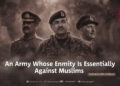
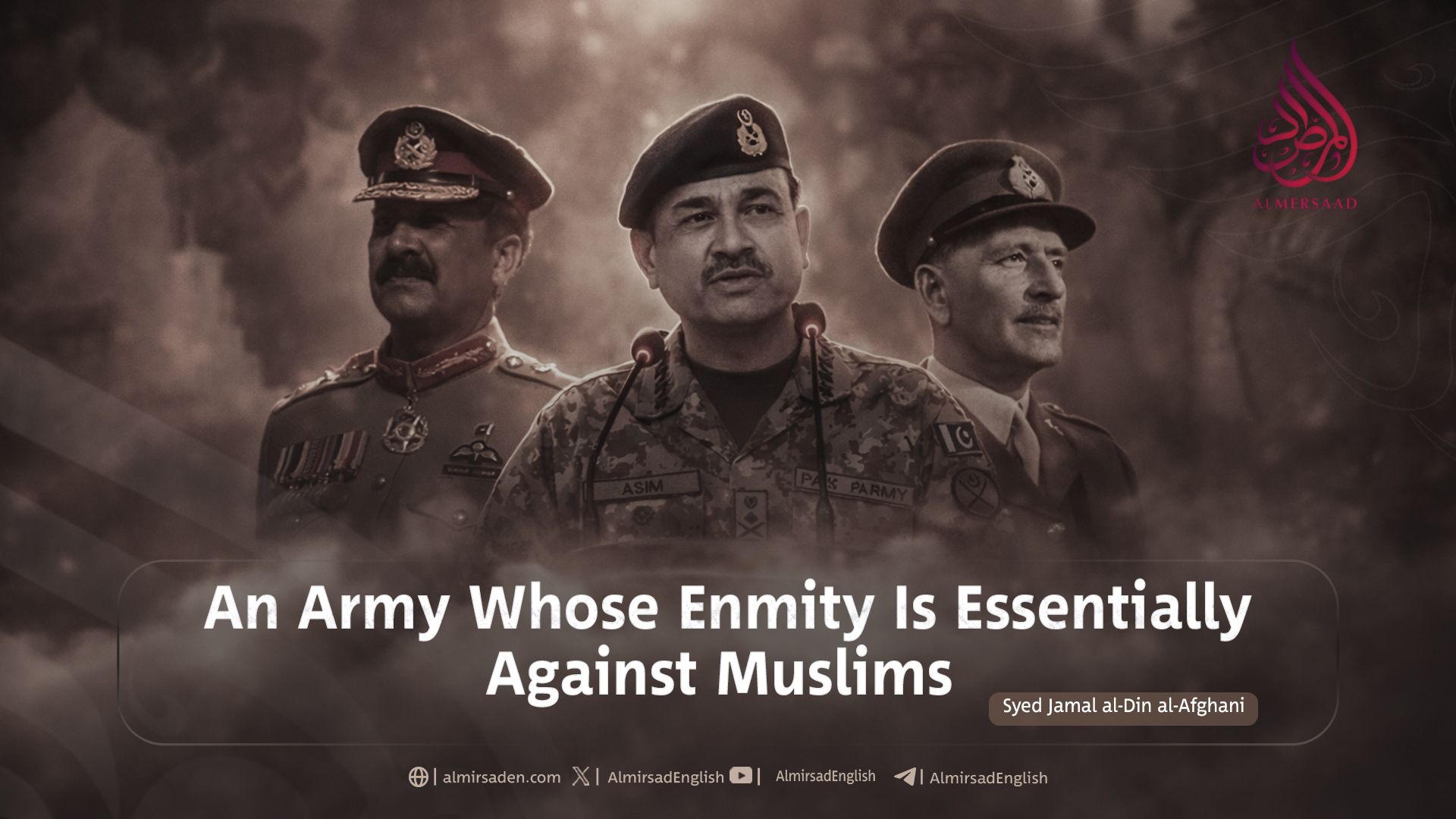
An army trained to thirst for Muslim blood, whose foundation was built upon hatred and hostility toward Muslims, continues to follow the same path to this day. Yet the problem was that for a long time it had not found a suitable pretext.
Finally, when the Jews together with their Western supporters decided to suppress the Palestinian mujahideen, the old aspiration of this army seemed to be fulfilled. It first presented itself before them, ready to shed Muslim blood. But since this required time, they began searching for another path.
For the former president of the United States, Donald Trump, the loss of Bagram Air Base and the issue of the weapons left behind in Afghanistan were important matters. For this reason the army chose the path of hostility toward Afghan Muslims and began launching attacks on various military centers in order to demonstrate its intentions. Yet it appears that even this did not satisfy its desire, until it eventually selected a sensitive moment.
It chose the month of Ramadan and then selected the nights around Laylat al Qadr within that month. Among those blessed nights it even selected a particular night and carried out attacks on Kabul.
In these attacks the victims were helpless people who, after a long period of hardship, had finally found some hope for life and held no hostility toward anyone. Reports indicate that many people were harmed and casualties occurred in these incidents, because the army used explosive materials that set everything ablaze, and fire inevitably leads to bloodshed.
This fire reveals even more clearly the nature of hostility toward Muslims, and through it the hearts of this hostile force find satisfaction. For this reason this terrifying act was carried out.
To those who express great astonishment over this incident it should be said that on March 17 some Pakistani political analysts pointed out from a historical perspective that decades earlier there had also been a decision to burn Kabul and reduce it to ashes. What happened afterward needs no further explanation.
But why do these people forget that a force whose nature contains hostility toward Muslims, whose foundation is built upon the scent of Muslim blood and whose veins carry the spirit of oppression, how could such a force show mercy? A force that did not show mercy to the oppressed in Palestine, nor to Arab Muslims, that did not consider the blood of the people of Balochistan sacred and did not act against the unjust killing of Pashtuns, Punjabis or Sindhis.
A force that for twenty years provided bases to foreign powers for operations against Afghan Muslims and from whose soil thousands of attacks were carried out. Is it really impossible for such a force to target five hundred people in a single moment?
Should I not sacrifice myself for your simplicity?