






Dr. Ajmal Tareen
Kashmir is one of the regions in the world that occupies a position of exceptional strategic importance in geopolitical terms. Situated at the crossroads of India, Pakistan, China, Afghanistan, the Middle East, and Central Asia, the region has repeatedly become a victim in the political games of global and regional powers. Its religious, ethnic, economic, and historical significance has turned it into a zone of competing interests, while the Kashmiri people themselves have rarely been allowed to determine their own fate. Since 1947, they have neither secured genuine independence nor been granted the right to shape their collective future.
For more than seven decades, India through military occupation, Pakistan through political manipulation, and the world through strategic silence have collectively violated the rights of the Kashmiri people. Kashmiris are a nation deserving of dignity, honor, identity, and sovereignty. Their cause must be addressed in accordance with the principles of justice, humanity, and international law.
Historical Background of Kashmir
Kashmir is an ancient and historical region that has served as a home to Buddhist, Brahmanical, and Islamic civilizations. Famed for its natural beauty, spiritual richness, and intellectual heritage, it was once known as the Paradise on Earth. During the era of Muslim rule, Kashmir flourished as a major center of knowledge, literature, trade, and culture. Its mosques, madrasas, libraries, khanqahs, and other institutions shaped its social fabric, while Muslim rulers promoted tolerance, coexistence, and social harmony. These principles fostered sustained stability and prosperity.
However, in the mid-19th century, the fate of this paradise was traded away by colonial powers. In 1846, through the Treaty of Amritsar, the British colonial administration sold Kashmir to the Dogra ruler Gulab Singh for 7.5 million rupees. This deal not only ignored the will of the Kashmiri people but also stood as a blatant violation of their political and human rights. With one stroke of a pen, the destiny of an entire nation was handed over without their consent.
When British India was partitioned in 1947, Kashmir was a Muslim-majority region whose political future was almost entirely ignored. Instead of allowing the Kashmiri people to decide their fate, the region became a point of contestation between the newly formed states of India and Pakistan, laying the groundwork for decades of conflict.
The Partition of Kashmir
After the partition of India and Pakistan in 1947, Kashmir was divided into three parts without the consent, consultation, or participation of the Kashmiri people:
1. Indian-administered Kashmir
This includes Jammu, Kashmir, and Ladakh. India occupied this territory and continues to maintain stringent military control over it.
2. Pakistan-administered Kashmir
This includes Azad Kashmir and Gilgit-Baltistan. Although Pakistan administers these regions, their final political status remains unresolved.
3. Chinese-administered Territory
Aksai Chin, a strategically important area, was later occupied by China and remains under its control.
This threefold division is remembered as one of the grave injustices of world political history. Kashmiris were denied the right to a referendum or an independent decision-making process, an explicit violation of several UN resolutions and international norms. As a result of this imposed partition, Kashmir has endured persistent violence, military occupation, and widespread human rights abuses.
Major Wars Over Kashmir
India and Pakistan have fought three major wars over Kashmir. Although these conflicts were carried out in the name of the Kashmiri people, their true objectives were defined not by concern for oppressed Kashmiris but by the military, strategic, and political ambitions of both states.
1. First War (1947–1948):
This war broke out immediately after independence when both states sought control over Kashmir. The conflict ended after United Nations intervention, yet the region remained divided.
2. Second War (1965):
Pakistan launched a surprise offensive based on the assumption that Kashmiris would rise in support. The conflict resulted in heavy casualties on both sides and ended with the Tashkent Agreement, without achieving any resolution for the people of Kashmir.
3. Third War (1999, the Kargil War):
Pakistani military generals attempted to infiltrate the Kargil heights. India responded with a large-scale military campaign. After severe casualties, Pakistani forces withdrew. This confrontation deepened mistrust and intensified the long-standing rivalry between the two nations.
In all these wars, which claimed hundreds of thousands of lives, the greatest suffering fell upon the innocent people of Kashmir. Caught between competing powers, they experienced neither lasting peace nor meaningful agency over their destiny. These military confrontations only increased hostility, militarization, and instability, instead of offering any viable solution.
Oppression Faced by the Kashmiri People
Once celebrated for its beauty, scholarship, religious tolerance, and natural blessings, Kashmir has transformed into one of the most heavily militarized regions on earth. Surrounded by Indian and Pakistani military forces, the population endures daily oppression, serious human rights abuses, and systematic injustices that violate universally accepted human rights standards.
Thousands of Kashmiris have been killed without trial. Many have disappeared without a trace, while countless others suffer severe torture in detention centers. Sexual violence against women and girls, particularly by military personnel, has inflicted deep psychological, social, and spiritual wounds, violating not only individuals but the collective honor of the entire Kashmiri nation. Numerous international human rights organizations have documented these atrocities.
Military operations frequently destroy homes, shops, property, and livelihoods, leaving families displaced and destitute. Educational institutions are often closed, students face violence, and access to healthcare is severely limited, creating generational devastation. Trade and employment opportunities are restricted.
Kashmir today represents one of the most severe humanitarian crises in the contemporary world. Yet global political interests have obscured its suffering and silenced its voice. Kashmiris continue to be denied their essential rights to life, freedom, education, livelihood, and dignity. This ongoing catastrophe must not be allowed to remain ignored any longer.
Kashmir Under Pakistan’s Control: A Military Administration in the Name of Freedom
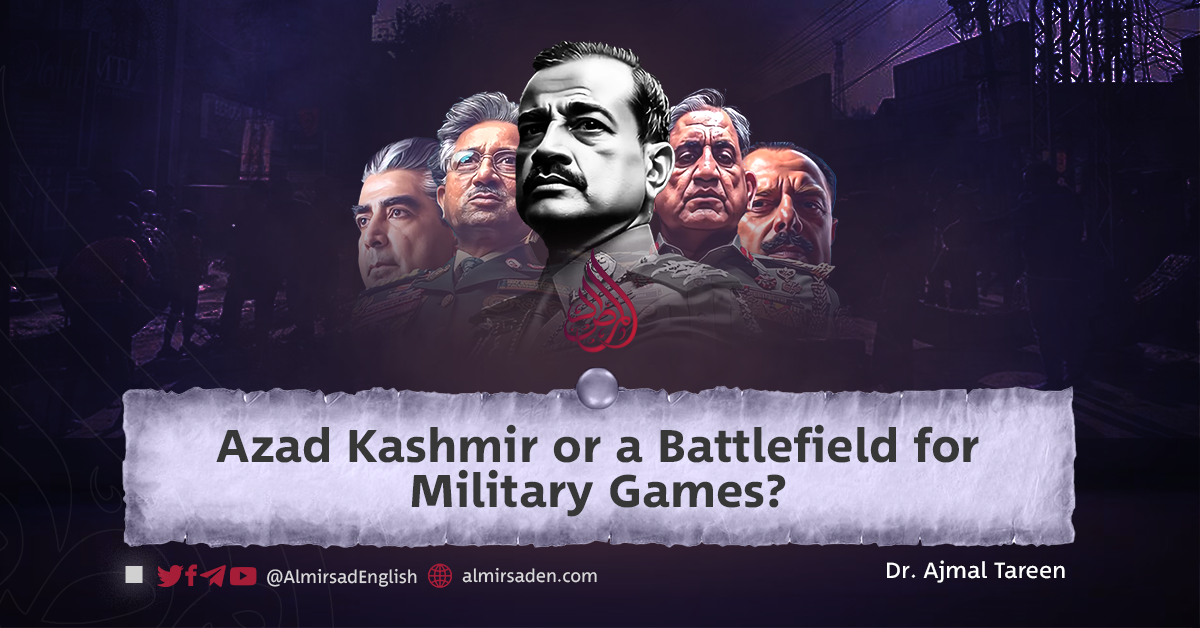
Pakistan presents itself on the global stage as a steadfast supporter of the Kashmiri people. Yet the reality in the territories it controls, namely Azad Kashmir and Gilgit-Baltistan, tells a starkly different story. These regions exist under a system where the people possess neither genuine political authority nor real civic freedom, and where they are denied the fundamental right to shape their own destiny.
1. Absence of Political and Civil Freedoms
In Azad Kashmir, the people are deprived of the right to free expression, political engagement, and meaningful decision-making. Political activities take place under the pervasive shadow of the army, intelligence agencies, and strict regulations.
2. The Case of Gilgit-Baltistan
Gilgit-Baltistan has been deliberately separated from the broader Kashmir dispute to advance Pakistan’s strategic interests. The region has never been granted full constitutional status, political authority, or clearly defined identity and property rights.
3. Military-Controlled Political Processes
Although elections are held, they are only nominal. Every political party and candidate must demonstrate unwavering loyalty to Pakistan and operate within the boundaries set by the military establishment. Intelligence agencies make the actual decisions behind the scenes, controlling who can contest elections and who can hold public office.
4. Unlawful Interference and Military Domination
The Pakistani army retains overarching authority over all significant decisions in these territories. Local administrative bodies have lost meaningful power, and the population feels increasingly powerless. Civil institutions exist in form but not in function, overshadowed by direct military involvement.
5. Azad Kashmir: A Claim of Freedom Without Substance
The term “Azad,” meaning “free,” appears in official labels and slogans but holds no truth in practice. The region operates as a military-administered territory under the direct influence of Pakistan’s central institutions. Structural deprivation, political suppression, and widespread helplessness mirror the conditions endured by Kashmiris living under Indian control.
The question is: Why does Pakistan oppress the Kashmiri people?
The oppression of the Kashmiri people by Pakistan is not accidental but serves several key objectives:
First, Kashmir occupies a critical geographic position at the crossroads of China, India, Central Asia, and South Asia. Military control over this region allows Pakistan to assert influence and safeguard the China-Pakistan Economic Corridor (CPEC) for China.
Second, Pakistan uses the Kashmir issue for domestic political objectives. It becomes a tool to justify inflated military budgets, divert public attention from internal economic and governance failures, fuel propaganda against India, and attract international sympathy and foreign aid.
Third, maintaining Kashmir as a perpetual conflict strengthens the power of the Pakistani military within the country. Sustaining the conflict ensures a large share of the national budget, pressure over the civilian political system, continued interference in governance, and the legitimization of military intervention.
Fourth, to protect these strategic benefits, the military regime actively suppresses dissenting voices. Political leaders, lawyers, journalists, and activists are frequently imprisoned without trial. Media is subject to heavy censorship, internet services are disrupted, and authentic local voices are replaced by individuals approved by the military establishment.
In this system, Kashmir is not treated as a region inhabited by a people with rights and aspirations. Instead, it becomes a political instrument serving the interests of the Pakistani state, with the Kashmiri population bearing the cost.
Why Are Kashmiris Excluded from Pakistan’s Institutions, Parliament, and Cabinet?
This is a deep and systematic issue reflecting Pakistan’s military structure and dual-faced policies. Although Pakistan publicly claims solidarity with Kashmiris, it does not constitutionally recognize these territories as part of the country. Nevertheless, it administers them as subordinate and dependent regions.
Kashmiris are denied full citizenship, civil rights, and meaningful political participation.
They do not enjoy equal rights like other Pakistanis. Elections in Azad Kashmir are orchestrated by intelligence agencies and lack credibility. The people of Gilgit-Baltistan have no representation in Pakistan’s national parliament, and those appointed to federal institutions hold nominal positions with no real influence. Such representation is merely for show.
These facts clearly demonstrate that Pakistan denies the Kashmiris their identity, authority, and political representation. This stands as an unmistakable example of political injustice and exposes Pakistan’s Kashmir policy as a colonial and militaristic project rather than one designed for the welfare of the people.
Why are essential services, educational opportunities, and public facilities so severely lacking for the people living in Pakistan-administered Kashmir?
Both Azad Kashmir and Gilgit-Baltistan suffer from chronic neglect, economic underdevelopment, and widespread deprivation. Despite the rhetoric of support for Kashmir, Pakistan has failed to provide even basic human rights or essential services.
Development is not the objective. Instead, political exploitation prevails. The name of Kashmir is invoked for media narratives and anti-India slogans, not for investment or public welfare.
There are no significant development projects. Infrastructure is either poorly maintained or entirely absent. Educational institutions are limited, with low standards, forcing students to migrate for higher studies. Hospitals lack specialists, equipment, and essential medical services. Agricultural, industrial, and commercial sectors have collapsed, leaving youth no option but to migrate to Punjab, Sindh, or Khyber for labor due to unemployment.
This neglect appears to be deliberate. Poverty, illiteracy, and economic dependence serve as tools to keep the population politically subdued and prevent the rise of political awareness.
What Should the People of Kashmir, Especially Those Under Pakistan’s Control, Do?
For the Kashmiri people to achieve genuine freedom and determine their own independent destiny, the only effective path is for the nation to move forward with clarity, awareness, unity, and a sustained civil, political, and jihadi struggle. A nation that protects its identity, culture, and language cannot remain subjugated indefinitely. Kashmiris must safeguard their linguistic, cultural, and historical heritage against the cultural influence of Pakistan and India.
They must raise their voices through protests, writing, media platforms, and international legal channels. Internal division remains the greatest weapon in the hands of occupying powers. Therefore, unity in purpose and collective action is essential.
The documentation of abuses is critical. Cases of enforced disappearance, torture, discrimination, and political deprivation must be recorded and shared with international institutions such as the United Nations, the Organization of Islamic Cooperation, and the European Union. International pressure can become a major constraint on occupying authorities.
Education and intellectual empowerment must form the foundation of the Kashmiri struggle. Only through knowledge and awareness can the new generation rise against oppressive systems imposed by Pakistan and India.
Institutions operating under Pakistan’s authority must be exposed for what they truly are. The population must understand that these structures, presented as symbols of autonomy, are in reality extensions of military rule. A nation that does not cultivate independent thinking and its own political will becomes destined for perpetual enslavement.
Strengthening bonds with other oppressed nations is equally important. Sharing experiences with Palestinians, Baloch, Kurds, and Uyghurs, and presenting the Kashmiri issue to global scholars, journalists, and researchers can bring the plight of Kashmiris to the world’s conscience.
The people of Kashmir must understand that Pakistan does not hold the key to their destiny. Only a united, conscious, and determined nation can defend its rights, identity, dignity, authority, and homeland. This is the moment for Kashmiris to take ownership of their future and move toward genuine freedom.
The Kashmir issue is not merely a regional conflict. It represents the broader struggle of an oppressed nation seeking identity, dignity, and human honor. Since 1947, Kashmiris have endured suffering caused by geopolitical rivalries and strategic agendas. Pakistan exploits the Kashmir cause for its military and political gains, while global powers remain silent.
The fundamental rights of Kashmiris, including life, education, political participation, freedom, and identity, have been consistently violated. Instead of peace and justice, they have faced censorship, militarization, war, and systematic deprivation.
In light of these realities, it is imperative for the international community, the Islamic world, and global human rights advocates to move beyond statements and paperwork. A genuine and just solution is required. The people of Kashmir must be allowed to decide their own fate, exercise their own authority, and reclaim their rightful place as a free nation. They must no longer be used as pawns in political and military power games.