














By Salamat Ali Khan
In every village there is always that one foolish, narrow-minded neighbor, a man sunk deep in poverty yet swollen with pride. He borrows money from others, sneers at the very people who show him kindness, and is ever ready for a quarrel. He never admits wrongdoing. And when a respected elder approaches him, rests a gentle hand on his shoulder, and advises him to make peace, he immediately dons the cloak of righteousness. He repeats, with practiced innocence, the same line once uttered by the followers of Ibn Ubayy ibn Salul: “We are only people who seek reform!”
Yet this very man has made life so bitter for the neighbor who shares his wall that the poor soul has no option left but to cut off all contact with him. But when this fool’s children insist on visiting that same neighbor’s house, he rushes to the mosque and announces with theatrical humility, “We are very humanitarian people. We had cut ties with our neighbor, but for the sake of their children, we will restore them.” In truth, he is the one in need. But through his strange mannerisms, empty pride, and shallow claims of “principle,” he manages to disguise his begging as moral generosity.
If we look at the world today, Israel among the non-Muslim nations and Pakistan among the Muslim countries have adopted precisely the same behavior as that foolish neighbor.
Pakistan has four neighbors. With India, it stoked hostility from the very first day. Through its own misguided policies, it lost the largest part of its territory, Bangladesh, placing it directly into India’s hands together with one hundred thousand of its soldiers captured alive.
Its second neighbor is Iran. In seventy years, Pakistan has neither benefited from this relationship nor allowed its own people to benefit from it. It caused harm and received harm in return.
Its third neighbor is China. Because China’s greatest weakness is its lack of direct access to the West, Pakistan and its associated power brokers exploited this dependency fully. For two decades they extracted every possible advantage from China while offering nothing meaningful in return. It is for this reason that China now seeks alternate routes through Afghanistan, Iran, or anywhere else to free itself from Pakistan’s web of deceit and obstruction.
And then comes its fourth neighbor, Afghanistan.
It is true that Pakistan received immense sums of money from the world in the name of Afghan refugees. It is also true that it permitted them to remain within its borders. But it is equally true that those refugees endured hardships they will remember even in their graves. Their camps lacked electricity, gas, water, sanitation, and even the most basic rights owed to any human being. Beyond this, Pakistan interfered in Afghanistan’s internal affairs whenever the opportunity arose. It used refugees as tools, and whenever it suited its interests, it exploited Afghan dignity for political gain.
Then, after twenty years of sacrifice, when Allah blessed Afghanistan with its devoted sons who liberated their homeland, revived its Islamic character, and established an Islamic Emirate rooted firmly in the principles of Sharia, the foolish neighbor felt a burning discomfort. Panic and confusion gripped him as he searched for ways to undermine this new reality. Imagining Afghanistan to be weak and inexperienced, Pakistan seized the moment. It attacked, provoked, and fueled conflict.
But contrary to Pakistan’s expectations, the honorable neighbor responded with wisdom. Afghanistan fought back and delivered a decisive lesson.
When Pakistan realized what it had triggered, it hurried to plead with several regional powers. Those powers examined the situation and advised the Afghan side, “Let us handle this matter.” Yet the foolish neighbor could not resist returning to his theatrics. He began claiming, “We were not going to withdraw, but so-and-so insisted, they begged us, and so we returned.”
Through Qatari and Turkish mediation, an understanding was reached. Afghanistan, calm, dignified, and resolute, stepped back from further fighting. Basic decency required Pakistan, having violated Afghan sovereignty and been tolerated despite its provocations, to take steps to rebuild trust.
But true to its character, it chose treachery instead. Believing that it was the season of Afghan pomegranates and grapes, and knowing that fresh fruit spoils quickly, it sought to weaponize Afghanistan’s economic needs; it kept the gates closed to exert pressure. And so it shut the gates, without fear of Allah or consideration for the farmers watching their crops decay.
This time, however, Afghanistan’s honorable leadership, mindful that sustenance comes only from Allah and fully aware of Pakistan’s foolish attempt at coercion, declared: “If the gate is closed, then it is closed from our side as well. If it is to reopen, it will reopen on our terms.”
This was more than a statement. It was a political detonation, a stunning blow to those who had long thrived by exploiting Afghan need.
Afghanistan began exploring alternative routes with patience and resolve. The initial losses were heavy, but dependency collapsed completely. Meanwhile, Pakistan, indifferent to its own citizens whom its elite often describe as creatures to be treated like dogs, offered no alternative solutions, no justification, no explanation. Losses mounted daily. Public anger surged.
Sensing a storm gathering, Pakistan’s decision-makers exposed their poverty to the world. They knocked on the doors of Russia, Iran, Saudi Arabia, Qatar, Türkiye, and even appealed to international organizations. Yet the Islamic Emirate of Afghanistan (IEA), firm and unshaken, ignored every message.
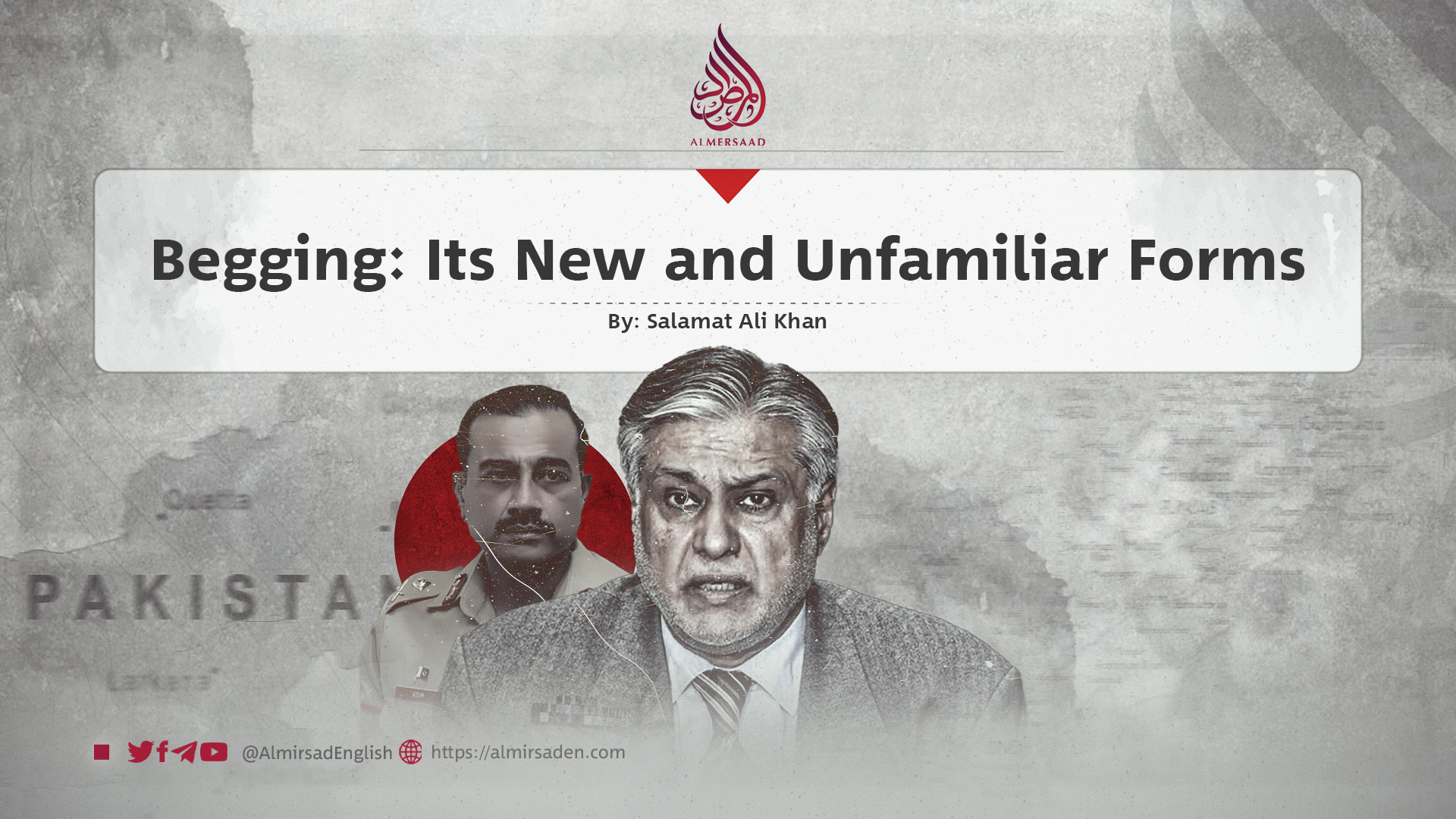
In the end, they handed Ishaq Dar, a respectable man trapped under military authority, a written script and ordered him to read it. As he recited the claim that “the international community has asked us, on humanitarian grounds, to open the gates,” his discomfort was unmistakable. With every line, his dignity seemed to suffocate under the weight of that script.
He must have remembered the famous remark often made about Pakistan’s rulers: “They beg for charity, but they beg like gangsters or they seek aid, but they seek it with the swagger of terrorists.”
They commit injustice and then claim the mantle of humanitarianism. They destroy livelihoods and then present themselves as guardians of humanity.
Perhaps Dar thought to himself that these are indeed strange days, when even charity appears in warped and unfamiliar forms.
And why should it not? Had Pakistan’s rulers separated trade from politics and allowed commerce to continue normally, it would have been a fundamental human right. Instead, they let Afghan produce rot at the gates. Only when Pakistan’s own orange season arrived, when sacks of potatoes were spoiling in their own streets, did they suddenly rediscover “humanity.” What a peculiar version of compassion, one that suffocates others first and then clutches its chest in feigned sympathy.
All of this mirrors that same foolish neighbor. But Pakistan forgot one truth: foolishness may rise to the skies, but when honorable nations finally choose to respond, they do not stop until foolishness is reduced to dust.
And so the world watched this bizarre spectacle, poverty draped in theatrics, while the dignified neighbor responded in a manner that exposed a truth Pakistan has tried to conceal for decades: It possesses no real power at all.