
By Ajmal Jalal
The final siege of Granada lasted nearly two and a half years (1489–1492 CE) and remains one of the most tragic chapters in the history of al-Andalus, a moment when an immense human catastrophe unfolded alongside the humiliating indifference of the broader Islamic world.
In 1491, Spanish forces tightened their grip on Granada still further. Every route in and out of the city was sealed, forcing its Muslim inhabitants to survive on the meager grain supplies stored in palaces and private homes. When Sultan Abu Abdullah al-Saghir, the city’s last ruler, recognized that continued resistance under such conditions had become impossible, he sent urgent appeals for help to Muslim rulers in North Africa: the Sultan of Morocco, the Zayyanid Sultan of Tlemcen, the Hafsid Sultan of Tunis, and the Mamluk Sultan of Egypt, al-Nasir Muhammad.
History, however, records no aid from any of them. On the contrary, throughout the conflict they continued exporting wheat to Castile and sustaining cordial commercial relations with it. Meanwhile, the condition of Granada’s Muslims deteriorated day by day, and in the final phase of the siege a devastating famine took hold. The Spanish historian Hernán Pérez del Pulgar described the scene starkly: “The stench of death rose from the city’s streets. People were forced to eat dogs, cats, grass, and even boiled leather taken from shoes.”
The Muslim chronicler Lisan al-Din Ibn al-Khatib al-Saghir, who witnessed portions of these events firsthand, wrote in his memoirs: “Children were dying of hunger at their mothers’ breasts, and people buried their dead in silence so as not to break the resolve of the survivors.”
Although the royal palace still retained some provisions, ordinary citizens were left to confront starvation, disease, and bitter cold. The siege dragged on through winter, while the mountains surrounding Granada lay buried beneath heavy snow. Plague, drought, and runaway prices spread until bread became more precious than gold.
By December 1491, Abu Abdullah al-Saghir concluded that Granada no longer possessed the strength to resist, particularly in the total absence of outside Muslim support. He therefore dispatched an envoy to the Catholic monarchs to propose surrender, but only on the condition that the religion, property, and dignity of the Muslim population be safeguarded.
The Treaty of Granada was signed on November 25, 1491. The city was granted a two-month reprieve, and the treaty’s provisions, regarded at the time as relatively favorable, were reviewed in detail. On January 2, 1492, Granada was formally surrendered under an agreement consisting of eighty clauses, each one designed to guarantee a specific right for the Muslim population.
Sultan Abu Abdullah al-Saghir demanded that Queen Isabella, renowned for her Catholic devotion, swear upon the Gospel and issue a solemn pledge in the presence of the vizier Abu al-Qasim al-Gharnati and senior judges that she would honor the treaty in full. Isabella took the oath, as did her husband Ferdinand, along with cardinals, priests, monks, senior officers, and leading officials of the state.
Nor did Abu Abdullah al-Saghir stop there. He insisted that the treaty be sent to Rome so that the Pope, the supreme religious authority of the Catholics, would also affix his signature. This was done, and Europe’s highest cleric ratified the accord as well. The Pope, Isabella, and her husband endorsed all eighty clauses, provisions safeguarding every Muslim right: women’s dress, burial rites, prayers, almsgiving, fasting, mosques, property, commerce, and the safety and honor of women and children.
But do you know what Isabella did next?
Once she had settled in Granada, ensured that Muslims had surrendered their weapons, dismantled the army, and exiled Abu Abdullah al-Saghir to Morocco, she wrote to the Pope, invoking her professed piety and requesting release from her oath. The Pope, in a formal letter preserved to this day, declared her absolved of the vow, her sin forgiven, and affirmed that if she betrayed the Muslims she would not be held accountable for it on the Day of Judgment.
Armed with this authorization, Isabella abandoned the agreement. Massacres began. Courts of inquisition were established. Blood was spilled openly in the streets. People were burned alive. Muslims were coerced into converting to Christianity. Eventually, even the faintest suspicion that someone practiced Islam or observed an Islamic rite became sufficient grounds to send them to the furnace.
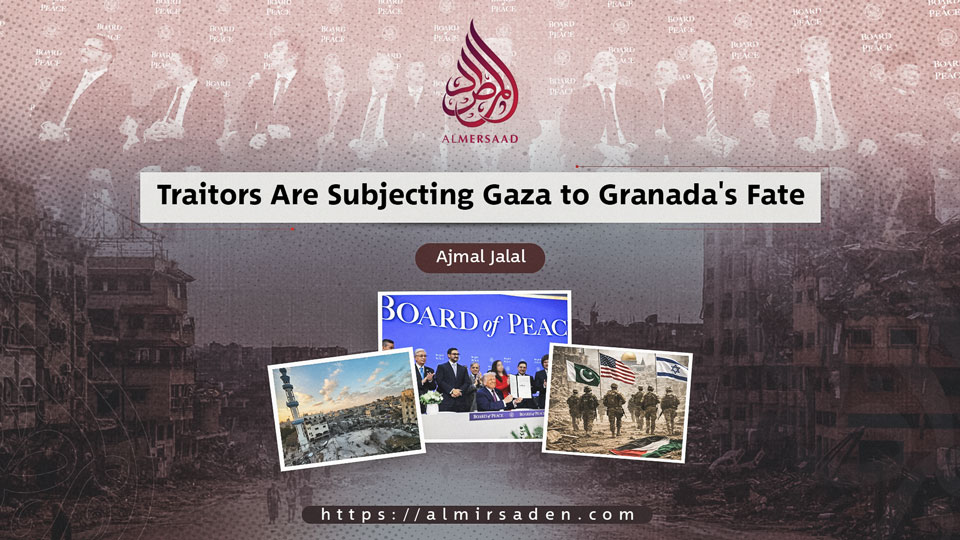
So, O Muslims! By Allah, I already smell betrayal. I see the faces of Granada’s people mirrored in the faces of Gaza’s people. I see new Ferdinands and new Isabellas emerging from the White House and the Black House, aided by the cooperation of certain treacherous servants within the Islamic world.
O Muslims! Has history truly changed? Have enemies ever honored our covenants? How many so-called peace agreements have been signed with them, only for the outcome to be deception and loss? Do you truly expect justice from Trump, Netanyahu, Macron, Meloni, and the traitorous rulers of the Islamic world?
And your Lord warns you:
“How [can there be a treaty] while, if they gain dominance over you, they do not observe concerning you any pact of kinship or covenant of protection? They satisfy you with their mouths, but their hearts refuse [compliance], and most of them are defiantly disobedient.”
So, O people of the former al-Andalus, is there anyone for the new, eastern al-Andalus?