
By Ajmal Ghaznavi
If we examine history closely, it becomes clear that the existence of some regimes is not solely for the protection of their own people, but rather to satisfy foreign powers, safeguard their interests, and implement decisions made in international politics. The Pakistani military regime operates according to this very logic. From its inception to the present day, this regime has acted ruthlessly solely to maintain its rule, and Balochistan stands as a living example of this brutality.
A large part of the history of Balochistan’s mountains, deserts, and people has become a testament to oppression under the occupation of the Pakistani army. Its cities have been destroyed under tanks, its homes demolished by bombs, and its people’s hearts confined under the shadow of fear. The operations of this regime have been carried out at the cost of the lives of the population, yet their logic has always been simple: to present “stability” for the eyes of the world and to gain the approval of foreigners in order to prolong their own rule.
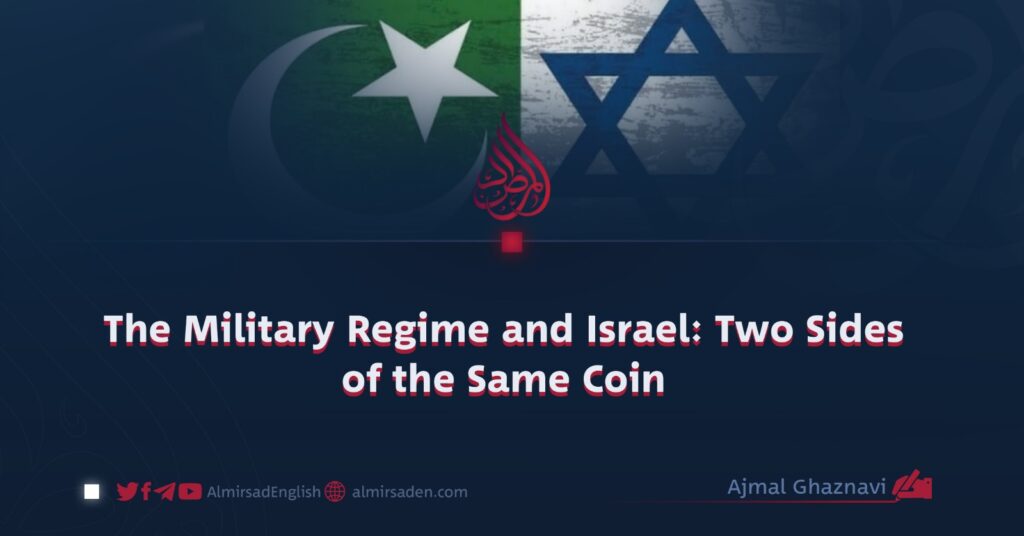
Similarly, Israel has carried out comparable actions in Palestine. Homes have been destroyed, children killed, and people displaced, all while presenting the legitimacy of its existence to the world under the language of “security” and “defense.” These are all part of the contemporary logic of occupation. The only difference lies in geography, not in principle. Both regimes follow a philosophy of force, terror, and the disregard of the rights of the oppressed.
From an analytical perspective, both cases cannot be reduced merely to guns, bombs, and sieges. The reality is that occupiers rely on international support to legitimize their existence. The Pakistani military regime acts as a guardian of America’s strategic interests, while Israel operates with the backing of global powers. Their acts of oppression are not solely for the seizure of land, but also to implement political and economic strategies, resulting in the deprived population losing their rights.
History has always recorded the voice of the oppressed. Balochistan has raised its voice of resistance, its mountains have echoed with slogans against tyranny, and its people have pledged every sacrifice for their freedom. Palestine is another example of such resistance. Although they live under the shadow of guns and bombs, the will of the oppressed remains higher than any weapon or oppression. Both cases provide us with a profound and comprehensive lesson: no matter how vast or brutal the occupying forces may be, they are weak against the determination of the people and the cry for justice. Oppression is temporary, but resistance is everlasting.
From every page of history, we can learn that freedom is inherent to human nature, and no force, no politics, and no occupation can ever break the will of nations permanently. The Pakistani military regime and Israel are reflections of one another; both are symbols of occupation, force, and the disregard of the rights of the oppressed, showing two sides of the same coin: one side displays power, while the other records a history of oppression and brutality. Yet, within the depths of this history, the light of resistance and freedom remains eternal, and it will ultimately shake the thrones of tyranny and allow the rights of the oppressed to rise like the sun.