
By Mir Shahwani
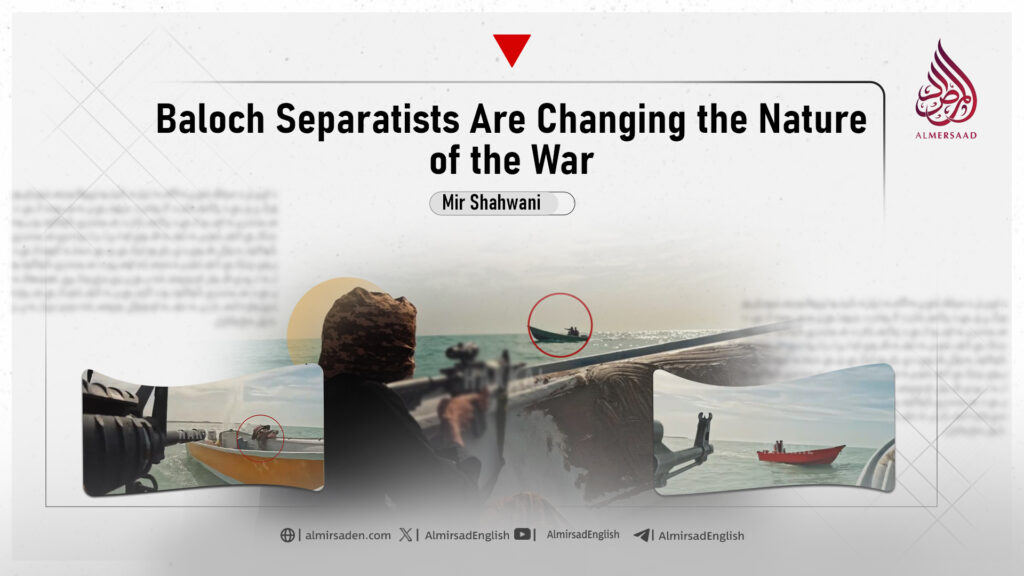
On April 13, some international media outlets reported that in the Jeewani area of Gwadar, Pakistan, a naval vessel of the Pakistan Navy was targeted in the sea, resulting in the death of at least three naval personnel. The report states that the attackers approached the naval forces using a fast boat and then opened fire on them. At the same time, all three personnel aboard the patrol vessel were hit and killed. After the attack, the assailants reportedly withdrew from the scene.
The responsibility for the incident was claimed by a group of Baloch separatists, the Baloch Liberation Army. They also released a video on their social media accounts, stating that the action was carried out by their “Zarpahaz” (meaning maritime protection force).
In the video, four individuals are seen appearing in a coastal area with their faces covered, speaking in the Balochi language. They then issue a warning to the Pakistan military, conveying the message: “Leave our lands and seas, these lands and seas belong to us and we are their owners. If you do not end this occupation, then along with the land, the seas will also be turned into waves of fire for you.” After this, they board a fast boat and carry out the attack.
Although Baloch separatists have occasionally clashed with the military since the creation of Pakistan, over the past two decades, as new waves of alleged repression and military operations intensified under various names, they too have adapted and changed their methods of struggle. On several occasions, they have carried out intense and violent attacks in different parts of Pakistan as acts of retaliation.
However, this time the operation appears different from past incidents. Previously, Baloch separatist actions were mainly limited to checkpoints, targeting military convoys, or attacking military installations and similar sites. However, air force units and especially naval forces were largely considered secure. This is the first time that Baloch separatists have carried out a highly skilled and sudden operation, reached their target, and successfully withdrawn without losses.
This incident has sparked new discussions at the international level and drawn significant media attention. In particular, analysts and researchers within Pakistan describe the event as not only surprising but also concerning. According to them, the targeting of naval forces represents a serious security threat on one hand, and on the other hand has damaged the morale of the forces and weakened the credibility of the state and military.
This attack, carried out in Gwadar, which is a strategically and economically important hub, took place in an area where China has invested heavily for years and seeks to use it as a route to bring its goods to global markets. However, such attacks and prior warnings by Baloch separatists affect these plans and discourage not only states but also ordinary investors from investing there.
This attack has also drawn global attention because, some time earlier, the use of drones by Baloch separatists was reported. Although these drones have not yet carried out any confirmed attacks, reports and claims about them have already raised concerns within the Pakistani state. According to these claims, the drones are currently being used for surveillance and target identification, but it has also been stated that they are protected from radar detection and jamming systems.
According to their statements, these drones can create psychological pressure and lower the morale of the opposing side, and when needed, they may be used to strike designated targets. At present, the presence of drones has changed the balance of warfare. Power is no longer limited only to large armies. Such technology even concerns major military forces, as drone operators remain far from the battlefield and control operations remotely, which also increases their safety.
Another important point is that these drones are relatively low-cost, while the cost of defense and countermeasures for the opposing side is much higher, which further increases pressure. According to experts, such actions and similar measures by Baloch separatists may increase in the future, making the situation even more complex. Their demands are clear: they want basic human rights for the Baloch people, the right to live in the region of Balochistan and benefit from its natural resources, freedom in political affairs, and respect for the will of the people.
However, according to them, the military ignores these demands, deprives people of basic rights, and has taken control of natural resources for its own use. Over the past two decades, thousands of people have been killed, and thousands more have gone missing, with no information about their fate. The extensive military presence in the region, along with economic difficulties, migration, and restrictions on people’s lives, has continued to increase day by day. For this reason, they believe they are compelled to adopt the path of resistance and continue their struggle for their demands.