
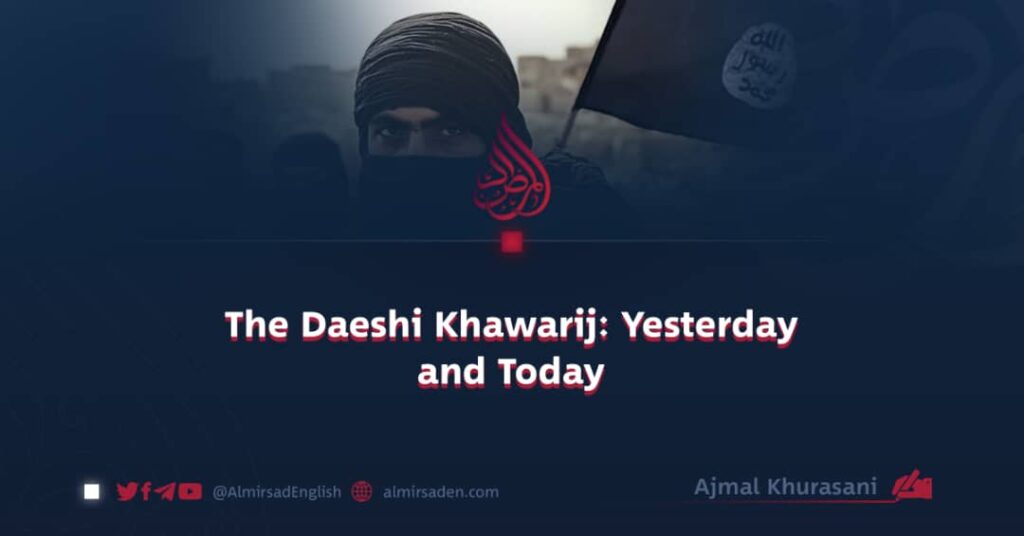
By Ajmal Khurasani
False and reckless claims have a way of crashing into public life with explosive confidence, dressing tyrannical and anti-Islamic ideas in the language of righteousness. Those who push them convince themselves that the Muslim world has fallen asleep, that its moral conscience has dulled and its religious awareness faded. For a while, such bluster and injustice can create the illusion of momentum. But history is rarely fooled for long. In the end, movements like these burn out so completely that they survive only as footnotes of betrayal in the historical record.
That same pattern unfolded with the rise of Daeshi Khawarij. With astonishing speed, the group swept across large territories, placing them under its self-proclaimed “caliphate.” Wherever it took root, terror followed. Mass killings became routine. Communities were brutalized in the name of its cause. Yet when the alert and discerning youth of the Ummah began tracing this fitna and studying its claims more closely, they discovered what it truly was: the opening of a chapter aimed at the destruction of the Ummah itself.
For decades, moreover, the consequences of global jihad have been recorded, whether deliberately or inadvertently, in the ledgers of Islam’s adversaries. Entire populations have been pushed to recoil from jihad and from the Islamic system, while acts carried out in the name of justice and fairness have crossed boundaries that even hardened oppressors recognize as illegitimate. Against this backdrop, we examine Daeshi Khawarij, yesterday and today, asking how its decline began and what forces pushed it toward collapse.
History offers a blunt answer. Today’s Khawarij are walking the same road as their predecessors, following the same patterns and repeating the same mistakes. If the earlier sect was marked by arrogance and belligerence, its present generation has multiplied those traits many times over. One need only listen to how they speak about the great scholars of the Ummah. Hardly a major religious figure escapes being branded corrupt or tyrannical. This stands in stark contrast to the Prophet Muhammad (PBUH), who praised righteous scholars, especially those who struggled against disbelief and irreligion, describing them as among the Ummah’s greatest honors. That arrogance and contempt have driven the modern Khawarij, like those before them, to the threshold of collapse and sped their march toward their end.
Another factor driving their decline lies in their insistence on presenting themselves as the sole representatives of the entire Muslim Ummah. The contradiction is striking. In speeches and proclamations they claim to speak for all Muslims, yet in practice they show a relentless hunger for Muslim blood. They work to ignite unrest across Islamic lands, focusing in particular on places where many of Islam’s rulings are already in force and others are actively being implemented. Instead of preserving the power they once wielded, they continue sliding toward fragmentation, and it is increasingly likely that this generation of Khawarij will soon face the consequences of its own actions.
Their downfall has also been hastened by the way they have disfigured Islamic hudood, rulings, and legal terminology, turning people away from such revered concepts. This historical crime has been carried in ISIS’s name. They distort Islamic terms and exploit them for their own objectives. Beyond their self-styled order, they condemn every other system as taghuti or unbelieving, even when those systems are deeply rooted in Shariah, such as the Islamic Emirate in Afghanistan within its territorial domain.
From this posture has emerged confusion and internal contradiction. Daeshi Khawarij cannot even agree on how to declare takfir on employees of rival systems. Some of them pronounce sweeping judgments on civilians and soldiers alike. Others attempt to draw lines between the two. These disputes surface everywhere, in matters large and small, revealing something deeper than mere disagreement. They expose the absence of any shar’i methodology. Each Daeshi seems to invent his own framework, his own definitions of Islamic rulings and terms. That fragmentation stands as yet another reason the group has drifted away from power and toward ruin, now reduced to counting down what remain of its final breaths.