
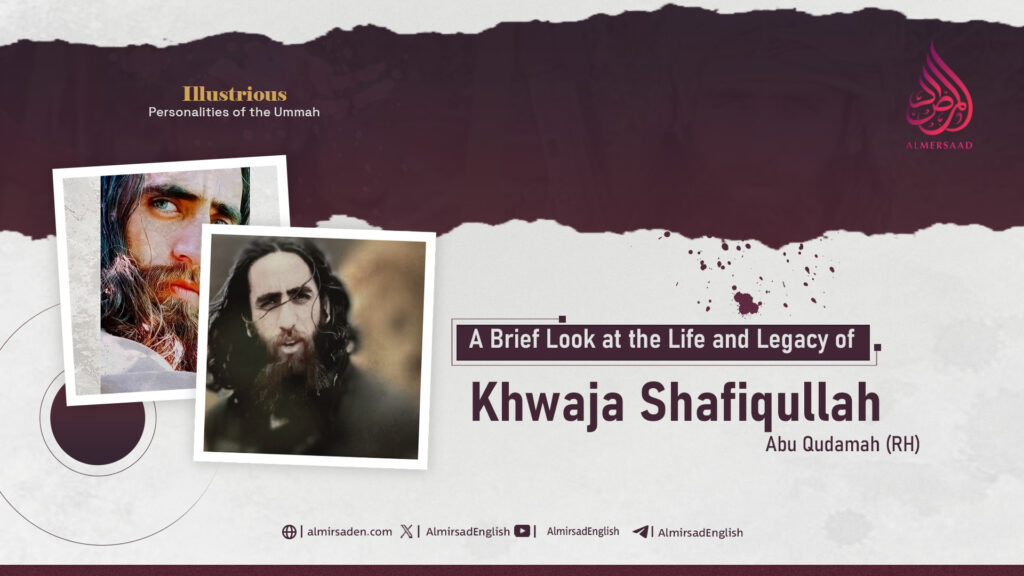
Khwaja Shafiqullah Abbasi, known as Abu Qudama Kalangari, was born on the 25th of Mizan, 1374 (Solar Hijri), in the village of Kalangar in Logar Province. He was the son of Salar Khwaja Ghulam Saeed and the grandson of Muhammad Saeed, and he came from a respected, religious, and Mujahid family.
Alongside his formal schooling, Abu Qudamah pursued Islamic studies in the local madrasa of his village. From an early age, nurtured by a strong Islamic upbringing and the spiritually rich environment of his home, he developed a personality distinguished by faith, good manners, and religious understanding.
After completing his secondary education, he pursued higher studies and was counted among the brightest and most driven students of his class. But another calling burned within him. The occupation of Afghanistan by America and its allies weighed heavily on his heart, and the sense of responsibility he felt toward his homeland and his people was not something he could set aside.
In 1388 (Solar Hijri), under the leadership of Mawlawi Muhammadullah Farooqi, he quietly joined the ranks of the Islamic Emirate of Afghanistan. With that decision, a new chapter of his life began.
Over twelve years of active participation in his Jihadi struggle, he distinguished himself in a wide range of military operations, including guerrilla warfare, ambushes, and mine-laying, building a record of courage and skill that few could rival. He also took part in numerous operations against Daeshi Khawarij in Nangarhar Province, where he became known for his steadfastness and fearlessness on the front lines. Even his adversaries were said to acknowledge his bravery.
Through all of it, he carried one quiet, private longing: martyrdom. He prayed for it, lived toward it, kept the hope alive in the deepest part of himself.
After two years of pursuing further education, he was identified during a field operation, and from that point on lived a hidden, careful life, but without wavering. His course was set, and he held to it.
He was a man who naturally drew others to him. Allah had blessed him with a dignified presence and a warm, disarming smile that reflected the serenity of his heart, the purity of his soul, and the quiet depth of his character. To his friends, he was gentle, compassionate, and fiercely loyal. To his enemies, he was resolute and unshakable.
After years of hardship, sacrifice, and countless trials on the path of jihad, he met his end on the 18th of Hoot/Hut, 1399, in the darkness of night, in the village of Khwaja Baba in Logar Province, in a cowardly ambush. He and his faithful companion Zikrullah Wahdat fought back and inflicted heavy losses on the enemy before both were first wounded, then martyred. His passing left a wound in the hearts of all who loved him, a grief that does not fade, a loss that cannot be forgotten.
May his soul rest in peace. May his memory never die. And may the path he walked always be filled with those willing to follow it.
نحسبه کذلک والله حسیبه.