
By Yusuf Badri
In the contemporary history of Afghanistan, 8th of Sawr stands as a significant and historic date, regarded as a symbol of the tireless resistance, sacrifice, and bravery of the Afghan people. This day coincides with the withdrawal of the Soviet Union’s Red Army from Afghanistan.
This day represents not only the conclusion of a military conflict but is also considered a profound symbol of a nation’s will, faith, and the preservation of its independence.
The Soviet Union invaded Afghanistan in 1358 (Solar Hijri) in an attempt to consolidate its influence and sustain a communist regime within the country. This invasion, which was part of broader international political rivalries, came at a devastating cost to Afghanistan. During this ten-year occupation, hundreds of thousands of Afghans were martyred, millions were displaced, villages and cities were decimated, and the nation’s fundamental infrastructure was destroyed.
Soviet forces did not merely conduct military operations; they also launched assaults on the religious, cultural, and national values of the Afghans. They attempted to alter the intellectual fabric of Afghan society by disseminating communist ideology, but these efforts faltered against the formidable faith and cultural identity of the Afghan people.
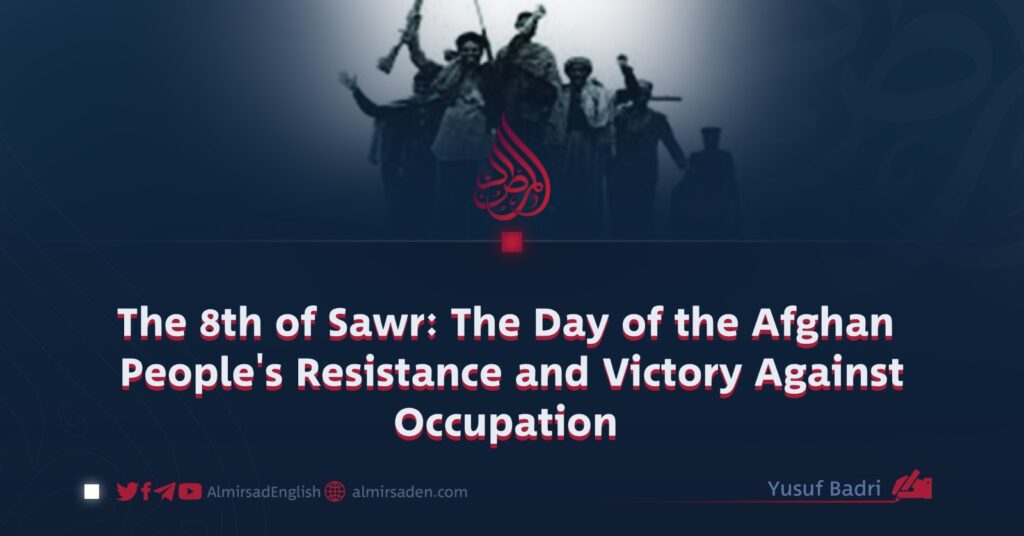
The Afghan people confronted this invasion with immense bravery and sacrifice. Their resistance was not solely military; it was a sacred struggle for faith, liberty, and independence. Afghanistan’s mountains, valleys, and rural regions were transformed into centers of resistance, and every segment of society, from the youth to the elders, participated in this struggle.
Ultimately, the unparalleled resistance of the Afghan people paved the way for the Soviet Union to withdraw its forces from Afghanistan. On the 28the 8th of Sawr, 1367, the last Soviet military units departed from Afghanistan, marking this as a day of victory and pride for the Afghan nation.
This victory was not merely the triumph of a smaller nation over a powerful regime; it was a victory of truth over falsehood, faith over atheism, and freedom over occupation. The Soviet defeat did not only end their presence in Afghanistan but also signaled the beginning of the weakening and eventual collapse of this superpower.
Today, the 8th of Sawr reminds us that if a nation stands united, faithful, and steadfast in its objectives, it can withstand any form of aggression or oppression and achieve victory. This day commemorates the sacrifices of our martyrs and entrusts us with the responsibility to safeguard our country’s liberty, independence, and values.
In conclusion, the 8th of Sawr is a golden chapter in the history of the Afghan people, which will forever endure as a testament to freedom, bravery, and sacrifice.