
By Ajmal Ghaznavi
In regional politics, some powers build their standing on reason, economic interest, and national stability. Others become hired players on a chessboard they don’t control. For decades, Pakistan’s military regime has tried to present itself as an indispensable strategic actor, but the truth is this: every time a global crisis erupts, it has turned its own soil into someone else’s battlefield.
Whatever happens between America and Iran, whether negotiation, political accommodation, or a U.S. retreat in the face of resistance, Washington will eventually come looking for those who deepened the crisis and played both sides. Pakistan’s military regime fits that profile precisely. It has always fed off conflict. At times it invoked the War on Terror, at others it claimed to be a strategic ally, or it presented tales of its sacrifices to the international community. Yet, international powers inevitably settle scores with their mercenaries once their strategic utility has expired.
The Pakistani military regime has kept itself alive by managing chaos, stoking fires just enough to stay warm, harvesting political and economic concessions from the very instability it helped create. History shows that the structures that tie their survival to other people’s conflicts eventually become their greatest casualties.
Today, the Pakistani military regime finds itself like a small frog that has jumped into a war between elephants. When the giants collide, the weak and the dependent are the first to get crushed. Islamabad may have believed it could run parallel games, with Washington, Beijing, the Gulf, and the region all at once, but global politics doesn’t reward sentiment. It rewards interests. And when interests shift, yesterday’s friendships curdle into pressure and contempt within hours.
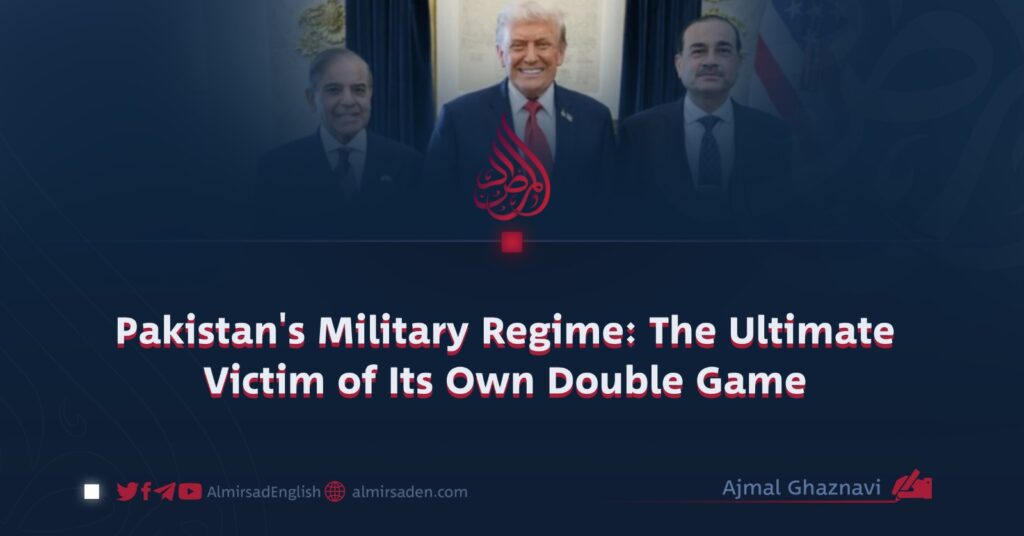
What the world witnessed during Pakistani officials’ overseas visits wasn’t just security protocol. It was the image of a diminished country. A regime that spent years boasting about its nuclear arsenal, its so-called mighty army, its irreplaceable geopolitical weight, its leaders now move through the world under a cloud of suspicion, distrust, and quiet humiliation. That didn’t happen overnight. It is the accumulated debt of decades of contradictory, duplicitous policy.
The regime has always blamed the outside world for its domestic failures. But the economic collapse, the political chaos, the spread of extremism, the erosion of international trust, these are homegrown. They are the direct harvest of the choices made. The world has moved on from the era when anyone could demand acceptance under the banner of “strategic necessity.” Countries are now judged by their stability, their honesty, and the clarity of where they actually stand.
If America reaches a deal with Iran tomorrow, Washington will try to build a new regional order, and in that order, there won’t be much room for double-dealing allies who keep one eye on every side. And if America is forced to retreat by the resistance, it will still take out its frustration on those who played the wrong role in its calculations. Either way, the Pakistani military regime is walking into a harder wave of pressure than anything it has faced before.
The signs are already there, economic crisis, political fracture, security breakdown. These aren’t isolated problems. They are previews. A regime that offers its people the philosophy of security games instead of knowledge, industry, and genuine progress will eventually be consumed by those very games.
History is littered with the ruins of powers that picked the wrong fights. But the most painful fate belongs to those who built their entire identity in the shadows of other people’s wars. If Pakistan’s military regime remains in the business of selling crisis rather than solving it, the road ahead will be lonelier, harsher, and darker than anything behind. Nations don’t survive on the noise of guns. They survive on thought, on economy, on knowledge, on islamic and national dignity. And regimes that keep their politics warm over open flames will one day find those flames at their own door.