


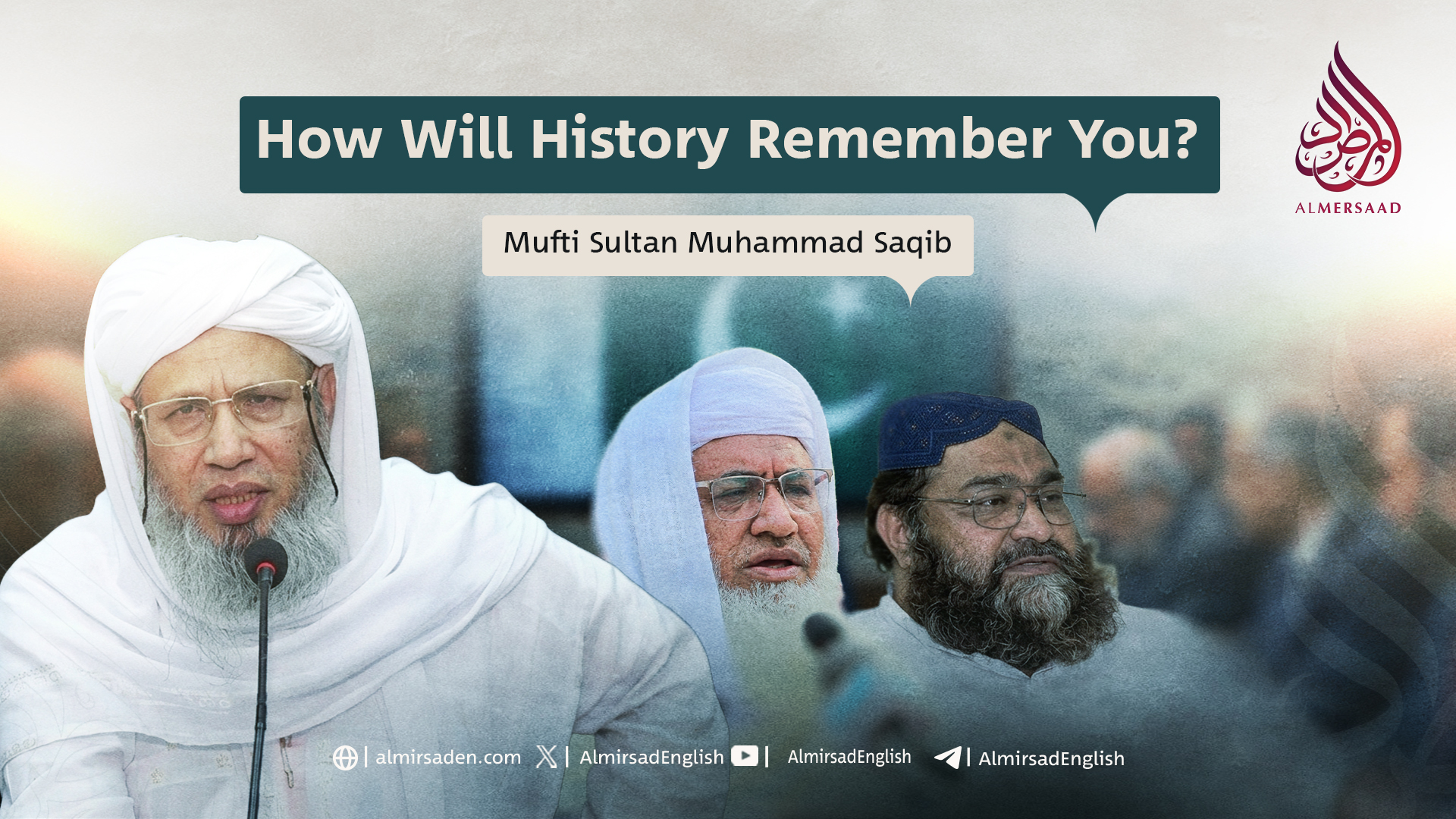
By Mufti Sultan Muhammad Saqib
History is the living record of a nation’s conscience. Every people in the world who have been guided by sincere, principled, and truth-bound scholars have never remained shackled in the chains of subjugation; rather, they have consistently lived with the blessing of freedom.
It is an established truth that among nations, the scholars hold the highest and most honorable rank, for they are the inheritors of religion and bear the profound responsibility of distinguishing truth from falsehood. It is they who rescue societies from intellectual and physical bondage, and call them toward freedom of thought, dignity, and honor.
The Islamic Ummah attains honor, dignity, and enlightenment when knowledge remains alive and scholars possess the courage to speak the truth. Yet history also shows that when knowledge falls silent and the voice of truth is restrained, falsehood not only rises, but often appears clothed in the garb of truth itself. This is the most perilous condition of all: when falsehood flourishes under the shadow of knowledge.
The concern is that today a variety of intellectual and political methods are being employed to weaken Islam. Among them are:
1. Deviations advanced in the name of Islamic politics.
2. The distortion of truth under the pretext of expediency.
Even more astonishing is that both of these agendas are being carried out among Muslim societies through certain scholars, and you, O scholars of Pakistan, have perhaps unwittingly become entangled in this very process.
Islamic politics is not merely something to be studied in books, nor is it defined by writing volumes on the subject and calling oneself a political thinker. Rather, Islamic politics is to stand, in practical struggle, against global conspiracies and to safeguard the Ummah from the political machinations of the infidels.
If we reflect on the lives of our predecessors, we see that they made immense sacrifices for the preservation of faith. They endured imprisonment, hardships, and even martyrdom, yet never abandoned speaking the truth. They never bartered away truth in the name of expediency; rather, they sacrificed everything for the survival of the Shariah. It was this very path that secured them an honorable place in the pages of history and established them as distinguished thinkers of Islamic political thought.
Why, then, do you today sway in the cradle of democracy in the name of expediency and politics? The time has come to follow the path of your predecessors, not to refrain from speaking the truth under the guise of expediency, and to discharge the responsibility of guiding the Ummah with courage and conviction.
History will record both your silence and your stance. It is therefore better to stand with truth, so that future generations may remember you with honor rather than reproach. For, as the legal maxim states:
درء المفاسد مقدم علی جلب المصالح
Preventing harm takes precedence over securing benefit. If any supposed expediency becomes a cause for concealing the truth, then it is not expediency at all, but harm.
Glorifying Falsehood in the Name of Truth
The land of Pakistan and its Muslim people are worthy of respect, and their praise is justified. Likewise, the religious services rendered by scholars deserve recognition. Yet the question remains: by what Shar’i justification do you, under the banner of praising Pakistan, lend support to criminal elements? On what grounds do you extol them? By virtue of what achievements have they brought honor or distinction to Pakistan?
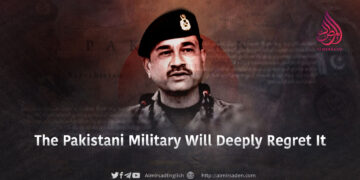
Are the particular circles within Pakistan’s system, now led by Asim Munir, deserving of praise for any discernible deeds? Through what actions have they elevated Pakistan? These are not idle questions; they are questions whose answers have already been recorded by history.
1. They accepted military cooperation with Israel against Gaza.
2. Did this very circle not place its land and airspace at NATO’s disposal for the dismantling of an Islamic order in Afghanistan, and thereby contribute to the destruction of the existing Islamic system?
3. Did this same circle not forcibly disappear dozens of our leaders, renowned in Islamic scholarship, on the charge of enmity toward the global alliance of unbelief?
4. Even if our blood holds no value in your eyes, then at least remember the blood of the innocent students of Lal Masjid and the oppression inflicted upon them. Remember the fate of your sister, Aafia Siddiqui, who was handed over to America in exchange for fifty thousand dollars. Remember the bullet-riddled chest of the martyred Shaykh Naseeb Khan (RH). Do you feel no shame over the wrongful and tragic martyrdom of Maulana Sami ul-Haq (RH), the rector of Haqqania, nor over the torn and shattered body of his son, Maulana Hamid ul-Haq (RH)?
5. If you have forgotten what happened before, then why do you turn a blind eye to what has been witnessed directly with your own eyes? For the second time, how did the Afghans establish their previous Islamic system? You are better witnesses to this than anyone else.
But then this same ruling circle launched a war against the Islamic system in the service of American interests, violated Afghanistan’s territorial integrity, and shed the blood of innocent children and adults in various provinces. In the attack on the Omid camp, more than 400 drug addicts were martyred, a level of brutality that, on a global scale, has rarely, if ever, been matched.
O leading scholars of Pakistan!
I say to you that, along with the above-mentioned crimes, this particular circle under the leadership of Asim Munir has disgraced the name of Pakistan. It has left countless reproaches upon the people in the pages of history, turned the dreams of past predecessors into dust, imprisoned scholars, and caused them to be martyred and injured.
So awaken! The marshal has not brought honor to Pakistan; rather, he has displayed Pakistan’s name in the arena of subjugation in such a way that even subjugation itself feels ashamed of it.
O scholars of Pakistan, reflect carefully!
Every era brings a test for its scholars. Sometimes this test comes in the form of poverty, sometimes oppression, and sometimes through proximity to power. But the most difficult test is when a scholar, instead of speaking the truth, chooses silence or expediency. The Holy Qur’an raises a profound and painful question regarding the silence of scholars:
﴿لَوْلَا يَنْهَاهُمُ الرَّبَّانِيُّونَ وَالْأَحْبَارُ عَن قَوْلِهِمُ الْإِثْمَ وَأَكْلِهِمُ السُّحْتَ﴾
Why do the Rabbani scholars not restrain them? This is not merely a question; it is, in fact, a divine admonition that places the silence of scholars on trial. For the silence of scholars is not neutrality; rather, it is: creating space for falsehood, empowering the oppressor, the beginning of the Ummah’s deviation, and a form of support for injustice.
O scholars! Allah Almighty says:
﴿وَلَا تَرْكَنُوا إِلَى الَّذِينَ ظَلَمُوا فَتَمَسَّكُمُ النَّارُ﴾
Rukūn is not only when a person stands alongside an oppressor; it also includes praising the oppressor, justifying his oppression, remaining silent in the face of injustice, or dressing falsehood in the garment of religion. This is the subtle stage where a scholar leaves the camp of truth and indirectly enters the camp of falsehood.
Rabbani scholars are those whose knowledge is connected with action, whose worldly concerns remain subordinate to their religion, and for whom truth takes precedence over everything else. They are not broken by the pressures of their time. They understand that: “The best form of jihad is a word of truth in front of a tyrannical ruler.”
The sign of a Rabbani scholar is not merely that he possesses extensive knowledge, but that he speaks the truth even in the most difficult circumstances.
How will history remember you?
In view of your divine responsibility, fear the severe punishment of Allah Almighty. Expose to the people the actions of a military regime that has been nurtured in the cradle of subjugation, and break the silence that has been bound by fear and expediency in the name of caution. Speak the truth openly.
If you do not do so, history will never remain silent. Every action, every decision, every conduct, and every silence becomes a subject of judgment. It will be a matter of great shame if history introduces you to future generations as supporters and accomplices of a mercenary military establishment. History records not only actions, but also silences.