


Part 1
By Khalil
An Analysis of the Roots, Contradictions, and Consequences of a Historical Deviation
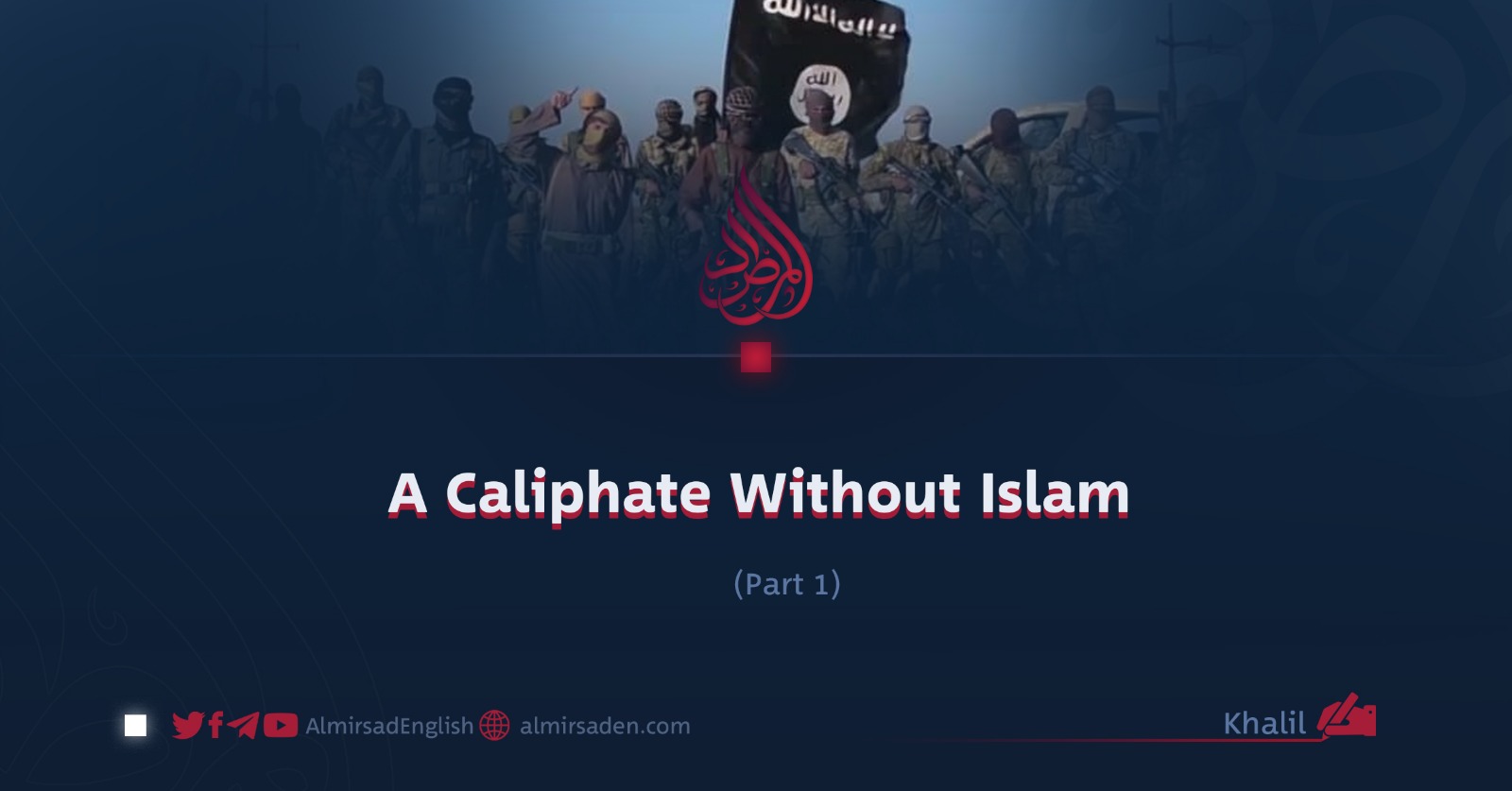
Preface: In recent years, the Muslim world has confronted a painful and abrupt phenomenon. During this period, a group emerged proclaiming its mission to revive the Islamic Caliphate. Through unrestrained violence and distorted interpretations of the Holy Qur’an and the Sunnah of the Prophet Muhammad (PBUH), this movement presented a warped vision of Islam, one that seemed to recognize nothing beyond the sword and the spilling of blood.
They planted their banners upon the ruins of devastated cities, shattered homes, and the bodies of innocent men, women, and children. Their brutality stained the sacred name of Islam with acts marked by savage cruelty. Yet amid this tragedy, one fundamental question arises, a question every sincere Muslim and every thoughtful, fair-minded scholar must confront: Was this phenomenon truly rooted in Islam? Or was it merely a political scheme in which religion served as a convenient mask to legitimize violence and the pursuit of power?
This series of articles, “A Caliphate Without Islam,” sets out to answer that question through careful, documented, and principled inquiry. Here, we will demonstrate, with accuracy and unbiased analysis, how the entity that labeled itself the “Islamic State” stood, in both principle and practice, in stark conflict with the foundational teachings of Islam.
The Holy Qur’an declares:
«وما أرسلناک إلا رحمة للعالمین» (الانبیاء: 107)
“And We have not sent you, [O Muhammad], except as a mercy to the worlds.” (Al-Anbiya: 107)
How, then, can such mercy ever be reconciled with the killing of women and children?
The Messenger of Allah (PBUH) also said: “I was sent only to perfect noble character.” How could such a mission possibly align with brutality, cruelty, and terror?
Research demonstrates clearly that what came to be known as “ISIS,” the “Islamic State,” or the so-called “Islamic Caliphate” was, in reality, a caliphate without Islam, a deviant project built on corrupted and toxic ideas far outside the authentic framework of the Qur’an and Sunnah. They crafted their own codes untethered from the established foundations of Islamic jurisprudence. And rather than spreading Islam’s message, they became one of the most powerful forces contributing to global hostility, fear, and misunderstanding toward the religion.
Throughout this series, we will explore six critical subjects, each essential to accurately understanding this aberration:
1. The Historical Roots of Deviation
We will journey back through history to uncover the ideological sources that nourished this group, tracing how these misguided beliefs evolved into the modern phenomenon we witnessed.
2. Manufactured Law Versus Divine Law
We will compare their fabricated framework to the sacred, time-tested principles of Islamic jurisprudence, and illustrate, case by case, how they veered from the true path of Islam.
3. Morality Confronts Violence
We will examine how the core Islamic concept of human dignity, a principle that stands at the center of the faith, was trampled beneath this project, reducing human beings to expendable instruments.
4. The Systematic Defamation of Islam
We will expose how each gruesome attack carried out under their banner fueled hatred, terror, and misinformation against Islam on a global scale.
5. The Consensus of Islamic Scholars
We will highlight how leading scholars from across the Muslim world, from Egypt to Iran to Afghanistan, unanimously rejected this group as outside the fold of Islam and warned the Ummah of its danger.
6. Lessons from History
We will reflect on the consequences of this movement and identify the lessons necessary to safeguard the Muslim community’s future from similar threats.
In essence, what follows is a narrative of truth confronting distortion. Drawing upon ISIS’s own actions, supported by credible Islamic sources and rigorous scholarship, we expose one of the most destructive falsifications in modern history. Our aim is not political persuasion, but to defend the true character of Islam, a faith built upon brotherhood, justice, compassion, and divine mercy.